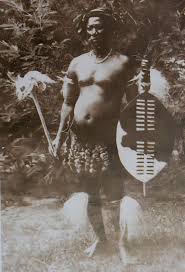






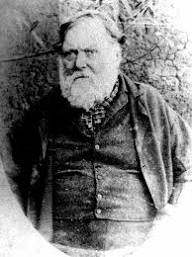
John Robert Dunn (1834 – 5 August 1895), often called “The White Chief of Zululand” (or “Jantoni” in isiZulu), was a South African-born hunter, trader, diplomat, and chieftain of British (Scottish) descent who became a powerful and controversial figure in 19th-century Zululand and colonial Natal (present-day KwaZulu-Natal, South Africa).
Early Life
Born in Port Alfred (Cape Colony, now Eastern Cape) in 1834, Dunn was the son of Robert Newton Dunn, a Scottish immigrant who arrived in South Africa around 1820, and Ann (née Biggar). The family later moved to the Port Natal (Durban) area. His father worked as a merchant’s clerk and hunter-trader. John lost both parents young (father around age 14, mother a few years later) and received little formal education.
From his teens, he worked as a transport rider and hunter. His frequent crossings of the Tugela River into Zululand made him fluent in isiZulu, skilled with firearms, and familiar with Zulu customs. He built relationships with local chiefs and princes through trade and hunting.
Rise in Zululand
In the 1850s, after a business dispute, Dunn spent time wandering in Zululand. His linguistic and cultural knowledge earned him favour with Zulu royalty. He became a close confidant of Cetshwayo kaMpande (who later became king in 1872 after Mpande’s death).
Cetshwayo appointed Dunn as his secretary and diplomatic adviser, handling foreign correspondence (especially with Natal colonial authorities) and acting as an intermediary. In 1857, Dunn formally settled in Zululand, receiving land (initially at oNgoye/ongoya on the southern coast), livestock, and authority as a “white chief.” He governed a coastal territory, built a network of influence through client relationships, and advised on trade and relations with the British.
He also served in other colonial-linked roles, such as Protector of Immigrants for Zululand (appointed 1874).
Role in the Anglo-Zulu War (1879)
Dunn’s loyalties were pragmatic and often self-interested. During the Anglo-Zulu War, he sided with the British against Cetshwayo, providing intelligence, scouts, and support to Lord Chelmsford’s forces. After the British victory and the defeat of the Zulu at Ulundi, Sir Garnet Wolseley appointed Dunn as one of 13 chiefs in the fragmented post-war Zululand settlement. Dunn received the largest and most strategically valuable territory (a buffer zone near Durban), which boosted his power and wealth temporarily.
When Cetshwayo returned from exile in 1883, the settlement collapsed, and Dunn lost much of his authority, though he retained influence in the region.
Personal Life and Legacy
Dunn is famous (and often sensationalized) for his polygamous household. He first married Catherine Pierce (daughter of a Durban settler with Cape Malay ancestry) around 1853; she bore him several children but disapproved of his later unions. Over time, he took approximately 48 Zulu wives (some sources say 49 total wives including Catherine), many gifted or arranged through Zulu custom (often involving lobola/cattle). These unions linked him to various clans across Zululand.
He fathered around 117 children (figures vary slightly in accounts, with some unofficial estimates higher). Many descendants formed a distinct community in southern Zululand (areas like Mangete and Emoyeni), blending Zulu and European heritage. Dunn’s descendants still exist today in South Africa, and family reunions have been held.
He lived in a large homestead at Emoyeni (near Gingindlovu), adopting elements of both European and Zulu lifestyles. Critics (including Bishop Colenso) viewed him as opportunistic or exploitative; supporters saw him as a skilled mediator who understood and respected Zulu ways while navigating colonial pressures.
Dunn died on 5 August 1895 at Emoyeni from dropsy (edema) and heart disease, aged about 60–61. He was buried there. Catherine survived him until 1905.
Historical Significance
Dunn embodied the complex “trans-frontiersman” archetype of the era — a white man who crossed cultural boundaries, mastered indigenous languages and politics, and wielded influence in both Zulu and British spheres. He was a trader, arms dealer, hunter, politician, and military ally at different times. His life highlights the fluid alliances and power dynamics on the colonial frontier before and after the Anglo-Zulu War.
The main scholarly biography is Charles Ballard’s John Dunn: The White Chief of Zululand (1985), which draws on archival sources for a balanced view.
His story continues to fascinate in South African history, appearing in books, articles, and discussions about identity, loyalty, and cultural hybridity in Zululand. Descendants have preserved family records and oral histories, emphasizing his role in creating a unique lineage in the region.
If you’d like more details on any aspect (his family tree, specific events in the Zulu War, descendants today, or recommendations for further reading), just let me know!