





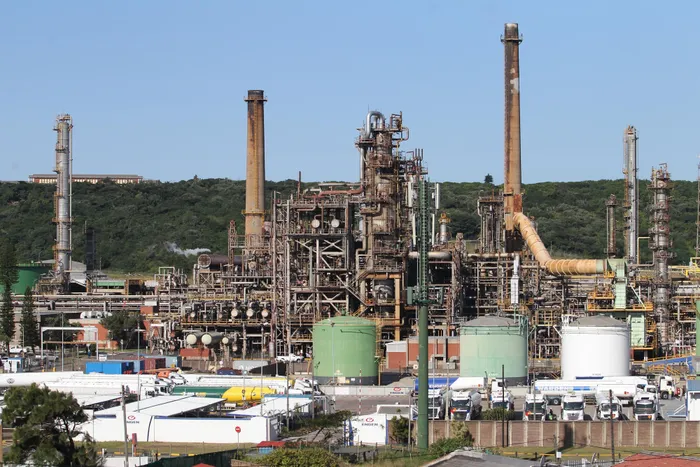
Vitol Group’s Vivo Energy is converting a former Durban refinery site into a major fuel storage hub for South Africa. The project involves building additional fuel tanks on the brownfield site (the old Engen refinery in Durban, which shut down years ago after losses and a fire).
Key Details:
- Investment: Approximately $130 million (roughly R2 billion, as referenced in Vivo Energy’s statements).
- New Capacity: Around 300,000 cubic meters (or about 125,000–300,000 m³ depending on exact reporting; it will bring total storage in the Durban area to roughly 500,000 m³ for Vivo/Engen).
- Timeline: Construction is underway, with completion targeted for the third quarter of 2027.
- Purpose: To strengthen South Africa’s energy security by buffering the import-dependent country against oil market shocks and supply disruptions (e.g., from the Middle East). South Africa has seen about half its refining capacity close in recent years, shifting the focus to imports and storage.
This fits into Vivo Energy’s broader strategy after acquiring a majority stake in Engen (via the 2024 deal combining operations, with Phembani Group retaining a minority share). The Durban Hub emphasizes local partnerships in South Durban, localization (e.g., for mining and other industries), and resilience.
Vivo Energy/Engen has framed it positively as a commitment to energy security and community value in the region.
Context for Durban/South Africa:
- Durban’s Island View Precinct is already the country’s main fuel import and storage hub (handling ~70% of imports), and recent government moves have extended long-term leases to majors like BP and Vitol to encourage investment.
- The shift from refining to storage/terminals reflects global trends and local challenges (aging refineries, high costs, and reliance on imports).