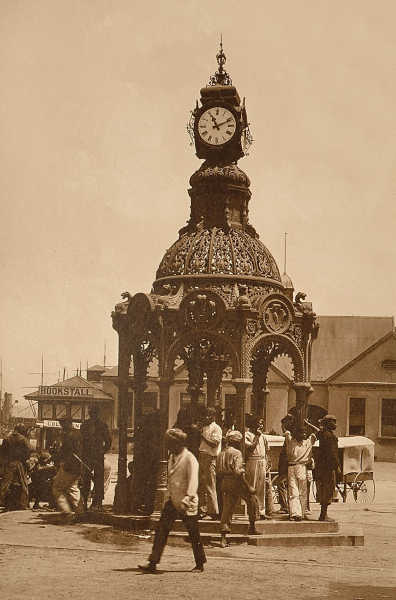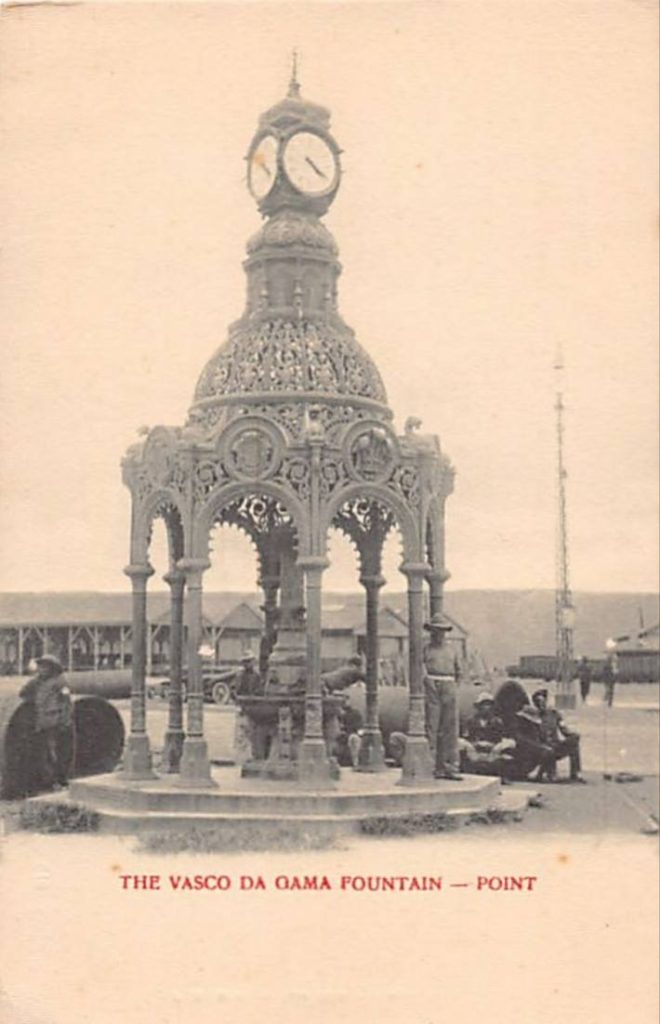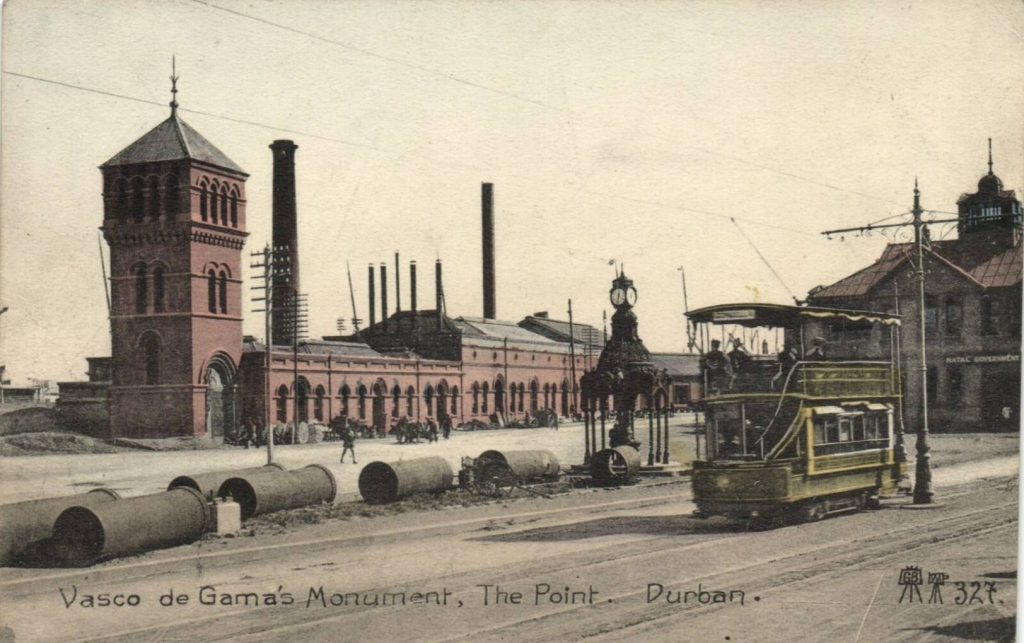





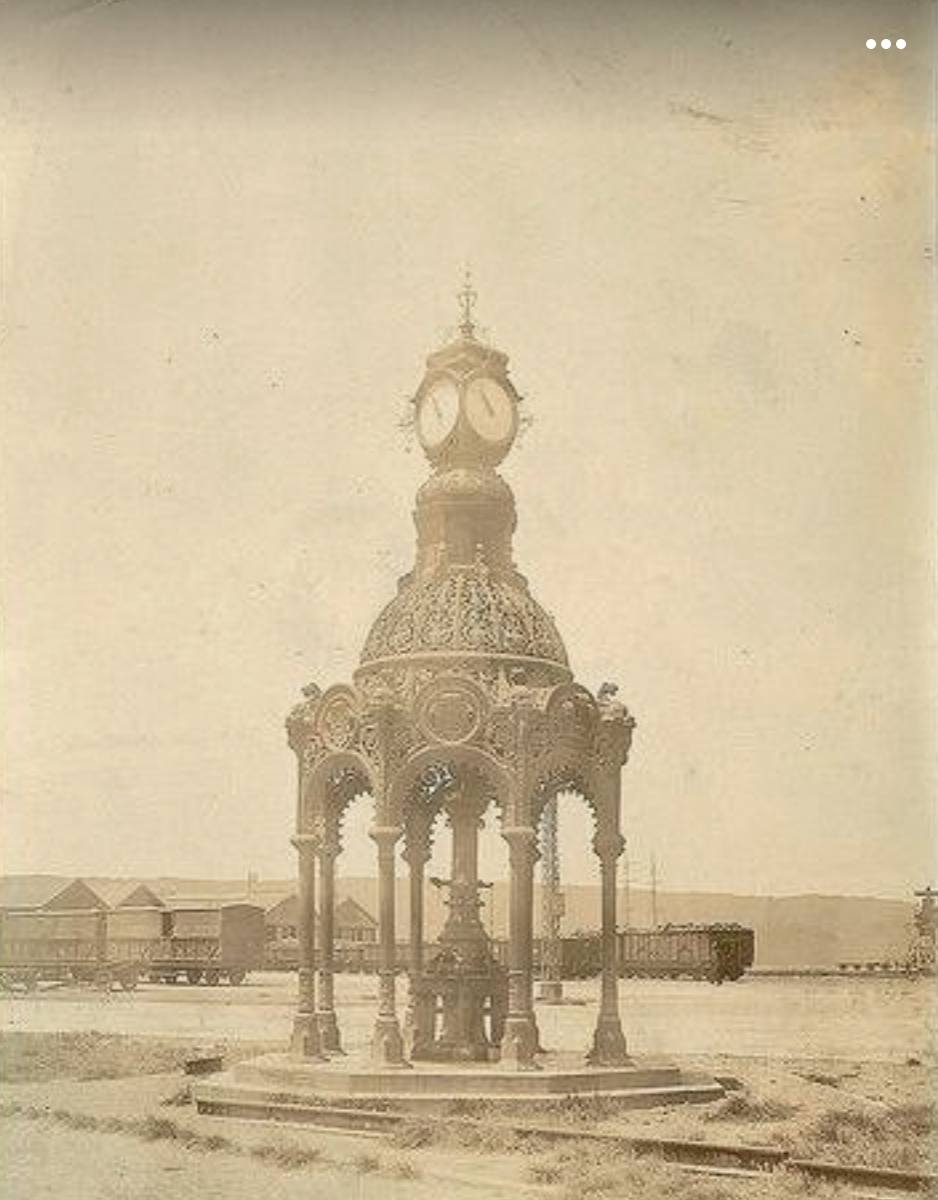
The Vasco da Gama monument in Durban (commonly called the Vasco da Gama Clock or Da Gama Clock Fountain) is a historic Victorian-era cast-iron structure commemorating Portuguese explorer Vasco da Gama’s sighting of the natural harbour on Christmas Eve 1497. He named the area “Natal” (Portuguese for Christmas), which later became the name of the province (now KwaZulu-Natal).
History and Design
- The monument was a gift from the Portuguese government to Durban (then part of the British colony), erected in 1897 to mark the 400th anniversary of da Gama’s voyage.
- It was manufactured in Glasgow, Scotland, by Walter Macfarlane & Co.’s Saracen Foundry — one of only three surviving examples of its kind worldwide.
- The ornate structure features intricate ironwork, a domed top, a drinking fountain base, and a central statue of Samson breaking his ropes. Plaques (in English and Portuguese) explain the connection to da Gama and Natal.
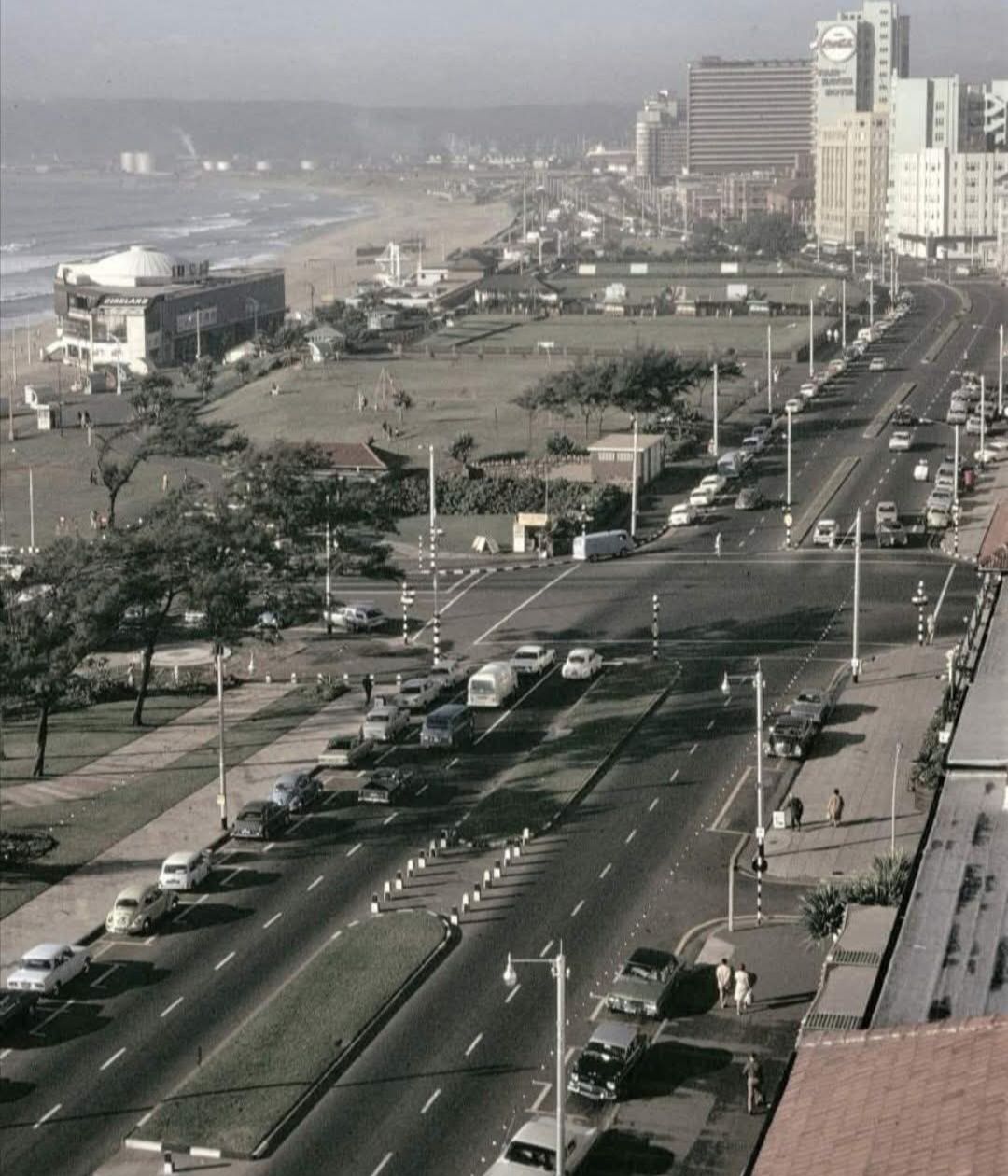
- It originally stood at the corner of Point Road (now Mahatma Gandhi Road) and Southampton Street, then moved in 1969 to the Victoria Embankment (now Margaret Mncadi Avenue) in the Esplanade area, near the harbour and beachfront.
The clock has a long history of relocations, weathering from sea air, and periods of disrepair or vandalism (including theft of the Samson figure and brass plaques for scrap). It was restored ahead of the 2010 FIFA World Cup and later underwent further work.
Current Location (as of 2026)
Due to ongoing preservation efforts and vulnerability to vandalism, the monument was dismantled, restored (with missing parts recast), and temporarily relocated around 2023 to the grounds of the Royal Natal Yacht Club (specifically the Ndongeni Lawns area). This is a secure, maritime-themed setting with harbour views, fitting its history. It is intended to remain there temporarily until potential future redevelopment of the Point area allows a more permanent public placement. The Royal Natal Yacht Club has been actively involved in its care as part of Durban’s maritime heritage initiatives.
It is a protected heritage structure under the KwaZulu-Natal Heritage Act.