

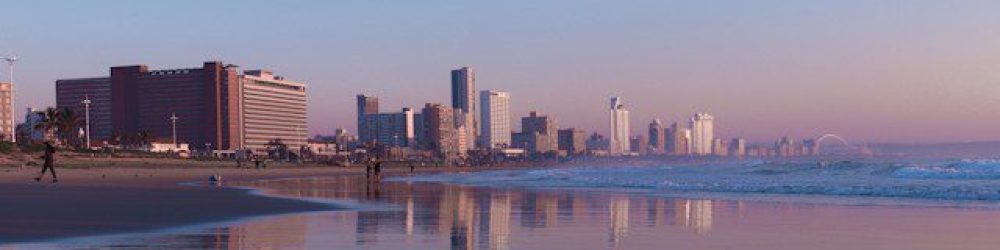

Natal Command was a regional command formation of the South African Army, headquartered in Durban (on Snell Parade, North Beach). It oversaw military operations, security, logistics, administration, and support for units in the Natal (later KwaZulu-Natal) region.
Establishment and Early History
The command traces its roots to the Union Defence Force (UDF) era, when South Africa was divided into military districts. It was formally established around 1937, with the site on Durban’s beachfront granted to the Department of Defence in February 1937. The prominent headquarters building, known as “The White House”, was completed that year. Designed by the Public Works Department (with architect William Benjamin Turner Newham), it featured a 17th-century Renaissance style adapted with heavy proportions and simplicity typical of contemporary South African military architecture. Sculptor Mary Agnes Stainbank created bas-relief panels, including wildebeest motifs symbolizing defence, commerce, and civic development, plus the Union Coat of Arms. The building included a 100-foot carillon tower with clocks, courtyards, offices, mess facilities, and guard rooms, at a cost of about £35,000.
On 3 September 1939 (outbreak of WWII), Lieutenant Colonel J. Daniel (SA Staff Corps) served as Officer Commanding. Units under the command then included the 1st South African Brigade (Pietermaritzburg, with Royal Natal Carbineers and Umvoti Mounted Rifles), the 7th South African Infantry Brigade (including Natal Mounted Rifles), two batteries of the South African Permanent Garrison Artillery, and the Natal Field Artillery.
Post-WWII commanders included Brigadiers Harold Willmott and Deon Ferreira. The command was closely linked to nearby Stamford Hill Aerodrome (requisitioned for the SAAF in 1940).
SADF Era (South African Defence Force)
In the 1970s–1980s, under the SADF, Natal Command played a key role in regional security, often supporting the South African Police during internal operations and political unrest in KwaZulu-Natal. It provided the primary command level for military operations in aid of civil power, along with logistic and administrative support.
Key units in the early 1980s included:
- Headquarters in Durban.
- 5 South African Infantry Battalion (5 SAI) in Ladysmith.
- 15 Maintenance Unit in Durban.
- Commandos such as Tugela Commando and Umvoti Commando (both Durban-based).
- Territorial force Groups: Group 9 (Pietermaritzburg), Group 10 (Montclair), Group 11 (Dundee, including Drakensberg and Dundee Commandos), and Group 27 (Eshowe).
From 1974, the 84 Motorised Brigade (later evolving into 9 South African Division and then 75 Brigade) was based at Old Fort Road in Durban. Its units (e.g., Durban Light Infantry at Greyville, Durban Regiment, 84 Signal Unit, 19 Field Engineer Regiment, Natal Field Artillery) mostly fell within Natal Command’s boundaries, though the brigade itself belonged to a higher formation.
The command was sometimes nicknamed “Surfboard Command” due to its Durban beachfront location, and it was viewed by some as a relatively comfortable posting. It handled aspects like recruitment, training oversight (including at Ladysmith), and support for Citizen Force and commando units. Personal accounts from national servicemen and reservists describe administrative roles, switchboard duties linking Durban HQ to outlying bases like Ladysmith, and primitive camp conditions that changed little from WWII times.
Closure and SANDF Era
Natal Command was officially closed on 23 November 2000 as part of the post-1994 restructuring and integration of forces into the South African National Defence Force (SANDF). The final General Officer Commanding was Brigadier (later Maj Gen) C. E. le Roux. The closure included a combined medal parade and ceremonial lowering of the Natal Command flag in front of the White House facade.
The beachfront property (leased on a 99-year term from the Durban Corporation/Ethekwini Municipality) was later used briefly by the SANDF’s eastern Joint Tactical Headquarters. It was returned to the city in 2009 due to facility consolidation. The site faced controversial sales and development proposals (including for a mixed-use project with film studios, hotels, etc.), with only the historic facade preserved in parts; some elements like the chapel fell into disrepair.
Leadership Highlights