




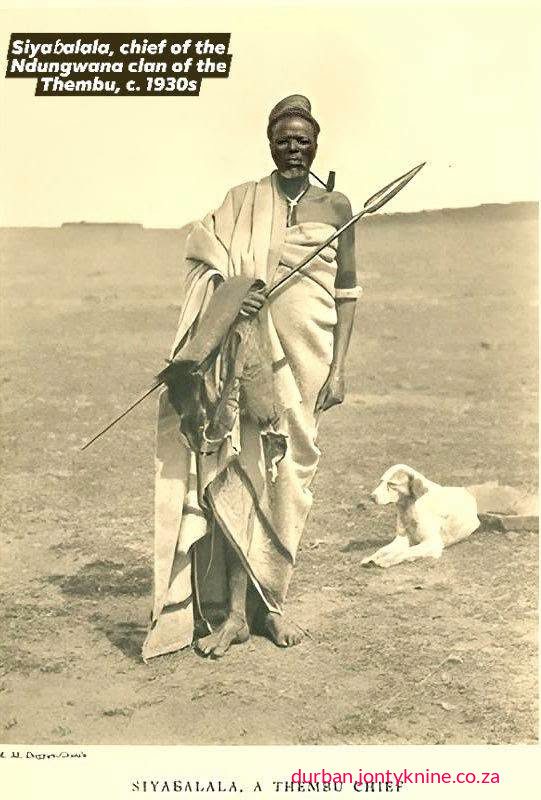
It is one of the major historical Xhosa federations in the former Transkei region. The people are estimated at roughly 900,000 to several million (including broader affiliations), speak isiXhosa, and maintain a rich cultural heritage intertwined with broader Nguni and Xhosa traditions. Famous descendants include Nelson Mandela (from a junior branch of the AmaMadiba clan of the royal line) and Walter Sisulu.
Origins and Early History
Oral traditions and historical accounts trace the AbaThembu to Nguni migrations from the Great Lakes region of Central Africa southward along the eastern coast of southern Africa. Early ancestors include figures such as Zwide (around the 11th century in some genealogies), Mbulali (or Mbulali Ka-Nanzinzaba of the Hala clan), and uMthembu (or Thembu KaNtongakazi), who led a migration from areas in present-day KwaZulu-Natal to Dedesi in the Transkei region of the Eastern Cape (by roughly the 14th–16th centuries in various accounts).
A key early consolidation occurred under Nxeko (around the mid-17th century or earlier in some traditions), who is often regarded as establishing a more unified polity after settling near the Msana River (a tributary of the Mbashe). Succession disputes followed, notably between his sons Hlanga (from the Great House) and Dlomo (from the Right-Hand House). Dlomo prevailed, founding the dominant AmaDlomo/Hala royal lineage that produced subsequent kings. A related branch under Mvelase remained further north and later integrated into broader Zulu structures.
The kingdom solidified further under leaders such as Hala, Madiba, Tato, Zondwa, Ndaba, and especially Ngubengcuka (also known as Vusani; reigned c. 1800–1830). Ngubengcuka is credited with uniting various clans into a more cohesive political entity under the Hala royal family (sometimes referenced as “Hala Mvelase”).
Colonial Era, Divisions, and Resistance
In the 19th century, the AbaThembu faced pressures from neighboring groups (including Gcaleka Xhosa), the Mfecane/Difaqane disruptions, and expanding British colonial influence. They were often referred to by Europeans as “Tamboekie” or “Tambookie.” After conflicts and annexations, parts of Thembuland came under Cape Colony administration as part of the Transkei.
A significant division occurred around 1865 with the creation of “Emigrant Thembuland” (Western/Right-Hand House areas). Groups under leaders such as Matanzima were resettled on land previously held by Xhosa groups west of the Kei River. This led to two main branches that persist today:
- Eastern Thembu (Great House / Indlunkulu): Centered at Bumbane Great Place near Mthatha, under the Dalindyebo line.
- Western Thembu (Right-Hand House): Associated with Qamata Great Place near Cofimvaba, linked to the Matanzima line (which produced figures such as Kaiser Matanzima, a key apartheid-era Transkei leader).
The traditional Nguni house system is hierarchical and central to succession and polity structure. Upon marriage, wives are allocated houses with ranked status: the Great House (indlunkulu; heir usually comes from here), Right-Hand House (indlu yasekunene; can establish a semi-independent but subordinate community), supporting iqadi houses, seed-bearer (ixhiba), and lesser domestic houses. This system shaped both internal politics and the Eastern/Western split.
Notable later 19th–early 20th century rulers include Ngangelizwe and Dalindyebo (Alava; reigned into the early 20th century), whose relatively stable rule was nonetheless constrained by colonial administration (which resisted recognizing full paramountcy). In the apartheid era, King Sabata Jonguhlanga Dalindyebo resisted Bantustan policies and Transkei “independence,” going into exile. He was succeeded by his son Buyelekhaya.
Contemporary Status
The AbaThembu are recognized under South Africa’s Traditional Leadership and Governance Framework Act. The monarchy holds cultural, customary-law, and community-leadership roles (dispute resolution, land allocation within traditional areas, cultural preservation) but no sovereign political power. The core homeland remains in the Eastern Cape (former Transkei areas), with communities also elsewhere due to historical migrations and apartheid-era displacements.
Current king: Buyelekhaya Zwelibanzi Dalindyebo (born 1964; reign name Aa! Zwelibanzi!), who assumed the throne in the late 1980s (formally recognized around 1989). His rule has been marked by controversies, including a criminal conviction leading to imprisonment (around 2015–2019 period), succession disputes involving his son Azenathi (who served as acting king during incarceration), and more recent public disagreements over political alignments, traditional leadership appointments (e.g., involving Mandla Mandela of Mvezo), and foreign engagements. Recent reports note a reconciliation with Azenathi. The Eastern (Dalindyebo) and Western (Matanzima-related) houses continue to feature in traditional politics.
Culture and Society
AbaThembu culture emphasizes strict adherence to many Xhosa customs (sometimes noted as particularly strong), including initiation (ulwaluko), polygyny (historically associated with the “Thembu system” or isithembu), praise poetry (izibongo), cattle-centered economy and symbolism, and ancestral reverence. The Central Cattle Pattern layout of traditional homesteads (umuzi) reinforces hierarchy, gender roles, and communal values. Language is isiXhosa (with historical influences and dialectal variations noted in oral traditions). Christianity is widespread alongside traditional beliefs.
Efforts continue around cultural preservation, clan reunification events, heritage documentation, and addressing contemporary challenges such as youth issues, land, and socio-economic development within the constitutional order.
Significance
The AbaThembu Kingdom illustrates the resilience of Nguni polities through migration, internal house-based politics, colonial fragmentation, apartheid co-option and resistance, and adaptation to democratic South Africa. Its royal lineages connect to major figures in the anti-apartheid struggle and national history, while ongoing traditional leadership debates reflect broader tensions between customary authority and modern governance.