
On May 30, 2026, Paris Saint-Germain secured their second consecutive UEFA Champions League title with a dramatic penalty shootout victory over Arsenal in Budapest. What should have been a night of pure celebration for French football quickly descended into chaos on the streets of the French capital. Once again, football joy in Paris was overshadowed by violence, vandalism, and clashes with police.
The Match That Sparked History — and Havoc
PSG, the defending champions, faced a resilient Arsenal side at Budapest’s Puskás Aréna. After a tense 1-1 draw (with goals from Arsenal’s Kai Havertz and PSG’s Ousmane Dembélé), the match went to penalties. PSG held their nerve, winning 4-3 to claim back-to-back European crowns — a historic achievement for the club backed by Qatari investment.
Tens of thousands of fans gathered across Paris, particularly around the Champs-Élysées, Parc des Princes, and fan zones. The Eiffel Tower lit up in PSG colors. For many, it was a moment of triumph after years of near-misses in Europe’s premier competition.
From Celebration to Carnage
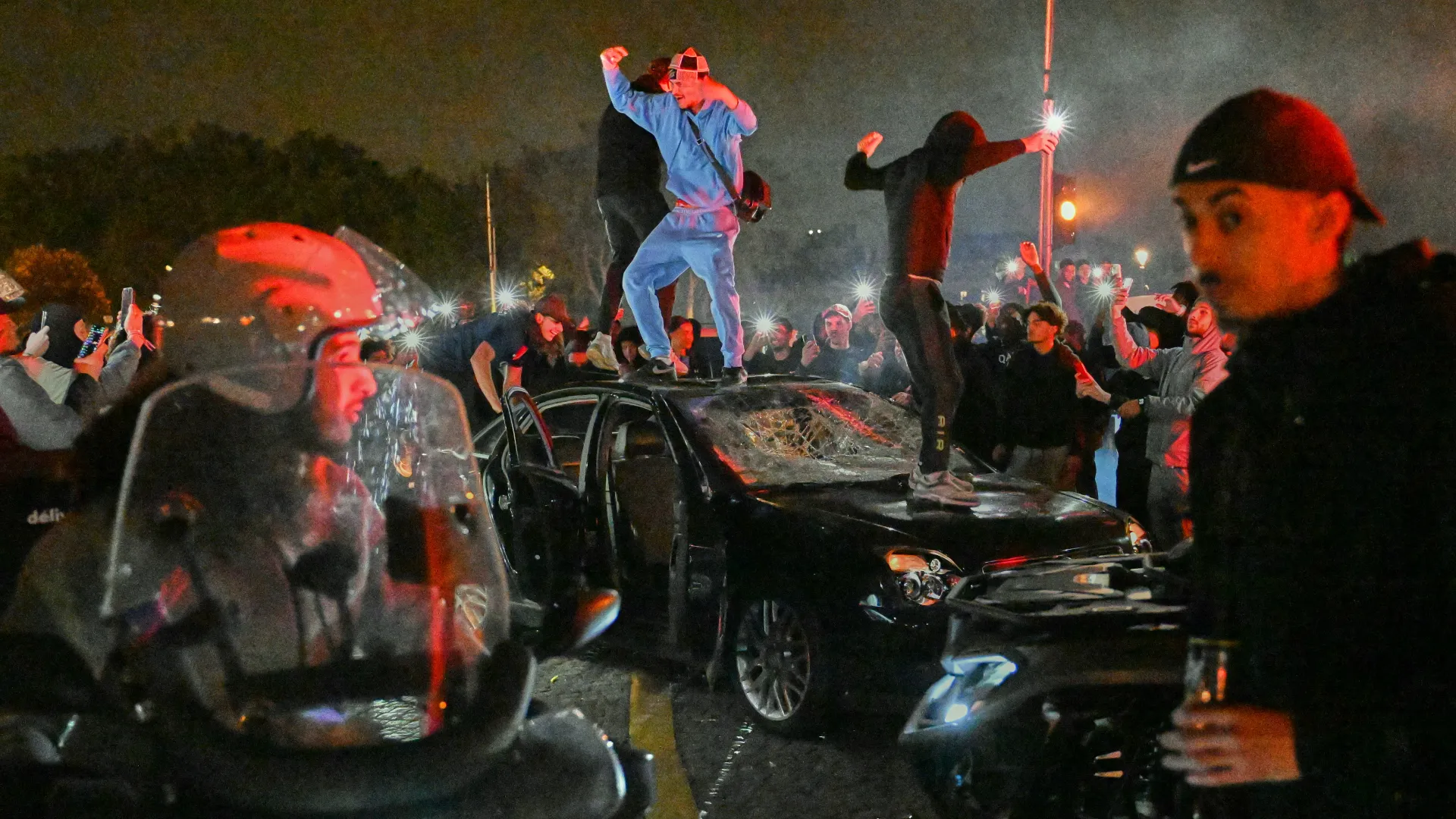
The festivities turned sour almost immediately after the final whistle. Reports indicate that unrest began even during the match — with some clashes reported shortly after Arsenal took an early lead. What started as fireworks, flares, and chanting quickly escalated into something darker:
- Groups set fire to vehicles, bins, and Lime bikes.
- Shops were vandalized and looted along iconic streets like the Champs-Élysées.
- An attempt was made to storm a police station in the 8th arrondissement.
- Riot police deployed tear gas to disperse crowds.
- Barricades appeared on parts of the city’s ring road.
French authorities reported hundreds of arrests — figures ranging from 400 to over 780 across France, with the majority in Paris. At least seven police officers were injured, and over 200 people total were reported hurt in the clashes. Some sources mentioned a death linked to the unrest, though details remain under investigation.
The violence wasn’t limited to Paris. Similar disturbances broke out in about 15 cities across France as fans celebrated (and exploited) the victory.
A Familiar Story for Paris
This isn’t the first time PSG success has been marred by disorder. French football celebrations — especially involving Paris clubs — have a troubled history of tipping into riots. Critics point to a mix of “ultra” supporter groups, opportunistic looters, and underlying social tensions in the banlieues that often spill into the city center during major events.
Interior Minister Laurent Nuñez condemned the violence as “absolutely unacceptable,” distinguishing between genuine fans and “barbarians” responsible for the destruction. Far-right leader Marine Le Pen remarked pointedly: “Only in France does everyone… a football club’s victory spark riots.”
Businesses along the Champs-Élysées had preemptively boarded up windows, anticipating trouble. Their caution proved warranted.
The Morning After
As Paris wakes up to damaged storefronts, burnt-out cars, and a heavy police presence, questions linger:
- How can a country that hosts the world’s biggest sporting events so consistently fail to contain fan violence?
- What does this say about integration, youth unemployment, and policing in modern France?
- Will UEFA or French authorities impose stricter measures for future high-stakes matches involving PSG?
For true PSG supporters, the achievement is historic. Back-to-back Champions League titles mark the club as a genuine European powerhouse. Yet the images dominating global headlines aren’t of lifted trophies or heroic penalty saves — they’re of burning streets and riot shields.
Football in France remains a passionate, beautiful, and sometimes ugly affair. Last night reminded everyone that when Paris wins in Europe, the city doesn’t always celebrate peacefully.
- No South African names, embassy statements, or community reports have surfaced regarding involvement.
If any South Africans were present as spectators or tourists in Paris that night, there’s no public indication they took part in the clashes. The riots appear to be a domestic French issue tied to the victory celebrations.