

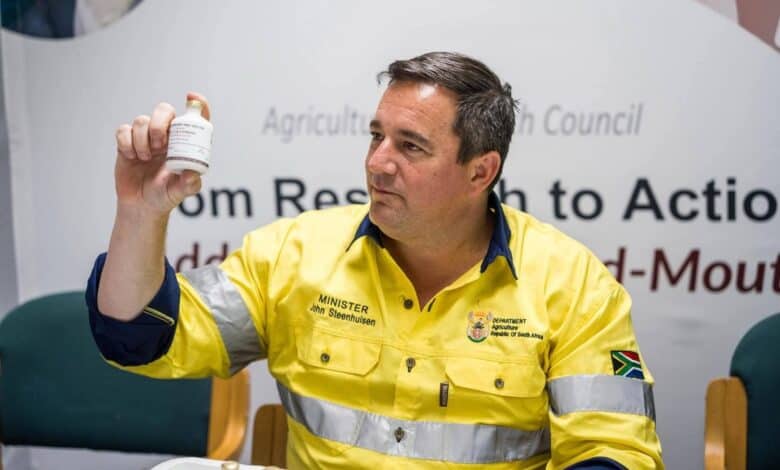
Agriculture Minister John Steenhuisen addressed a media briefing in Parliament, highlighting that KZN leads the country’s vaccination efforts. The province has vaccinated the highest number of animals nationally, with over 1.1 million doses administered there as part of a broader campaign that has reached nearly 4.4 million animals nationwide by late May 2026.
Key points from the briefing:
- Government has spent R494 million on vaccine procurement.
- South Africa recently received an additional 3.5 million vaccine doses, with regulatory approval for importing another 14 million doses to support boosters.
- The outbreak has caused significant economic strain on livestock producers, including movement restrictions, higher feed costs, and financial losses. Steenhuisen acknowledged farmers’ frustrations.
- KZN’s role is central because it has been the hardest hit since the outbreak intensified (with roots in cases dating back to 2021 in areas like Mtubatuba). It affects the province’s large cattle population (around 2.5 million) and its important dairy sector.
Recent Developments in KZN
- The national Disease Management Area (DMA) restrictions in KZN were lifted in May 2026 (verbally earlier, gazetted around 15 May), allowing auctions and some movements to resume, even as the virus persists in parts of the province.
- Mass vaccination campaigns continue strongly, e.g., over 13,000 cattle vaccinated in a single day in uMgungundlovu District (including Impendle).
- The province has shifted toward a more proactive approach, including province-wide vaccination drives and collaboration with traditional leaders to control livestock movement.
National Context
FMD has spread to multiple provinces, but KZN remains a focal point. The government is moving from a reactive to a preventative biosecurity strategy, including expanded diagnostics, surveillance, and regional cooperation (e.g., with SADC countries and Botswana). Some export markets (Jordan, UAE, Hong Kong, Kuwait) remain open under conditions.
The outbreak, ongoing for years, has been challenging due to factors like livestock movement and initial detection in wildlife/livestock interfaces. Vaccination efforts (using imported doses from sources like Turkey and Argentina) are the main tool right now, alongside biosecurity.
If you’re a farmer or resident in Durban/KZN affected by this, check the latest from the KZN Department of Agriculture and Rural Development (DARD) or the national FMD Command Centre for local movement protocols and vaccination schedules. The situation is evolving quickly with the vaccination push.