






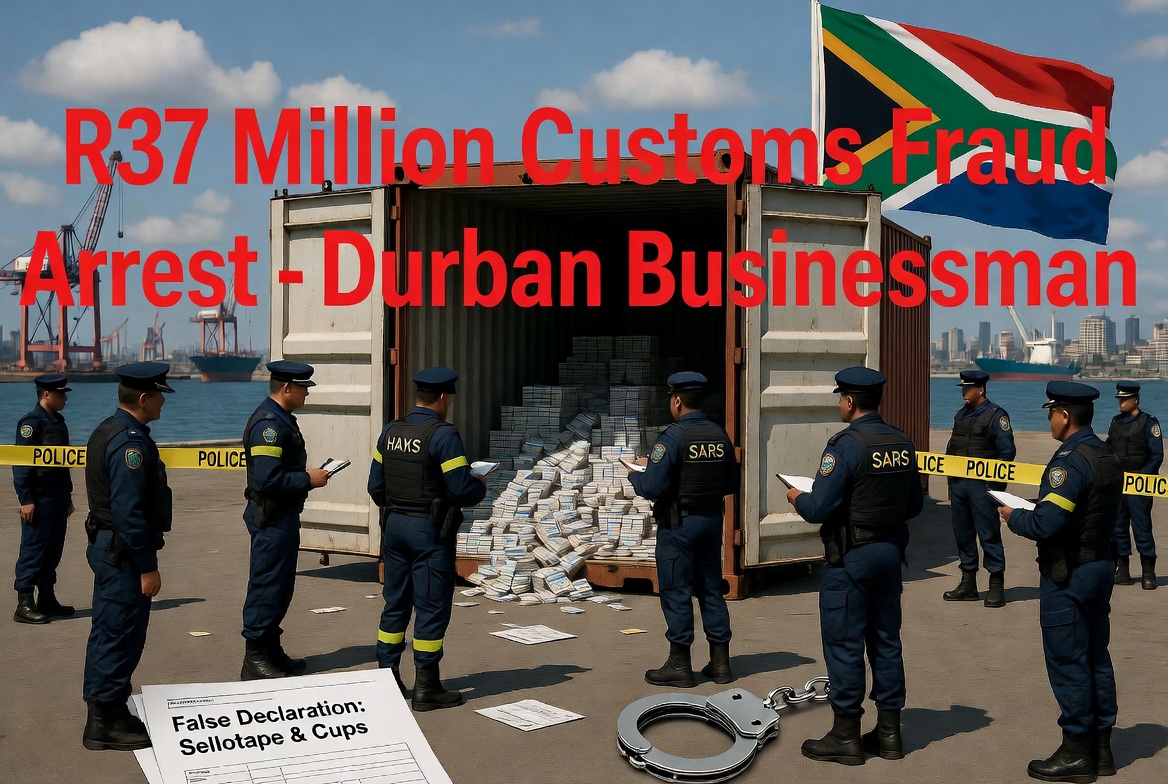
- The Alleged Fraud: In 2021, Mhlanga reportedly submitted false documentation to the South African Revenue Service (SARS) declaring a shipping container’s contents as “clear sellotape and cups.” SARS assessed and cleared it based on this low-value declaration. Upon inspection, authorities found it packed with various brands of illicit cigarettes instead.
- Financial Impact: This misrepresentation allegedly caused a potential loss to the fiscus of approximately R36.965 million in unpaid Customs Duty and Value-Added Tax (VAT).
- Legal Proceedings: A fraud case was opened at Durban Central Police Station and referred to the Hawks. Mhlanga appeared briefly in the Durban Magistrate’s Court on the same day (6 July 2026). He was granted R20,000 bail and the matter was postponed to 4 September 2026 for further investigation.
This appears to be a classic example of under-declaration or misdeclaration of goods to evade duties—one of the common methods in customs fraud.
Broader Context: Illicit Cigarette Trade in South Africa
South Africa has a significant problem with illicit tobacco. Estimates often place the illicit market share at 20-40% of total consumption in recent years (varying by source and methodology), resulting in billions in lost tax revenue annually for SARS. Key angles include:
- Economic and Fiscal Implications: Every rand lost to cigarette smuggling reduces funding for public services. Illicit trade also distorts legitimate markets, undercuts compliant businesses, and funds other criminal activities (e.g., organized crime syndicates often link tobacco smuggling to drugs, money laundering, or corruption).
- Common Tactics: Misdeclaring container contents (as in this case), undervaluing goods, using fake invoices, or routing through third countries. Durban’s port is a major entry point for such shipments due to its volume.
- Enforcement Efforts: SARS, Hawks, and police run joint operations. Recent examples include seizures in Durban, Limpopo, Mpumalanga, and KZN. On the same day as Mhlanga’s court appearance, a separate case in Polokwane involved a Zimbabwean national (Eldrie Ngwenya) remanded for possessing/transported illicit cigarettes worth R35,000.
Related Recent Cases:
- Durban businessman Rubishen Munsamy was earlier convicted on multiple counts of fraud and Customs Act violations, ordered to repay over R13 million.
- Ongoing probes into larger tax evasion and VAT fraud rings in KZN.
Nuances and Considerations
- Presumption of Innocence: Mhlanga has not been convicted. The case is ongoing, and investigations continue. Bail was granted, indicating the court did not view him as a flight risk or immediate danger at this stage.
- Investigation Challenges: Proving intent in customs cases can be complex—requiring forensic analysis of documents, supply chains, financial trails, and possibly links to importers, clearing agents, or corrupt officials. Delays until September are common as Hawks build stronger dockets.
- Edge Cases and Systemic Issues:
- Corruption Risks: Customs fraud often involves insiders. South Africa has seen scandals with compromised officials facilitating such schemes.
- Supply Chain Vulnerabilities: Global shipping volumes make 100% inspection impossible; risk-based targeting is used, but sophisticated fraudsters exploit gaps.
- Public Health Angle: Illicit cigarettes are often cheaper, higher in nicotine/tar, and evade health regulations, exacerbating smoking-related diseases and youth access.
- Business Perspective: Legitimate importers face unfair competition. Compliant businesses bear higher effective costs while smugglers undercut prices.
- Policy Responses: SARS has intensified digital tracking, data analytics, and international cooperation (e.g., with origin countries in Asia). There are also calls for harsher penalties, better whistleblower protections, and industry self-regulation.
Implications
This arrest highlights ongoing efforts to recover revenue and deter white-collar crime in trade. If convicted, Mhlanga could face significant prison time and asset forfeiture, given the scale (similar cases have resulted in multi-year sentences). For the broader economy, consistent enforcement is crucial to protect the tax base amid fiscal pressures.