



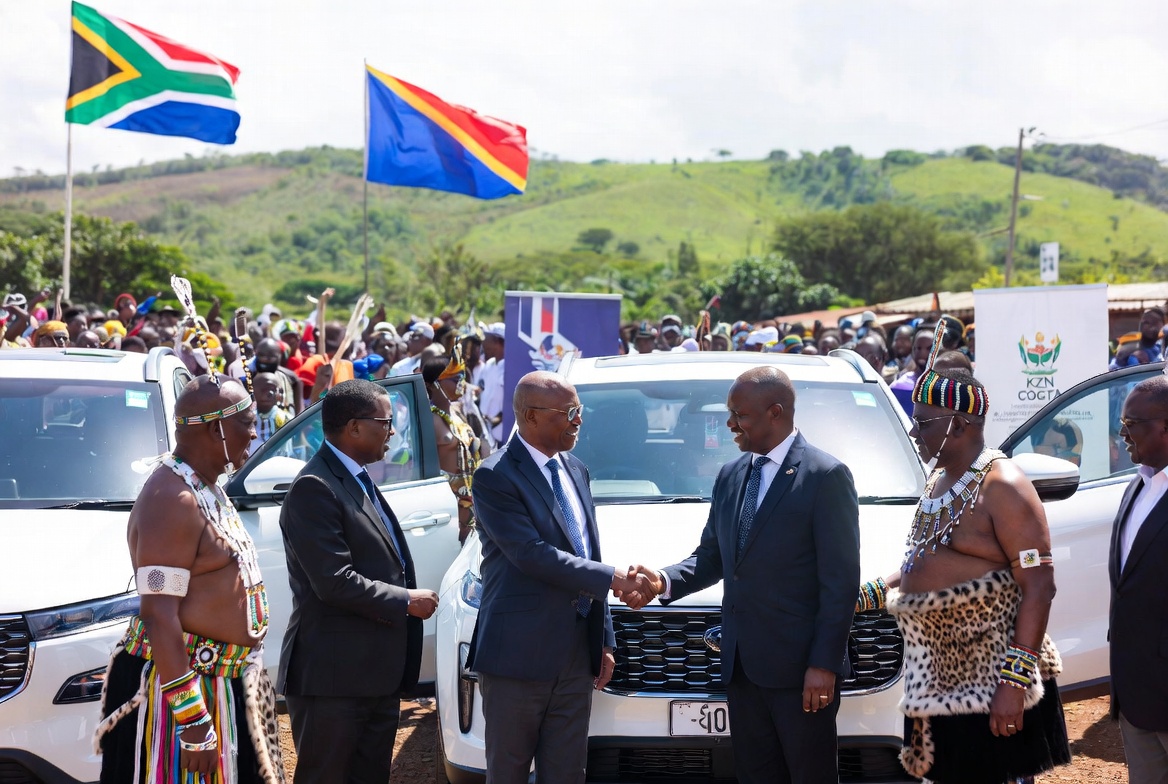
KwaZulu-Natal has a significant traditional leadership structure rooted in Zulu culture and history. Amakhosi serve as community leaders, peacemakers, custodians of heritage, and partners in rural governance and service delivery. They often operate in vast, rural areas with challenging terrain and limited infrastructure.
The program, accelerated under MEC Reverend Thulasizwe Buthelezi (IFP), aims to equip Amakhosi with vehicles for mobility—enabling them to:
- Monitor service delivery and development projects.
- Respond to community needs (e.g., emergencies, social services processing).
- Fulfill customary and constitutional roles effectively.
It was announced during the 2026 Opening of the KZN Legislature as part of broader support for traditional leadership. Handovers occur in phases, often in district gatherings (e.g., Durban for five districts in late June 2026).
Scale and Timeline
- Initial phases: Around 30 vehicles distributed earlier (costing close to R20 million).
- Recent phase (June/July 2026): 35 additional vehicles handed over in a multi-phase rollout across districts.
- Total goal: Vehicles for nearly all ~300 Amakhosi over coming years, potentially bringing cumulative numbers to around 65+ by mid-2026 in some reports.
The program is ongoing, with plans to continue until full coverage.
Vehicles Provided
Vehicles include a mix suitable for rural use:
- Ford Territory SUVs.
- GWM (Great Wall Motor) P-series / P300 double-cab bakkies (pickups).
Retail prices (approximate, varying by spec):
- Ford Territory SUVs: R594,500–R734,000.
- GWM P300 bakkies: R529,900–R699,900.
Some earlier mentions reference Ford Rangers and other GWMs. These are positioned as practical tools rather than pure luxury, though critics highlight their “top-of-the-range” nature.
Funding and Costs
- The department has reprioritised funds (e.g., R19.41 million for one batch) from other programs, raising questions about budgeting.
- Long-term implications: Annual running costs (fuel, maintenance, insurance, etc.) could be substantial. For example, ~R1.8 million per year for just 12 vehicles. Scaling to 300 would represent a significant provincial or Traditional Council expense.
Political Controversy and Criticisms
The rollout has sparked significant debate in KZN’s Government of Provincial Unity:
- DA (Democratic Alliance): Strongly opposes it as potential electioneering ahead of local government elections. They question transparency, selection criteria, affordability, sustainability, and prioritisation over service delivery crises (water, sewage, infrastructure). They demand details on full costs, beneficiary lists, and ongoing maintenance responsibilities.
- Other critics (e.g., OUTA, MK Party): View it as patronage, questioning why it wasn’t delayed post-elections and highlighting opportunity costs in a province with service delivery challenges.
- Timing and optics: Handovers close to elections fuel suspicions of political influence, given Amakhosi‘s community sway.
Support and Defense
- CoGTA and Provincial Government: Emphasize partnership with traditional leaders as a “cornerstone of stability.” Premier Thamsanqa Ntuli and MEC Buthelezi argue vehicles are essential for rural work, not luxuries.
- CONTRALESA (Congress of Traditional Leaders of South Africa): Strongly supports it, noting KZN and Eastern Cape Amakhosi lagged behind other provinces (e.g., Mpumalanga, Limpopo) where such provisions have existed for years (sometimes renewed in 5-year cycles). Vehicles aid diverse duties, including emergency transport.
- Many Amakhosi welcome the support for enhanced service to communities.
Broader Context and Implications
- Precedents: Similar programs exist in other provinces, sometimes including additional perks like phones or offices. Maintenance responsibilities vary.
- Nuances: Amakhosi homes often function as public hubs; vehicles see heavy community use. However, questions remain on selection equity, long-term fiscal impact, and alignment with other priorities.
- Edge cases: In a resource-constrained environment, trade-offs between supporting traditional institutions and direct service delivery are contentious. Transparency in procurement, beneficiary criteria, and total projected costs will likely face ongoing scrutiny via parliamentary questions.
This initiative highlights tensions in South African governance: recognizing cultural institutions versus fiscal prudence and service delivery demands.