

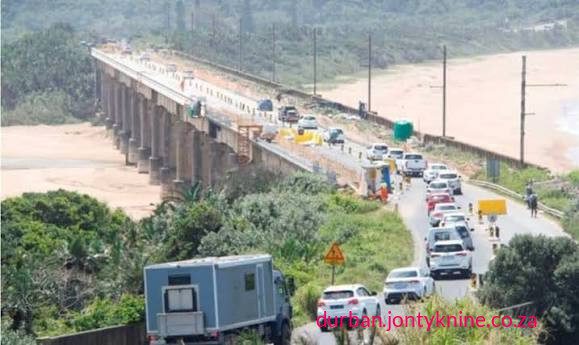
As of early September 2026, work is advancing toward a revised completion target of late September, with a single lane open after recent jacking of Pier 2.
Project origins and original plan
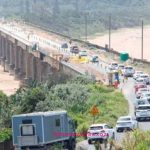
The bridge, built in 1958 using the older caisson foundation system, suffered serious damage from prolonged rainfall and flooding. Pier 2 rotated, compromising stability and making the structure unsafe. In March 2025 the KZN Department of Transport (DoT) closed it for emergency repairs and rehabilitation, budgeting roughly R190–199.5 million. Officials said the work would restore durability for at least another 25 years and was expected to take about six months, with completion initially targeted around September/October 2025.
Alternative routes included the P464 and, after approval, toll waivers or frequent-user rebates at the Oribi Toll Plaza ramps on the N2. Local employment was promised (around 120 community members in early statements), and emerging contractors were to receive packages.
Why it ballooned far beyond six months
Multiple factors compounded:
- Technical and environmental challenges — Dredging/silt removal around piers, high tides, river flow into the ocean, weather delays (including later rainfall and even snowfall references in acceleration plans), geotechnical investigations, piling, pile-cap construction (one phase used ~767 m³ of concrete and 180 tons of steel), heritage-related stoppages, and the specialised jacking of the rotated pier. Progress reports at various points showed the project lagging planned percentages (e.g., ~56% actual vs higher planned earlier on).
- Payment crises and stoppages — The most publicised issue was non-payment of contractors. In April 2026 reports (including a parliamentary response from MEC Siboniso Duma) confirmed contractors were owed about R31.5 million, leading to tools-down, abandonment of site at times, and suspension of traffic management that forced temporary full closures. This was part of wider DoT cash-flow problems: the department said it needed roughly R1.2 billion monthly for contractors from a R13–14 billion budget but often received far less (e.g., R500–600 million, or as low as R200 million in some months) due to Provincial Treasury transfers, SCOA accounting system transitions, and competing priorities such as education funding. Contractors including Yena Uyabusa Trading (main contractor referenced) and consulting engineers (Naidu/Naidoo Consulting) were affected; payments were later made or prioritised after engagements with Treasury, allowing resumptions in mid-2025 and again in June 2026.
- Broader R102 context — The bridge work is intertwined with rehabilitation of the adjacent R102 (P3-1) corridor. That separate (much larger) project has faced its own contractor issues; as of 1 September 2026 the contract with Jamjo Civils was cancelled, with a new contractor expected on site later and major works not starting until mid-January 2027. Interim maintenance falls to the DoT or a sub-contractor.
Milestones along the way included partial single-lane reopening in December 2025 (stop-and-go), multiple revised target dates (November/December 2025, February 2026, May 2026, then September 2026), stakeholder meetings, MEC site visits, and acceleration measures (extended hours, weekend work, 24-hour operations in critical phases).
Current status (early September 2026)
Jacking of Pier 2 has been completed. A single lane has been open to traffic (with ongoing restoration work continuing around it). The latest reported completion target for the bridge rehabilitation is 26 September 2026 (or more broadly “September 2026” / end of September). Progress had been described as roughly 60% in early August during an MEC visit that also covered remaining tasks such as handrails/parapets, coating, end blocks, deck patching, pedestrian walkway, and finishing works.
Businesses and residents continue to report cumulative impacts: longer detours or toll costs, traffic gridlock (especially peak times), lost trade, reduced hours or retrenchments at some firms, and general frustration after more than 17–18 months of disruption on a key local artery linking Port Shepstone, Umtentweni, Sea Park and alternative access toward Durban.
Stakeholder positions and accountability
- KZN DoT / MEC Siboniso Duma — Have acknowledged delays, attributed many to factors “beyond control” (Treasury cash flow, system changes, weather, technical complexity of an old caisson bridge), apologised for inconvenience, prioritised invoices after Treasury engagements, and emphasised acceleration and the bridge as a priority. Payments of hundreds of millions across projects have been reported at various points.
- Opposition and local voices (DA, ANC Veterans League representatives, councillors, business owners) — Have criticised systemic non-payment, shifting deadlines, poor oversight, economic harm, and called for public progress reports, immediate settlement of arrears, penalties for missed deadlines, transparent recovery plans, and better stakeholder inclusion. Letters to higher offices (including the Presidency) have been acknowledged.
- Local municipality and community — Ray Nkonyeni Municipality has facilitated stakeholder engagements; mayor and councillors have pressed for progress and communicated updates. Commuters and businesses remain the most directly affected.
Broader implications
This project illustrates recurring pressures on provincial infrastructure delivery in KZN: dependence on timely Treasury transfers, vulnerability of cash-strapped contractors who cannot indefinitely bankroll government work, the difficulty of emergency repairs on aging coastal structures exposed to flooding and scour, and the real economic cost when a single critical link fails. Parallel problems on the wider R102 amplify the effect. While technical completion of the bridge appears closer than it has been for months, full two-way functionality, lasting durability, and resolution of the surrounding road works will determine whether the long disruption finally eases before the next peak travel seasons.
The numbers in public reporting (R190 million original allocation, R31.5 million specific unpaid amount at the April 2026 low point, repeated percentage-complete and date revisions) are consistent across local coverage from the South Coast Herald, News24, departmental statements, and political oversight. Exact final costs and whether further extensions occur will depend on the remaining finishing work and any last technical or payment hiccups.