





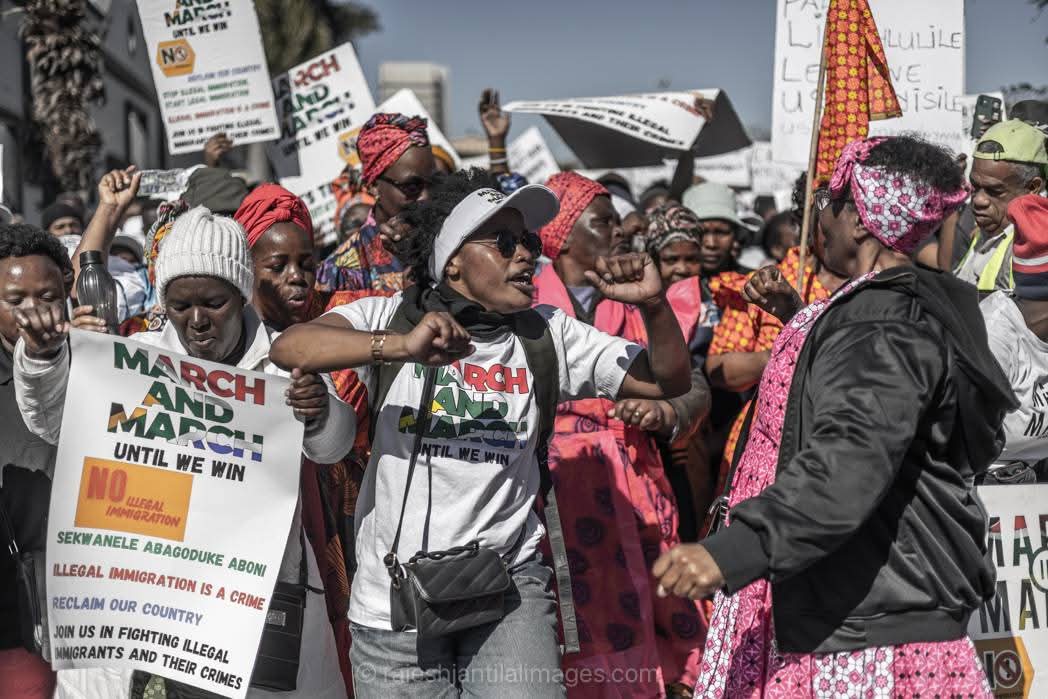
On or around July 9, 2026, the movement launched its weekly Thursday protest in Umzumbe on the KZN South Coast. Supporters marched approximately 10 km, demanding that spaza shops (small township convenience stores) and other township businesses be returned to South African ownership. Leader Jacinta Ngobese-Zuma (also referred to as Jacinta Ngobese Zuma) and the group argue that the township economy has been “hijacked” by foreign nationals (often undocumented), and they call for legislation to reserve these businesses for South African citizens.
This fits into their broader campaign of weekly protests, an unofficial June 30, 2026 “deadline” for undocumented foreigners to leave, and ongoing inspections or pressure on foreign-owned businesses. They use slogans emphasizing “Mabahambe” (they must go) and frame the issue as protecting citizen opportunities in employment, services, and small business.
Context on Township Businesses (Spaza Shops) in South Africa
Township economies, especially informal retail like spaza shops, are a major part of South Africa’s informal sector. Estimates suggest:
- The broader township economy contributes significantly (one figure around R900 billion), with spaza/informal retail as a key pillar.
- There are roughly 150,000+ spaza shops, serving a large portion of township residents who rely on them for daily essentials due to convenience, credit options, and proximity (formal retailers like Shoprite are often farther or more expensive for small purchases).
- Foreign nationals (particularly from Somalia, Ethiopia, Pakistan, etc.) own or operate a substantial share—often estimated at 70-80% in many areas—while South African ownership has declined in some townships.
Why foreign-owned shops often succeed more (per various studies):
- Stronger networks for bulk buying and supply chains → lower prices and better stock.
- Higher startup capital (e.g., via diaspora or pooled resources) vs. locals’ limited funding.
- Longer hours, diversification (e.g., additional services), and operational discipline.
- They pay rent to South African landlords, contributing indirectly (one estimate: R25 billion annually from foreign spaza owners).
Foreign shops are often credited with providing affordable goods, creating some local jobs (though critics note preference for foreign labor), and injecting energy into underserved areas. However, tensions arise over perceived displacement of local entrepreneurs, crime links (real or alleged), and competition.
Broader Movement Background
- Founded around March 2024 as a grassroots response to undocumented immigration’s impacts on jobs, services, housing, and safety.
- Led by Jacinta Ngobese-Zuma, a former Vuma FM presenter and activist.
- Associated with similar groups like Operation Dudula; has links or support from parties like MK Party (uMkhonto weSizwe). Critics describe it as a “political project” ahead of elections.
- Activities include marches in Durban, Johannesburg, and other areas, with calls for mass deportations, stronger borders, and citizen-first policies. Some protests have been linked to shop closures, tensions, or isolated violence/looting, though the group emphasizes peaceful action.
Nuances, Implications, and Edge Cases
Arguments in favor of the call:
- High unemployment in South Africa (especially among youth) makes local control of accessible businesses a priority for dignity and economic inclusion.
- Informal sector supports millions; reserving segments could boost South African entrepreneurship with targeted support (training, funding, supply chain help).
- Concerns about undocumented status, remittances draining the economy, and uneven competition.
Counterpoints and risks:
- Foreign operators often fill gaps locals struggle with (capital, skills, risk tolerance). Forced takeovers have led to higher prices, shorter hours, and reduced service in some Durban areas (e.g., bread from R20 to R30).
- Economic contributions: Jobs (direct/indirect), VAT via suppliers, rents to locals, and consumer savings. Displacement could shrink the sector or push activity underground.
- Legal/constitutional issues: South Africa has rights for legal residents/foreigners; broad bans risk xenophobia, investment flight, or court challenges. Past incidents show violence can harm everyone (e.g., looting affecting communities).
- Root causes: Systemic barriers for South African township entrepreneurs (access to credit, business training, infrastructure, crime) matter more than ownership alone. Studies show endowments (capital, networks) explain much of the performance gap.
Related considerations:
- Government has had spaza support funds, but implementation and leakage are debated.
- Inclusive models (cooperatives, skills transfer, regulation of all operators) could balance priorities without zero-sum outcomes.
- Migration policy complexity: South Africa hosts many migrants/refugees; effective border management, documentation, and integration matter alongside enforcement.
- Socio-political context: High inequality, service delivery failures, and election cycles amplify these tensions.