




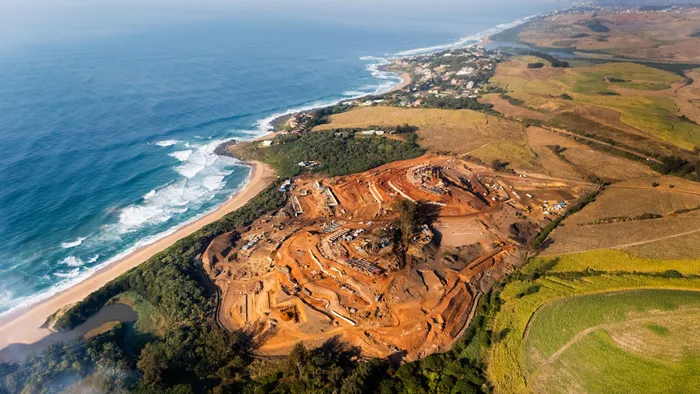
The controversy involves Club Med’s first South African resort at Tinley Manor (also called Club Med Tinley Manor), a R2 billion (~€100 million / $120 million) beach-and-safari development on KwaZulu-Natal’s Dolphin Coast, about 50 km north of Durban. The resort is set to open in July 2026 and sits next to Tinley Manor Beach, bordering the buffer zone of the protected uThukela Banks Marine Protected Area.
The Issue: Proposed Shark Nets and Drumlines
Local authorities (KwaDukuza Municipality) have proposed installing shark nets (around 214 meters) and baited drumlines off the public beach to protect swimmers and tourists, anticipating higher visitor numbers once the resort opens. The KwaZulu-Natal Sharks Board has reportedly greenlit or supported the idea as a standard bather protection measure in the region.
Shark nets are gill nets that entangle and drown sharks (and other marine life), while drumlines use baited hooks. These methods have been used for decades along parts of KZN’s coast to reduce shark attack risk.
Why the Backlash?
Marine scientists, conservation groups (including WILDTRUST and the Anti-Shark Culling Coalition), and organizations like Sharks Under Attack have strongly opposed the plan. Key concerns include:
- Bycatch of endangered species: The area is an important nursery for sharks and rays, with recorded Endangered and Critically Endangered species such as leopard stingrays, eagle rays, loggerhead turtles, and ragged-tooth sharks likely to be caught and killed. The uThukela region is ecologically sensitive and has been earmarked as a sanctuary for these animals.
- Questionable necessity: Critics argue there’s little evidence of a high shark-attack risk at this specific beach to justify lethal measures. They call the approach “outdated” and demand a full environmental impact assessment (EIA) before proceeding.
- Alternatives ignored: Non-lethal options (e.g., drone surveillance, smart drumlines, electric barriers, or education/signage) exist but are not being prioritized, according to opponents.
- Club Med’s sustainability image: The resort markets itself with eco-friendly and sustainable tourism claims (beach + safari experience). Activists argue that supporting or benefiting from lethal shark control undermines this, especially near a marine protected area.
Club Med itself is not directly installing the nets (that’s a municipal/authority matter for the public beach), but it has been drawn into the dispute because the safety measures are tied to increased tourism from the resort. Some reports suggest the environmental consultation for the development referenced the nets.
Broader Context in KZN
South Africa’s east coast has a history of shark attacks, and the Sharks Board manages protection programs at popular beaches. However, there’s growing scientific and public scrutiny of traditional nets due to their environmental toll and improving alternatives. Tourism is economically vital here, but so is marine biodiversity.
The story has picked up international coverage (Bloomberg, France 24, Telegraph, etc.) in recent days, framing it as a clash between tourism development/jobs and conservation.
As of mid-April 2026, the proposal remains contentious, with scientists having lodged formal complaints. No final decision appears locked in, and calls for better assessment and non-lethal solutions continue.
This reflects a common tension in coastal areas worldwide: balancing human safety and economic benefits with ecosystem protection. What aspect of this story interests you most— the science behind shark control, the resort details, or the local politics?