

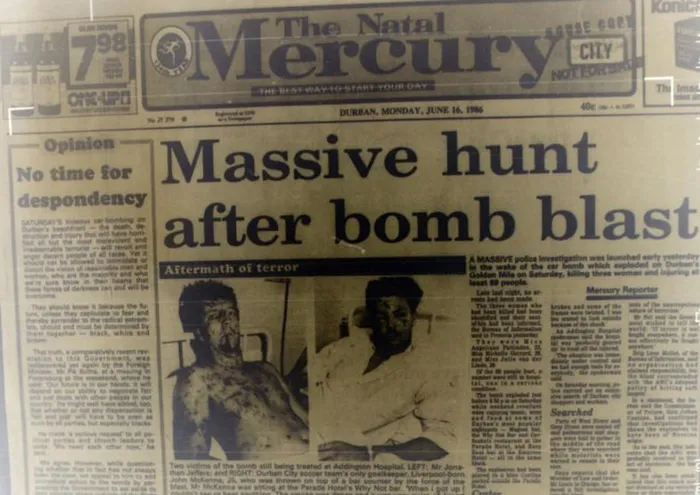
- Casualties: Three civilian women were killed — Angelique Pattenden, Julie van der Linde, and Marchelle Gerrard — and around 69–74 people were injured. Many victims were in or near the Why Not Bar and adjacent Magoo’s Bar.
- Perpetrators: Robert McBride (then an MK unit commander), along with others including Matthew Lecordier. A car bomb (reportedly containing about 60kg of explosives) was detonated outside the venue.
- Context and Intent: The target was selected because it was reportedly frequented by off-duty apartheid security police and military personnel. This occurred amid escalating violence: apartheid forces conducted cross-border raids on ANC targets (often killing civilians), while the ANC shifted toward a “people’s war” strategy following its 1985 Kabwe conference. McBride and others later described it as retaliation in the broader armed struggle.
The bombing was one of the more controversial MK operations because it primarily harmed civilians rather than direct military targets, drawing intense condemnation from the apartheid government and white South Africans at the time. McBride (sometimes called “Bomber McBride” in the press) was arrested, convicted of terrorism, and sentenced to death, but he was reprieved and released in 1992 as part of political negotiations under F.W. de Klerk.
Post-Apartheid Accountability
The Truth and Reconciliation Commission (TRC) examined the incident extensively in the late 1990s. McBride and several other MK operatives applied for and received amnesty. The TRC acknowledged it as a gross violation of human rights but accepted the political motivation and context of the armed struggle. McBride has expressed regret and apologized to victims’ families.
McBride later pursued a career in law enforcement and politics, serving in roles such as chief of metropolitan police in Ekurhuleni, though his past has remained a point of public debate and legal contention.
40 Years On (2026 Reflections)
With the 40th anniversary around 14 June 2026, the event is being revisited as a reminder of apartheid-era atrocities on all sides, the value of the TRC process for truth-telling and reconciliation, and the human cost of political violence. A recent Business Day piece by Michael Schmidt highlights survivor testimonies (e.g., bar server Helen Kearney describing the horrific scene), the backgrounds of those involved, and interviews with victims’ families, such as Candice van der Linde (daughter of Julie van der Linde), who grappled with loss while acknowledging the broader fight against oppression.
It underscores ongoing discussions in South Africa about dealing with the legacy of political violence, prosecutions (or lack thereof) for apartheid-era crimes, and the TRC’s imperfect but significant role in the transition to democracy.