




Background and Context
Phoenix is a densely populated suburb north of Durban in the eThekwini Metropolitan Municipality. Areas like Centenary Park have served communities for decades as recreational spaces, with the park in question reportedly donated around 45 years ago by the National Building Society (NBS) for public use. Residents describe it as a vital green space for children’s play, community gatherings, sports, and safety—especially important in an over-populated area already facing service delivery challenges.
The development stems from the municipality’s Infill Housing Programme (IHP), which aims to provide affordable (“low-cost”) housing on vacant or underutilized municipal land using zoning like SR180 (Special Residential 180). While the intent is to address housing shortages, implementation has sparked significant controversy.
Key Concerns Raised by Residents and Activists
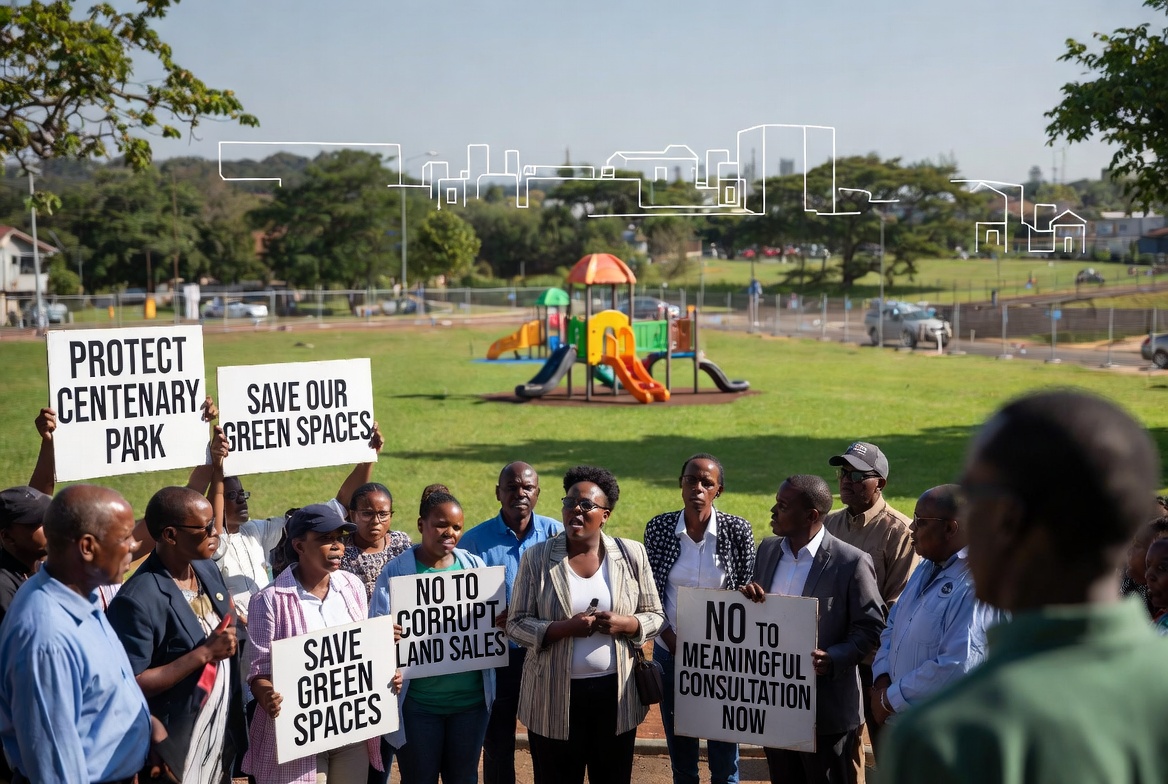
Residents, civic associations (e.g., Centenary Park Civic Association, Phoenix Tenants and Residents Association), and officials gathered at Marstan Place to voice opposition. Main issues include:
- Lack of Public Consultation and Transparency: Many residents reported learning about the development only when marking or fencing began, with little or no prior notice or meaningful participation. This violates principles of public participation in land-use decisions.
- Rezoning and Land Disposal Processes: Concerns over the SR180 zoning blanket application to convert public open spaces. Residents argue parks are not mere “vacant land” but essential community assets for health, recreation, and social cohesion.
- Environmental Impacts: Allegations of removal of protected vegetation and indigenous trees. Deputy Minister Narend Singh committed to investigating potential breaches of environmental legislation.
- Link to SIU Report Findings: A 2023 (with follow-ups) Special Investigating Unit (SIU) report into eThekwini’s land disposal under the IHP highlighted irregularities, non-compliance with the Constitution, Municipal Finance Management Act (MFMA), and Supply Chain Management (SCM) policies. Specific developers (e.g., Lady Brick Block Property Developments / Woodglaze Trading, Madupha Business Enterprise, Ready Homes) were implicated in improper appointments and allocations. Some were recommended for blacklisting, yet concerns persist about continued dealings.
- Infrastructure Strain and Broader Impacts: Phoenix already faces water pipe bursts, potholes, sewer overflows, and service delivery issues. Additional housing without upgrades could exacerbate these problems, affecting quality of life.
Similar protests and legal considerations are occurring in nearby areas like Starwood, Lenham, and Campbell’s Town, indicating a pattern.
Perspectives from Officials and Stakeholders
- Deputy Minister Narend Singh (Forestry, Fisheries and Environment; DDM Champion for eThekwini): Acknowledged concerns about consultation, governance, and environment. Pledged engagement with municipal authorities and investigation into vegetation removal.
- IFP Councillor Dr. Jonathan Annipen: Highlighted the need for policy review on infill housing and public open spaces to ensure transparency and community voice.
- Municipality: Has not fully responded in recent reports. Past statements (e.g., from the mayor) acknowledged some sales as mistakes, but implementation lags. The SIU report underscores systemic issues.
Nuances, Implications, and Edge Cases
This conflict embodies classic trade-offs in urban planning:
- Housing vs. Livability: South Africa faces a massive housing backlog. Infill development can be efficient, but converting functional parks risks long-term social and environmental costs, potentially worsening inequality if new housing doesn’t adequately serve locals or strains services.
- Governance and Corruption Risks: The SIU findings point to deeper maladministration. Lack of accountability (e.g., blacklisting not enforced, implicated officials remaining influential) erodes trust. Delays in acting on reports fuel perceptions of impunity.
- Environmental and Heritage Aspects: Parks provide green lungs in urban areas, support biodiversity, and hold community history (e.g., links to indentured labour legacies in some Phoenix areas).
- Legal and Policy Angles: Developments must comply with public participation requirements, environmental impact assessments (EIAs), and SCM rules. Failures open doors to objections, court challenges, or national intervention.
- Broader Context: Similar tensions exist in other South African municipalities and globally, where densification policies clash with NIMBY (Not In My Backyard) sentiments or legitimate local needs. Phoenix’s issues are compounded by historical planning and post-apartheid development pressures.
Potential Paths Forward:
- Strengthened public participation and independent reviews.
- Enforcement of SIU recommendations (blacklisting, recoveries, disciplinary action).
- Alternatives like developing non-park open spaces or prioritizing infrastructure upgrades.
- Policy reforms balancing housing goals with preservation of recreational spaces.
- Community legal action or escalated national oversight if local processes fail.
This situation highlights the importance of inclusive, transparent governance in balancing urgent housing needs with sustainable community development. Residents’ unity demonstrates civic engagement, while official responses will test the municipality’s commitment to accountability.