


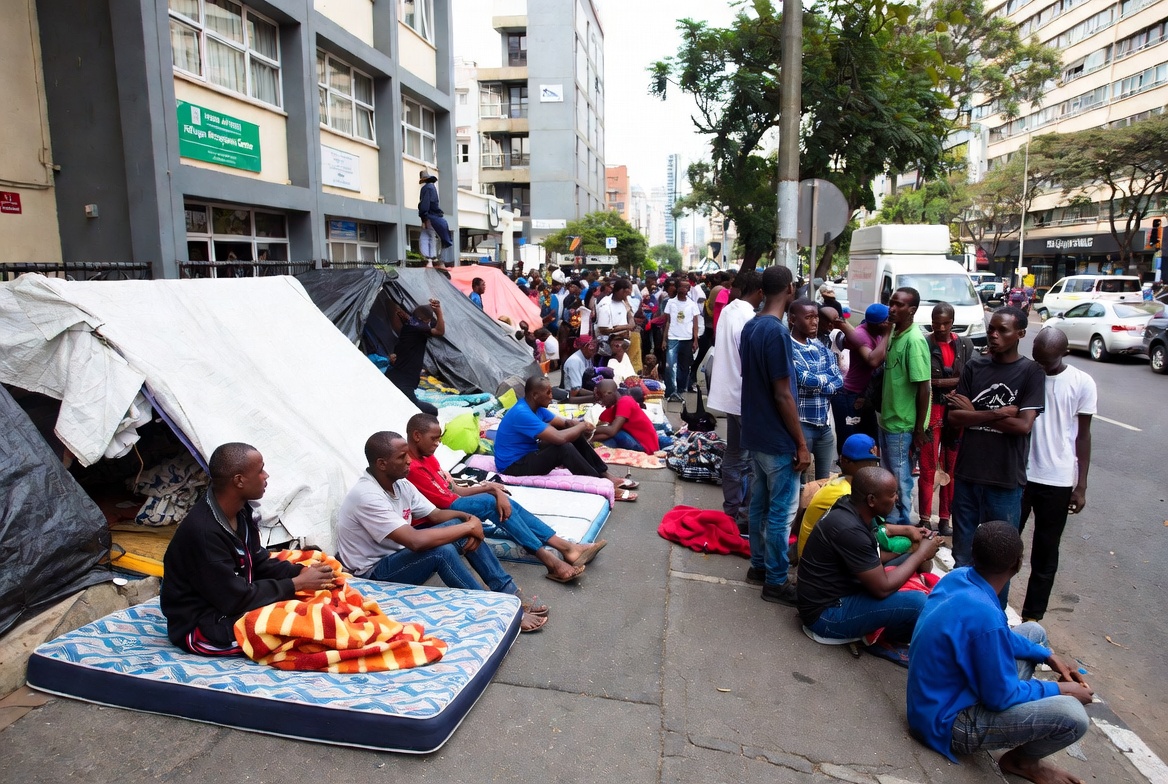
They report fleeing recent xenophobic threats and intimidation in their communities and say they have nowhere safe to return to, despite many holding legal documentation.
Background and Immediate Context
This protest camp emerged amid heightened anti-immigrant tensions in South Africa. Organizers of protests set an unofficial June 30, 2026, deadline for undocumented foreigners to leave the country. This triggered displacements, with reports of threats, attacks on foreign nationals (including Malawians and others), and large temporary camps elsewhere in Durban and KwaZulu-Natal.
Many in the Home Affairs camp are from countries like the Democratic Republic of Congo (DRC), Gabon, Sudan, and others. They emphasize they are legally in South Africa with asylum seeker permits (Section 22) or refugee permits (Section 24). Home Affairs officials reportedly verified most as documented, with very few undocumented individuals found during checks.
They sleep on pavements, facing harsh conditions (cold, exposure, limited sanitation). They demand temporary shelter, protection, and humanitarian assistance while a longer-term solution is sought. Some have been there for seven weeks or more.
Government and Local Response
- Home Affairs: The camp is outside their Refugee Reception Office. They have conducted verifications and turned away undocumented individuals. Broader efforts include fast-track courts for immigration cases, recruitment of more immigration officers, and addressing backlogs in asylum processing.
- eThekwini Municipality: Mayor Cyril Xaba faced criticism for comments interpreted as framing the group as seeking “free housing.” Authorities have issued ultimatums urging return to communities.
- National Government: Emphasis on distinguishing documented refugees/asylum seekers from undocumented migrants. President Cyril Ramaphosa and officials have called for peaceful protests and managed deportations/repatriations (thousands occurred around the deadline). There are also Constitutional Court rulings tightening repeat asylum applications to curb system abuse.
Humanitarian aid appears limited on-site; NGOs, churches, and community groups may provide some support, but conditions remain dire.
Root Causes and Broader Context
Xenophobia and Socio-Economic Pressures: South Africa faces high unemployment, inequality, service delivery protests, and competition for jobs/housing in informal settlements. Foreign nationals (often in small businesses, retail, or labor) are scapegoated during tensions. Historical patterns of xenophobic violence (e.g., 2008, 2015, 2019) recur, fueled by rumors of crime or resource strain.
Immigration System Challenges:
- South Africa hosts a large number of asylum seekers/refugees; backlogs have been massive.
- Many enter legally but face delays in status determination, renewals, or documentation.
- Distinction between genuine refugees (fleeing persecution) and economic migrants is contentious.
- Recent policies aim to strengthen enforcement, biometrics, and deter abuse while meeting international obligations (1951 Refugee Convention, etc.).
Nuances: Not all foreign nationals are targeted equally. Legally documented individuals still face generalized threats. Some communities differentiate between “refugees” and “undocumented,” but fear spills over. Malawians and others sought repatriation, while this group seeks protection within South Africa.
Implications and Multiple Angles
Humanitarian: Prolonged pavement living risks health issues (exposure, disease, trauma), especially for vulnerable groups (women, children, elderly). Children may miss schooling; mental health impacts from prior displacement plus current limbo are significant. International standards require non-refoulement (not returning people to harm) and basic assistance.
Legal/Policy: South Africa must balance refugee rights with sovereignty and domestic pressures. Providing temporary shelters could set precedents or strain resources. Failure to protect documented refugees risks court challenges, reputational damage, and deterred future investment/aid. Edge case: How to verify ongoing threats? Individual risk assessments vs. group solutions.
Social/Political: Fuels division. Critics argue lax immigration enables abuse; supporters highlight SA’s historical role in hosting exiles (anti-apartheid era) and constitutional values. Mayor’s comments highlight tensions between local service delivery burdens and national responsibilities. Long-term: Integration challenges, social cohesion programs needed.
Economic: Foreign nationals contribute to economy (entrepreneurship, taxes, labor). Mass displacement disrupts businesses and local supply chains. Repatriation costs money; shelter/protection also does. Broader migration management affects regional stability (SADC dynamics).
International: UNHCR and partners monitor; potential for increased scrutiny or aid requests. Neighboring countries (e.g., Malawi) deal with returnees. Reflects global migration pressures amid conflict, climate, and inequality.
Related Considerations and Edge Cases
- Documentation Issues: Permits expire or require renewal; bureaucracy can leave people in limbo.
- Mixed Motives: While most here claim legal status and fear, opportunistic elements exist in larger migration debates.
- Alternatives: Temporary safe sites, accelerated processing, community reintegration with police protection, or third-country options (rare).
- Prevention: Addressing root xenophobia through job creation, service delivery, and anti-hate initiatives. Data on actual crime contributions by nationality is debated and context-specific.
- Comparisons: Similar to past SA displacements or global cases (e.g., refugee camps in Europe, Middle East) where legal status doesn’t guarantee safety.
This situation underscores deep fault lines in South African society and governance. Short-term de-escalation (shelter, dialogue) is urgent, while long-term solutions require tackling inequality, efficient asylum systems, and inclusive growth. Outcomes could influence national politics, regional relations, and SA’s global standing on human rights.