

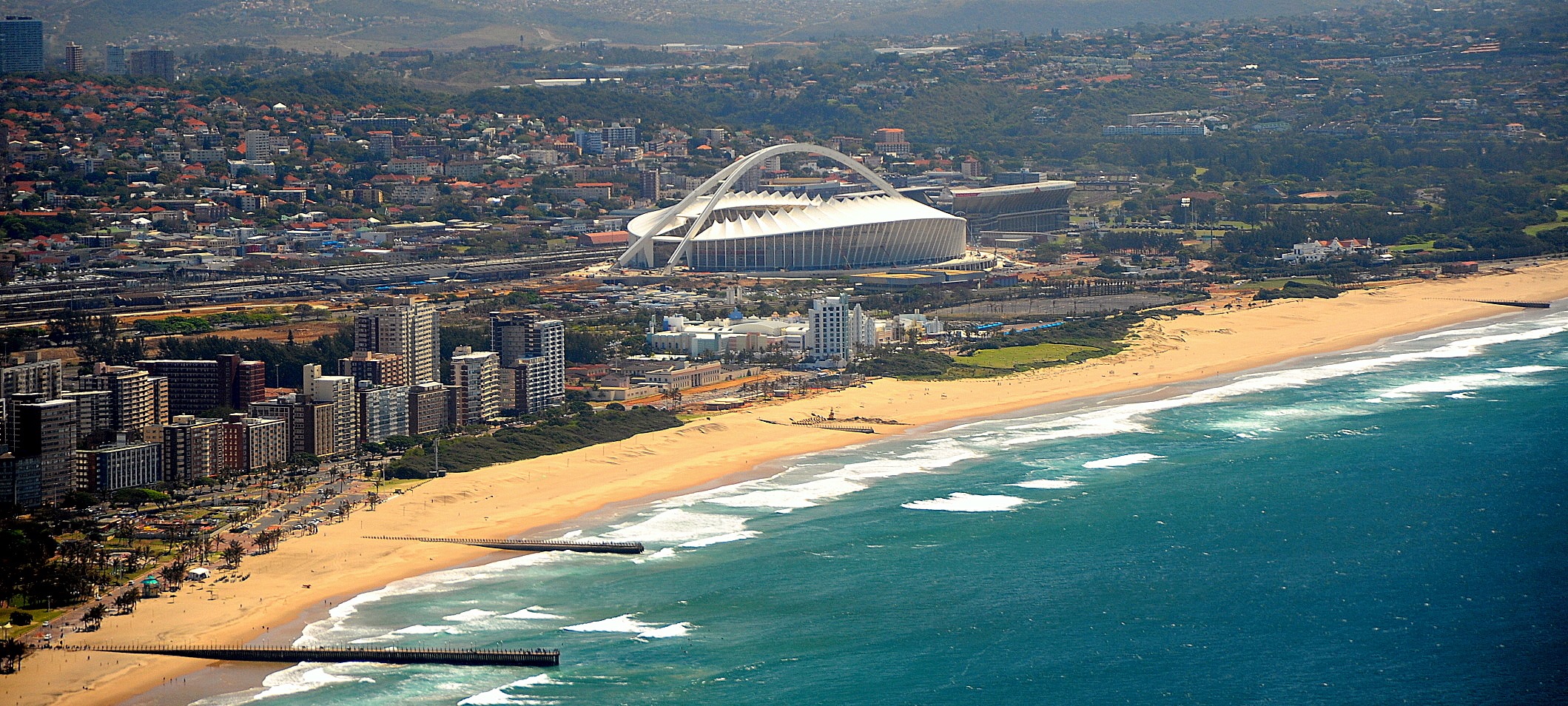
Moses Mabhida Stadium is a prominent multi-purpose soccer stadium in Durban, KwaZulu-Natal, South Africa. It is located at 44 Walter Gilbert Road in Stamford Hill, adjacent to the older Kings Park Stadium (now often associated with rugby).
Naming and Background
The stadium is named after Moses Mbheki Mncane Mabhida (1923–1986), a key anti-apartheid activist, trade unionist, and former general secretary of the South African Communist Party (SACP). He played a significant role in the liberation struggle and the formation of a united front against apartheid. His remains were repatriated from Mozambique in 2009, around the time of the stadium’s completion. A memorial wall inside the stadium honors his contributions.
Originally, there were discussions about naming it after a Zulu royal figure (such as King Senzagakhona), but it was ultimately dedicated to Mabhida to reflect themes of unity and freedom in post-apartheid South Africa.
Construction and Design
Construction broke ground in 2006 and was largely completed between 2007 and 2009 at a cost of approximately R3.4 billion (around US$450 million at the time). The project was part of South Africa’s preparations to host the 2010 FIFA World Cup and aimed to create a lasting legacy for Durban, including economic benefits like job creation (estimated at around 14,000 jobs) and regional investment.
The iconic design, by the German firm Gerkan, Marg und Partner (in collaboration with local partners in the Ibola Lethu Consortium), features a dramatic 350-meter-long (about 1,148 ft) “arch of triumph” that rises to 106 meters at its peak. This arch symbolizes the “Y” shape of the South African national flag, representing the coming together of a divided nation into unity. The stadium has a fully covered roof with a membrane structure and incorporates green building elements.
It was built to be flexible for multiple uses, including soccer, rugby, athletics, concerts, and large events. Post-World Cup, the seating was adjusted from a World Cup capacity of around 62,760–70,000 down to a regular capacity of about 55,500 (with potential expansion to 75,000 for major events like the Commonwealth Games).
Opening and 2010 FIFA World Cup
The stadium was officially completed on 24 November 2009 and opened to the public shortly after. The first official match was on 29 November 2009 between AmaZulu and Maritzburg United (Maritzburg won 1–0).
It served as one of the key venues for the 2010 FIFA World Cup (referred to as “Durban Stadium” during the tournament). It hosted seven matches in total:
- Five group stage games
- One round-of-16 match (Netherlands vs Slovakia, 2–1)
- The semi-final between Spain and Germany (Spain won 1–0)
The atmosphere was electric, with high-profile attendees and strong local support. The event boosted Durban’s profile and contributed significantly to the local economy through tourism and related activities.
Post-2010 Legacy and Use
After the World Cup, the stadium has been used for a wide range of events beyond soccer (AmaZulu F.C. has been a tenant). It has hosted:
- Rugby matches (occasionally, including by the Sharks)
- Concerts and music festivals
- Other sports like cricket, motorsports, and even bungee jumping from the arch
- Corporate events, conferences, and large public gatherings (e.g., the 2022 coronation events related to Zulu King Misuzulu)
It has won multiple awards for its architecture and operations, including Stadium of the Year in 2011. However, like many World Cup venues, it has faced challenges with ongoing maintenance costs and finding consistent anchor tenants, leading to periods of financial strain.
The stadium includes adventure attractions like a sky car ride up the arch, a big swing, and views over Durban, making it a tourist draw as well.
Recent Developments (2025–2026)
As of late 2025 and into 2026, the stadium has been undergoing major renovations and rehabilitation work, estimated at R236–284 million. This includes:
- Pitch restoration
- Structural upgrades to address long-term design and stability issues (e.g., roof cables)
- Safety enhancements
- Additions like an improved sky car, zip line, and other visitor experiences
The work aims to ensure the venue remains safe and competitive for future events, as it had not seen significant refurbishment since 2009–2010. Some sources indicate ongoing or phased completion into 2027.
Today, Moses Mabhida Stadium stands as an architectural landmark and symbol of Durban’s sporting and cultural pride—often called a “sporting cathedral”—with its striking arch visible across the city skyline. For the latest visitor info, events, or tours, check the official site at mmstadium.com.