

- Casualties: One person died. The victim has been identified only by the surname Ntuli. Authorities, including the South African Police Service (SAPS), are still working with community leaders and neighbours to trace and notify next of kin.
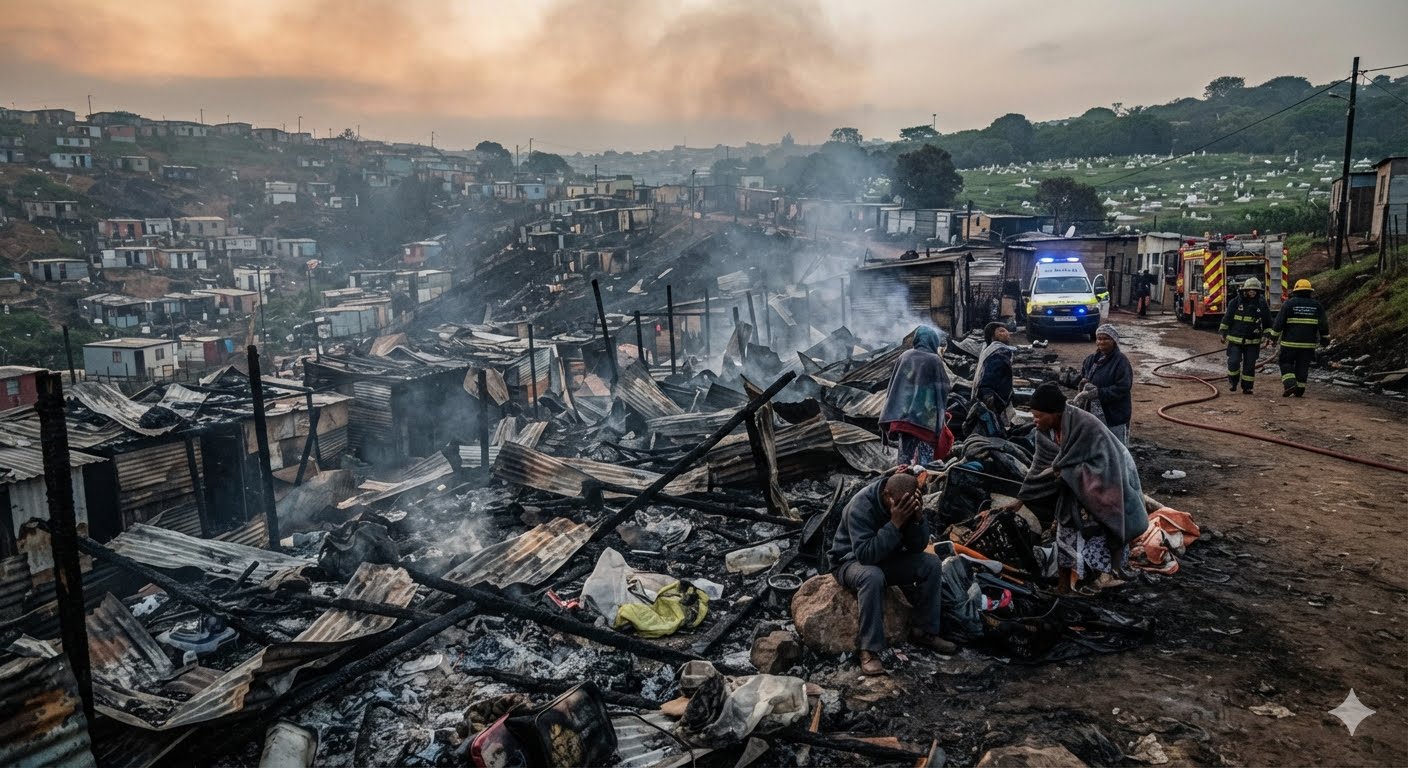
- Damage: Approximately 60 shacks were destroyed or severely damaged.
- Displacement: More than 70 residents (reports vary slightly, with some mentioning up to 150 affected people in broader terms) were left homeless amid cold winter conditions.
eThekwini Municipality’s emergency and disaster management teams responded swiftly and contained the blaze, preventing it from spreading further and potentially saving many more lives. KZN MEC for Transport and Human Settlements Siboniso Duma and departmental spokesperson Ndabezinhle Sibiya praised the integrated response involving provincial, municipal, and national departments.
Response and Support
- An intergovernmental team (including the Department of Human Settlements, eThekwini disaster management, and others) was deployed to the scene for immediate assistance, focusing on vulnerable groups like children exposed to the bitter cold.
- Relief efforts likely include temporary shelter, blankets, food, and rebuilding support. Organizations such as Gift of the Givers have historically responded to similar fires in the area.
- SAPS is investigating the cause of the fire, which remains undetermined as of the latest reports. Common causes in such settlements include unattended paraffin stoves, candles, electrical faults from illegal connections, or arson, though no speculation has been confirmed.
Broader Context and Implications
Informal settlements like Malacca Road face heightened fire risks due to:
- Dense, makeshift construction: Shacks built from highly flammable materials (wood, plastic, cardboard) with minimal spacing.
- Lack of infrastructure: Limited or no formal electricity, water access, or firebreaks; reliance on open flames for cooking/heating.
- Winter conditions: Increased use of heating sources in cold weather exacerbates risks.
- Socio-economic factors: High poverty, rapid urbanization, and pressure on housing in Durban/eThekwini.
This is not an isolated event. Similar fires have occurred in the same or nearby settlements in past years (e.g., a 2020 incident in Malacca Road also claimed a life). South Africa sees dozens of such deadly shack fires annually, often in KZN, Gauteng, and Western Cape, highlighting systemic challenges in upgrading informal settlements, providing safe electricity, and enforcing safer building practices.
Nuances and edge cases:
- Response times can vary dramatically in informal areas due to narrow access paths and water shortages.
- Identification of victims can be delayed if records are incomplete.
- Long-term recovery involves not just immediate aid but land tenure security, relocation options, and prevention (e.g., community fire education, early warning systems).
- Climate and seasonal factors: Winter winds can fan flames quickly.
Authorities have emphasized condolences and ongoing support. For those affected, reaching out to local ward councillors (e.g., Mandla Biyela), the Department of Human Settlements, or NGOs could provide further assistance.