



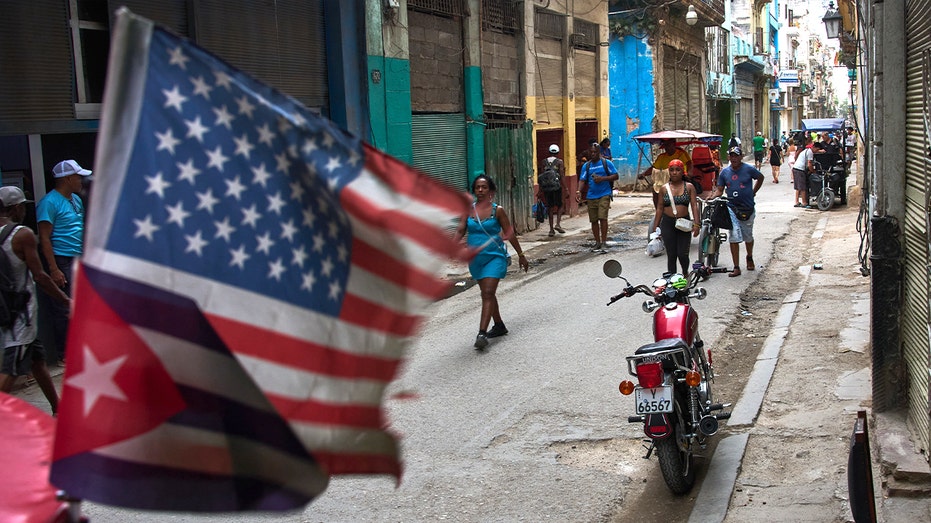
A nationwide blackout left Cuba in darkness on Monday, highlighting the worsening energy crisis straining the country’s fragile power infrastructure.
Approximately 10 million people were affected before partial electricity service resumed in certain regions.
“The National Electric Power System has experienced a complete disconnection,” Cuba’s state-run Electric Union announced Monday morning. “The underlying causes are under investigation.”
In recent years, Cuba has endured increasingly common blackouts due to persistent fuel shortages and aging power networks. The situation deteriorated further after former President Donald Trump introduced stricter sanctions in January and warned of tariffs on nations supplying oil to the island.
During Monday’s outage, public transit ground to a halt, and officials reported that tens of thousands of medical procedures were called off across the country, according to The Associated Press (AP).
Around two hours after the system failed, authorities confirmed that one power generation unit had restarted.
“Microgrids across the nation are now functioning to safeguard essential services,” the Electric Union stated.
The energy minister said restoration efforts were underway and pointed to U.S. policies as a contributing factor in the ongoing power struggles.
“Critical services remain protected despite this difficult scenario, intensified by the energy blockade we are subjected to,” said Vicente de la O Levy.
President Miguel Díaz-Canel also attributed the crisis to American actions, calling the energy restrictions a “genocidal” tactic by Washington.
“As the U.S. seeks to provoke social unrest through…”
h asphyxiation by blocking fuel access to #Cuba, the UNE mobilizes to reverse the SEN outage,” Díaz-Canel said, referring to Cuba’s National Electric Power System.
“What the electrical workers are doing in the midst of a genocidal energy blockade is heroic.”
Cuba’s energy crisis intensified earlier this year after a U.S. military operation captured Venezuelan President Nicolás Maduro and halted Venezuelan oil exports, cutting off a key source of fuel for the island.
While Cuba produces only about 40% of the fuel it needs, a Russian tanker delivered roughly 730,000 barrels of oil to the country in March, supplies that were depleted by the end of April, according to The AP.
To conserve fuel, the Cuban government has imposed scheduled power outages that have lasted more than 24 consecutive hours in some areas, the outlet said.
A blackout in early March affected Cuba’s western provinces, while a separate outage in mid-March plunged the entire island into darkness.