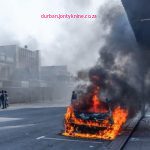


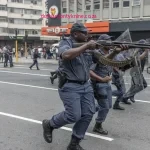
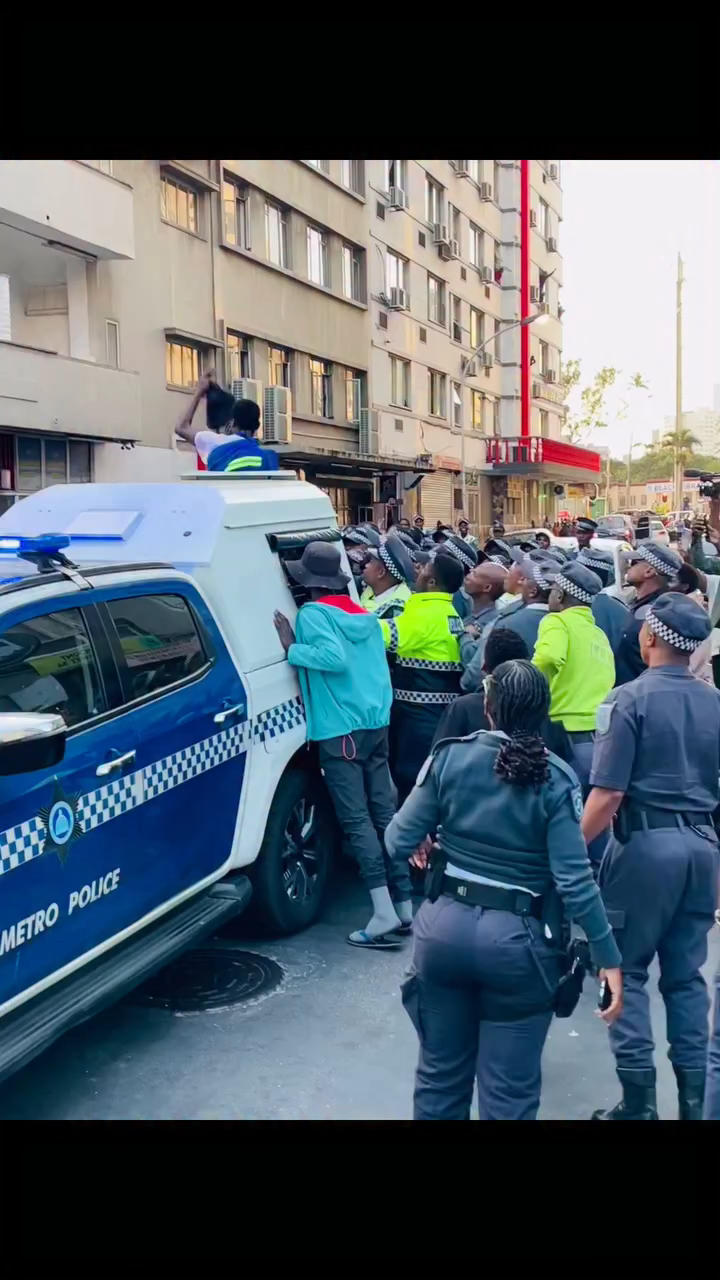
- Early frames (0–~30s): Durban Metro Police officers and vehicles (blue-and-white bakkies marked “METRO POLICE”) are shown in a tense confrontation or crowd-control situation on a street. Officers in standard uniforms, high-visibility vests, and caps interact with a group of people. One man in a light blue/green hoodie appears agitated or involved in pushing/interacting near a police vehicle. This looks like an arrest, dispersal, or enforcement action.
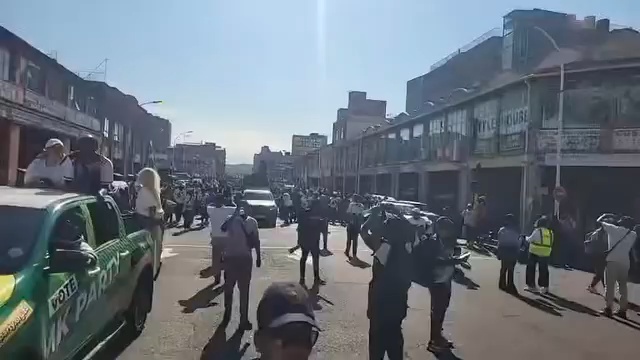
- Later frames (~30s onward): The scene shifts to a massive, dense crowd of South African protesters filling the streets (e.g., near Gillespie Street, Dr Pixley KaSeme Street/West Street, areas with KFC, Palmerston Hotel, and other CBD landmarks). People are marching, recording on phones, waving South African flags, and moving through the city. The atmosphere is that of a large demonstration rather than a riot, though earlier police activity suggests tensions.
The video title “Durban central is being cleaned” is likely sarcastic or rhetorical, referring to the protesters’ goal of “cleaning” the area of undocumented immigrants, foreign-owned businesses, or related issues, rather than literal street sweeping.
Broader Context
This footage aligns with nationwide anti-illegal immigration protests in South Africa, particularly intense in Durban and Johannesburg around 30 June 2026. Key background:
- Organizing Group: “March and March” (sometimes associated with local activists) called for actions against illegal immigration, demanding stricter border controls, deportation of undocumented foreigners, and action against non-compliant businesses (often alleged to be foreign-owned). They framed it as a “clean-up campaign” in Durban’s CBD.
- Triggers: Long-standing grievances over unemployment, crime, housing shortages, and competition for resources, blamed (by protesters) on undocumented migrants. There were prior incidents involving foreign nationals protesting for safety, clashes, and police operations targeting non-compliant shops/undocumented individuals.
- Scale and Impact: Thousands participated. Much of the Durban CBD shut down (over 95% of shops closed out of fear). Heavy police (including Metro Police) and security presence. Reports of rubber bullets in some related incidents, arrests (hundreds to over 900 nationwide for various offenses, including looting in places), and military deployment in hotspots.
- Locations: Matches visible landmarks — Palmerston Hotel, KFC on what appears to be areas like Smith/Gillespie/Dr Pixley KaSeme streets, high-rises typical of Durban CBD.
Nuances and Implications
- Perspectives: Protesters viewed it as reclaiming the city and addressing economic pressures. Critics labeled it xenophobic, noting risks to legitimate foreign nationals and potential for violence/looting. Foreign nationals had held counter-protests demanding protection.
- Police Role: Visible in the video enforcing order, making arrests, or managing crowds. Joint operations often targeted undocumented migrants and by-law violations.
- Edge Cases: Not all participants were violent; many were peaceful marchers. However, such events can escalate quickly, leading to business closures, economic disruption, and heightened community tensions. Similar “clean-up” or protest actions have occurred before in Durban.
- Timing: Around early July 2026 (current context), following the major 30 June actions, with ongoing ripple effects.
This is part of recurring socio-economic and migration-related tensions in South Africa, where urban centers like Durban see periodic flare-ups. The video shows both the enforcement side (police) and the protest scale.