





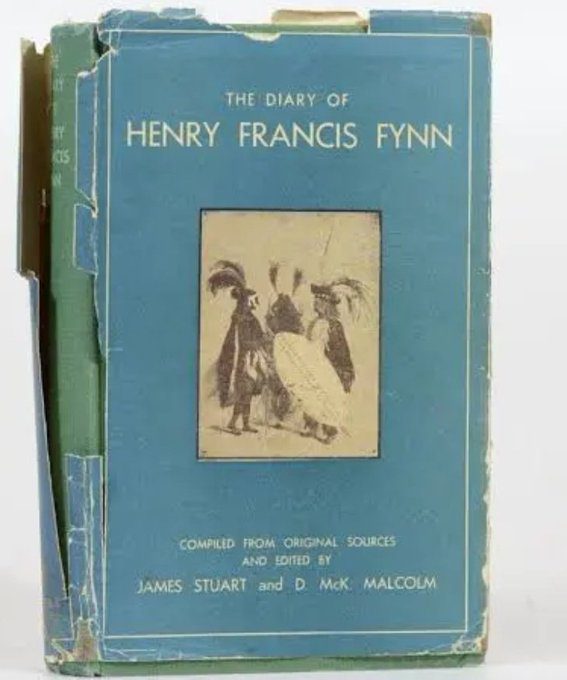
The published Diary (edited by James Stuart and D. McK. Malcolm and issued by Shuter & Shooter in 1950 in a limited edition of 1,700 copies) is not a straightforward contemporary daily journal. Fynn kept notes from around 1824 onward, but the bulk of the surviving material appears to have been written or compiled later (circa 1840s) from memory and papers. It underwent extensive editorial intervention: Stuart worked on it intermittently from about 1905 to 1942; Malcolm completed the work after Stuart’s death, with publication in 1950. The original notebook is said to have been buried according to Zulu custom with Fynn’s younger brother Frank.
Despite these layers of mediation, the Diary remains one of the most important European eyewitness accounts of Shaka’s court, military organization, customs, the mfecane/Difaqane-era upheavals, mass ceremonies, and daily life. It includes descriptions of Fynn’s arrival, the first meetings, Shaka’s personality and rule, campaigns (such as against the Ndwandwe), the death of Shaka’s mother Nandi and associated mourning/massacres, and the king’s assassination in 1828. Scholars have long treated it as a foundational source, though critical reassessments (e.g., by J.B. Gewald, Dan Wylie, and others) highlight exaggerations, inconsistencies, retrospective shaping, and the influence of later colonial agendas. It should be read alongside Nathaniel Isaacs’s Travels and Adventures in Eastern Africa (1836) and oral traditions, with awareness of its constructed character.
Extracts and popular editions (such as Meeting Shaka: From the Diary of Henry Francis Fynn) continue to circulate, offering accessible windows into the period.
Later Life and Legacy
After Shaka’s assassination by his half-brothers Dingane and Mhlangana in 1828, relations with the Zulu court deteriorated. Dingane ordered an attack on Fynn’s settlement; Fynn survived and eventually left Natal for the Cape, where he served as an interpreter, diplomatic agent, and official (including during frontier conflicts). He returned to Natal later and died in Durban on 20 September 1861.
Fynn’s relationship with Shaka exemplifies the pragmatic alliances of the early contact period: mutual benefit through trade, medical knowledge, information, and prestige, set against the backdrop of Zulu expansion and the beginnings of European settlement that would transform the region. His descendants form part of a distinctive mixed heritage community with ongoing historical and legal claims rooted in the original royal grants. The Diary, for all its editorial complexities, continues to shape understandings of Shaka and the founding of colonial Natal, while modern scholarship stresses the need to balance it with Zulu oral histories and critical source analysis.
Fynn was portrayed by Robert Powell in the 1986 television series Shaka Zulu, which popularized (and dramatized) aspects of this history. Primary materials related to the Fynn papers and diary are held in South African archives and have been digitized in projects such as the Five Hundred Year Archive (FHYA/EMANDULO).