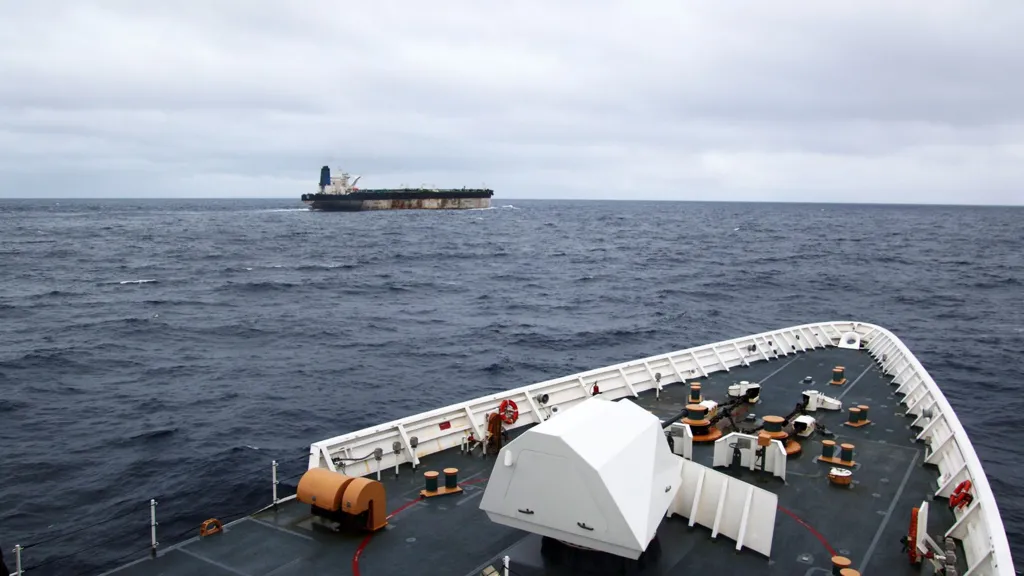





This came immediately after the Trump administration’s announcement of “Operation Economic Outcast” (also described by U.S. officials as an “economic D-Day” or campaign of “economic asphyxiation”). The U.S. Treasury sanctioned dozens of individuals, entities, and vessels (reports vary between roughly 60 and more, with a significant share linked to China/Hong Kong) and expanded secondary-sanctions authorities covering sectors such as digital assets, technology, gold, aviation, and shipping. The explicit goal was to sever Iran’s remaining economic lifelines and pressure third countries to cut ties.
Official Chinese Position and Framing
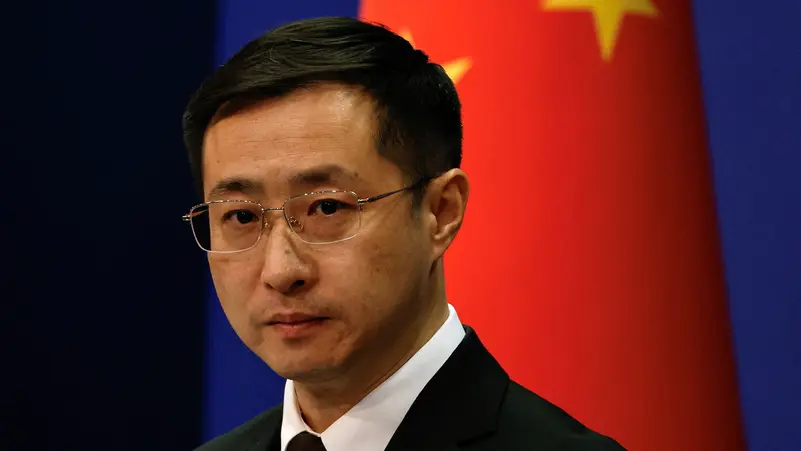
China’s core arguments, as articulated by Lin Jian and consistent with longstanding policy, are:
- Opposition to unilateral sanctions: Beijing views U.S. measures not authorized by the UN Security Council as illegal under international law. It argues that “economic warfare and maximum pressure” escalate tensions, create spillover risks, disrupt the global economic and financial order, and harm other countries’ legitimate interests rather than solving problems. The priority, China says, should be de-escalation and a return to dialogue/negotiation.
- Legality and sovereignty of bilateral cooperation: China insists its ties with Iran operate within international law and therefore should not face external interference.
- Self-defense of interests: The warning about taking “all necessary measures” signals potential retaliation or continued non-compliance if Chinese entities or trade flows are heavily targeted.
This is not a new stance—China has repeatedly rejected secondary sanctions on Iran (and other partners) for years—but the timing and directness reflect the intensity of the latest U.S. push and the fact that Chinese/Hong Kong firms were among those designated.
Underlying Strategic and Economic Reasons
China’s position is driven by concrete interests rather than pure ideology:
- Energy security and oil trade: China has long been by far the largest buyer of Iranian oil—historically accounting for the vast majority (often cited in the 80–90% range) of Iran’s exported crude, frequently purchased at discounts by independent “teapot” refiners. Even with disruptions from the ongoing conflict (including Strait of Hormuz issues, blockades, and reduced flows in 2026), Iranian barrels remain a meaningful (if diminished) part of China’s import mix and a source of cheaper feedstock. Severing this trade would raise costs and complicate supply diversification.
- Broader economic and strategic partnership: China and Iran maintain a “comprehensive strategic partnership” (elevated in recent years, building on a 25-year cooperation framework). Bilateral trade, while not enormous in absolute terms outside oil, includes other sectors, and China has provided diplomatic cover and practical workarounds for sanctions. Abandoning Iran under U.S. pressure would undermine Beijing’s credibility as a reliable partner for countries seeking alternatives to Western-led systems.
- Geopolitical principles and multipolarity: China’s foreign policy emphasizes non-interference, opposition to “hegemonism,” and a multipolar order. Yielding to secondary sanctions would set a precedent that weakens its ability to resist similar pressure elsewhere (e.g., on Russia or other partners). It also aligns with Beijing’s preference for managing Middle East tensions through diplomacy rather than maximum pressure, especially given its large energy imports from the broader Gulf and desire to avoid wider regional instability that could spike oil prices or disrupt shipping.
- Context of the wider conflict: The statement occurs against the backdrop of the 2025–2026 U.S./Israel–Iran conflict (including military actions, cease-fire efforts mediated partly involving Pakistan and China, Strait of Hormuz navigation disputes, and fluctuating oil flows). China has balanced rhetorical support for Iran’s sovereignty with practical pressure for de-escalation and open shipping lanes, reflecting its dual interests in energy security and avoiding entanglement. Publicly defending economic cooperation signals it will not fully isolate Tehran even while preferring negotiations.
Nuances, Limitations, and Implications
China’s language is firm but calibrated. It does not announce specific retaliatory steps or claim a formal military alliance; Beijing has historically avoided binding defense commitments to Iran and has prioritized relations with Gulf Arab states as well. In practice, Chinese buyers and firms have sometimes shown caution when secondary-sanctions risks rise (e.g., shifts in purchasing patterns or use of intermediaries/shadow fleets). The U.S. package itself stopped short of immediately designating major Chinese banks or imposing the most sweeping measures, partly reflecting the risks of broader financial disruption and an upcoming leaders’ summit.
Potential implications include further friction in U.S.–China relations, continued (if reduced) Iranian oil flows to China via workarounds, possible Chinese countermeasures (e.g., support for alternative payment/settlement mechanisms or reciprocal restrictions), and sustained Chinese diplomatic emphasis on negotiations over isolation. For Iran, China’s stance provides a critical economic and political lifeline, though one that has proven limited in preventing military or severe sanctions pressure.
In short, China’s statement defends its legal and economic autonomy, protects tangible energy and partnership interests, rejects the legitimacy of unilateral U.S. secondary sanctions, and signals resolve against being coerced into isolating a strategic partner—while still preferring de-escalation of the underlying conflict.