



Background and recent escalation
Tensions date back months. Foreign nationals began camping outside the centre after fleeing perceived threats in their communities (around May 2026 onward). March and March has staged weekly or near-weekly actions demanding enforcement of immigration laws, clearance of the pavements, and an end to what they describe as unchecked asylum processing. Clashes have involved stones, verbal confrontations, and police interventions with stun grenades, tear gas, rubber bullets and pepper spray on multiple occasions (including early September and early October 2026).
A major spike occurred around 6–10 October 2026:
- March and March disrupted asylum queues and effectively shut down or heavily disrupted operations at the Home Affairs centre, blocking entrances and turning people away.
- Protests spread into the Durban CBD and surrounding areas (Pixley ka Seme/West Street, Point, Umbilo, etc.). Violence included vehicles being torched (reports of around 14 in Durban), shops looted or damaged (especially those perceived as foreign-owned), buildings/houses set alight, and a scrapyard/tyre-related sites burned.
- Triggers cited in reports included an alleged assault or shooting involving a demonstrator and foreign nationals, plus broader anger over a Constitutional Court ruling and subsequent Home Affairs directives that eased or reopened certain asylum application pathways. Home Affairs later adjusted/withdrew aspects of the directive amid the unrest.
- Police made multiple arrests (around 19 in connection with the Durban events, facing charges such as public violence and malicious damage to property). Some earlier arrests involved allegations of discharging a firearm.
Security response
KwaZulu-Natal Premier Thami Ntuli requested national support. The SANDF (South African National Defence Force) was deployed to Durban to assist police with public order and securing key areas, authorised under constitutional provisions, with the presence planned until at least 31 October 2026. Official statements emphasise that soldiers support police in preventing crime and disorder, not in targeting peaceful protest, and that lawful, unarmed assembly remains protected.
Heavy SAPS Public Order Police and Metro Police deployments have been visible at the Home Affairs site and along Moore/Che Guevara Road, forming barriers between groups, dispersing crowds when needed, and monitoring the area. Soldiers have also been present in the vicinity.
Reports of shots on or around 15–16 October 2026
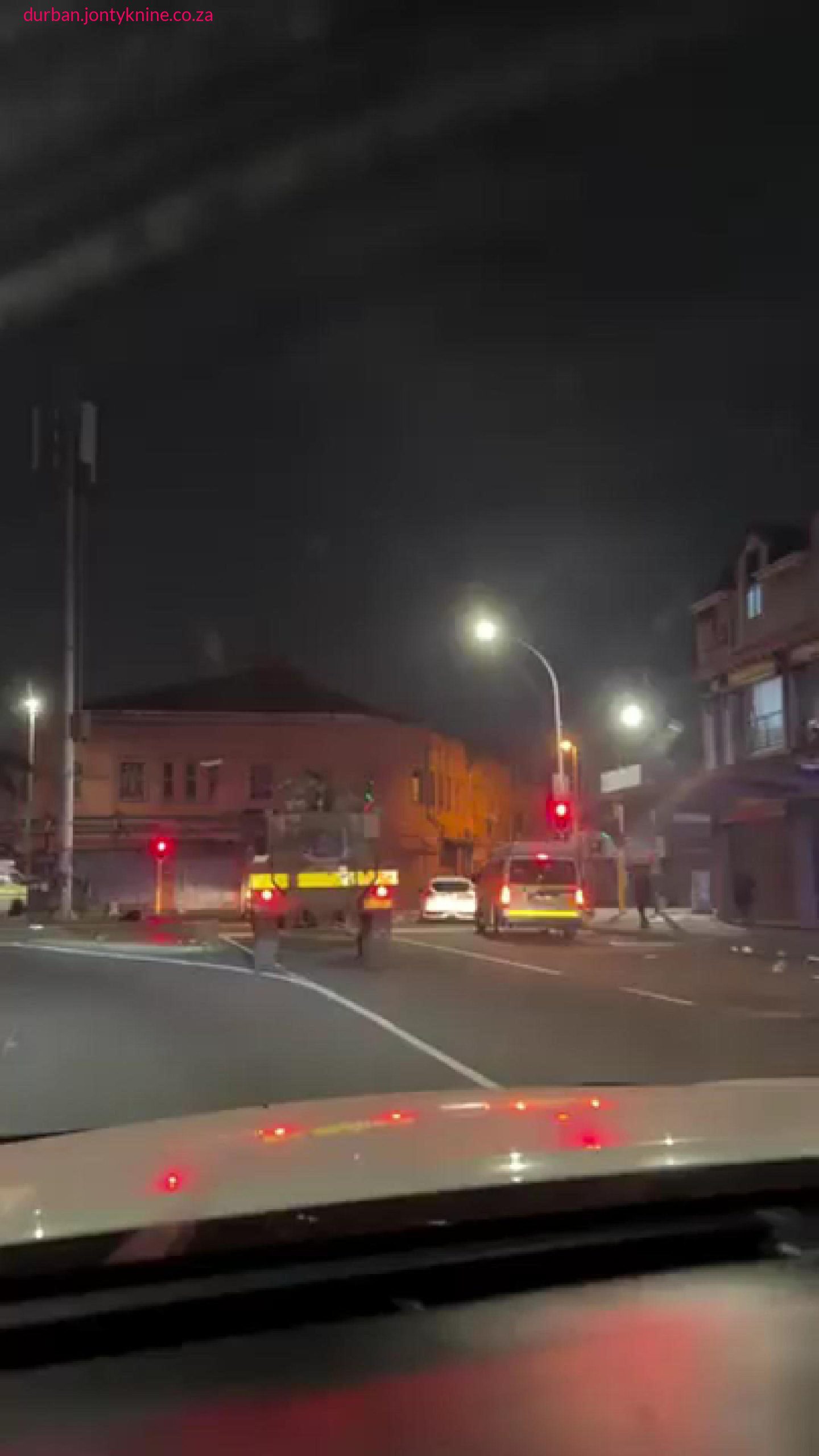
Social media (including the circulating post matching your query) has reported claims of police officers and/or soldiers firing shots during a march or related activity on Moore Road. Videos have circulated showing scenes at or near the site. However, as of the latest available reporting:
- Mainstream coverage does not confirm live ammunition being fired by security forces in a specific new incident on 15–16 October.
- Earlier police responses in the broader unrest and prior Moore Road confrontations relied on less-lethal options (rubber bullets, stun grenades, tear gas, pepper spray).
- Separate criminal shootings have occurred in the wider Durban area around the same period (unrelated or only loosely connected to the protests), and there have been unconfirmed allegations in past incidents of a firearm being discharged by a foreign national at the camp site.
- A tyre shop/scrapyard fire near the Home Affairs office was reported around 14 October, with heavy police presence noted.
Details remain fluid and contested on social media. Independent verification of any specific “firing of shots” by police/soldiers during a march on the most recent dates is limited; claims should be treated cautiously pending official statements or clearer footage/context.
Current on-the-ground picture
- The area around the Refugee Reception Centre continues to see police (and residual SANDF) presence to manage gatherings and prevent direct confrontations between March and March supporters and foreign nationals.
- March and March has maintained pressure, with supporters gathering periodically; some recent social media activity referenced celebratory or supportive processions (e.g., motorbikes).
- Foreign nationals at the site have faced repeated pressure, temporary evacuations for safety, and ongoing uncertainty about relocation (earlier talks involved possible moves to Lindela or other facilities, though implementation has been delayed or contested).
- Broader anti-immigration sentiment and protests have occurred in parallel in places like Soweto, contributing to a national climate of tension ahead of local government elections.