




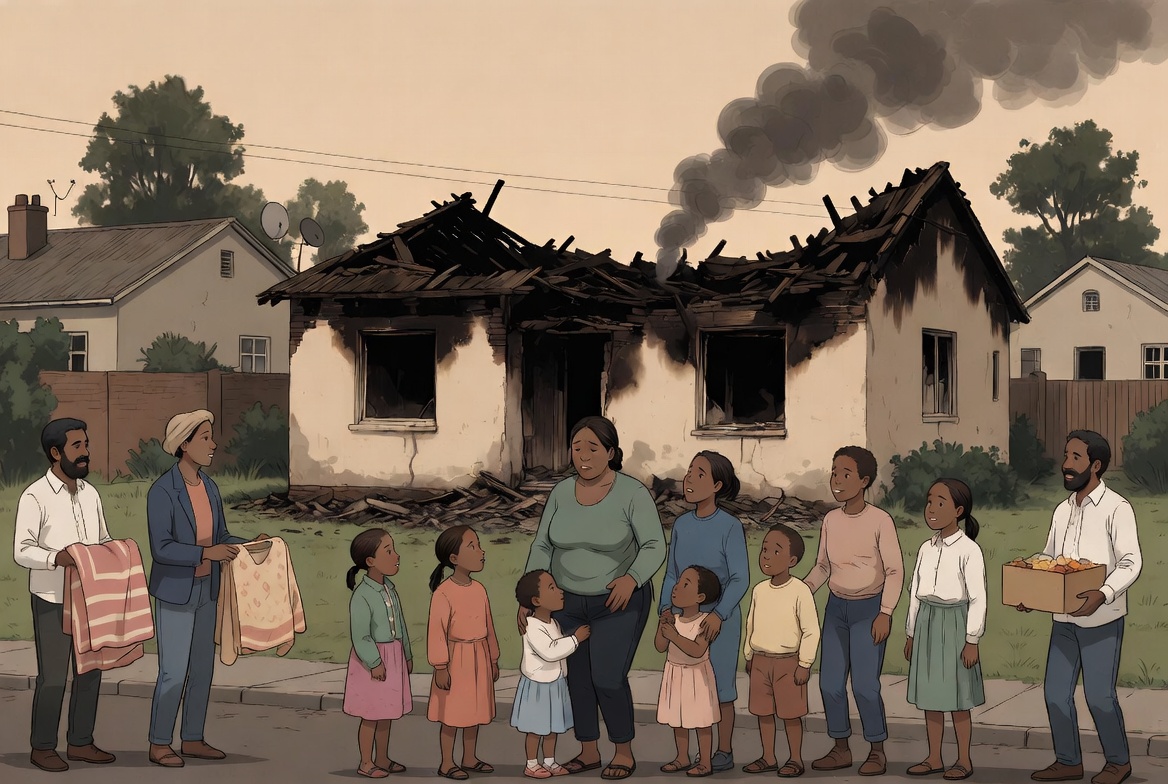
The fire destroyed the family’s home on Middlemiss Crescent in Reservoir Hills, a residential suburb in Durban, KwaZulu-Natal, South Africa. The family consists of the mother and seven children: three girls (aged 17, 6, and 5) and four boys (aged 3, 7, 10, and 15). No one was seriously injured, as the children safely evacuated to the backyard before the fire spread rapidly. Neighbors initially mistook the smoke for a grass fire, but black smoke quickly alerted them. The sound of shattering glass underscored the intensity.
The mother arrived home to devastation and was comforted by neighbors. The house was completely destroyed, leaving the family with nothing—not even basic items like toothbrushes. The cause remains unknown, as eThekwini Fire and Emergency Services had not yet released a report at the time of initial coverage.
This occurred during South Africa’s winter school holidays, when children were more likely to be home, heightening risks from unattended heaters, stoves, or other sources. Fire safety reminders from officials, such as keeping matches out of reach and never leaving heating devices unattended, are particularly relevant.
Community Response
The Reservoir Hills community mobilized within hours, showcasing strong neighborhood solidarity. Key actions included:
- Immediate shelter: Temporary housing arranged in local homes.
- Essentials provided: Clothing, food, blankets, bedding, and other necessities.
- Coordination: The Reservoir Hills Community Police Subforum (RHCPS), led by chairperson Lee Maharajh, initiated relief efforts. Religious organizations and residents collaborated effectively.
- Local leadership: Ward 23 Councillor Alicia Kissoon praised the hand-in-hand response and noted the tragedy’s impact while highlighting community unity.
Neighbors like Deshini Naidoo described the overwhelming support and emphasized that “a strong community is what helps people survive.” Relief organizers are now managing the influx of donations and planning longer-term support for the family to rebuild.
This response reflects a broader pattern in many South African communities where informal networks, faith-based groups, and local forums step in quickly when formal aid lags, especially for vulnerable families.
Broader Context in South Africa
House fires are a recurring challenge in South Africa, particularly in areas with older housing stock, informal settlements, or during load-shedding periods that increase reliance on alternative heating and lighting (candles, paraffin, gas). Reservoir Hills itself has seen prior fires, including in nearby informal settlements that displaced dozens or hundreds.
Single-parent households, especially those with multiple children, face amplified risks: financial strain, limited safety resources, and emotional toll. A large family losing all possessions compounds trauma, disruption to schooling, and long-term recovery challenges like replacing documents, furniture, and rebuilding credit or stability.
Positive nuances: Such tragedies often strengthen community bonds. The rapid rally here prevented immediate homelessness on the streets and provided psychological comfort. It highlights “ubuntu” — the African philosophy of interconnected humanity — in action.
Implications and Considerations
- Short-term: Immediate needs appear met, but the family will require sustained support (e.g., housing reconstruction or rental assistance, school supplies, counseling for trauma, especially for younger children).
- Long-term: Rebuilding could involve insurance (if any), government aid via disaster relief channels, or crowdfunding/community funds. The eldest children (teens) may face added responsibilities.
- Prevention: This underscores needs for better fire awareness campaigns, smoke detectors, and safer heating solutions in winter. Local authorities could use such incidents to push for inspections or subsidies in at-risk areas.
- Edge cases: If the fire was due to electrical issues (common in older Durban homes), it raises questions about infrastructure maintenance. Investigations may clarify liability or preventable factors.
Related examples include other South African community responses to fires or floods, where donations and volunteering create temporary safety nets, though systemic issues like poverty and housing quality persist.