




David “Davey” Hearn, a 67-year-old former U.S. Olympic canoeist from Bethesda, Maryland, was indicted on July 2, 2026, by a D.C. grand jury on a single felony count of destruction of property (valued at $1,000 or more).
Background on the Incident
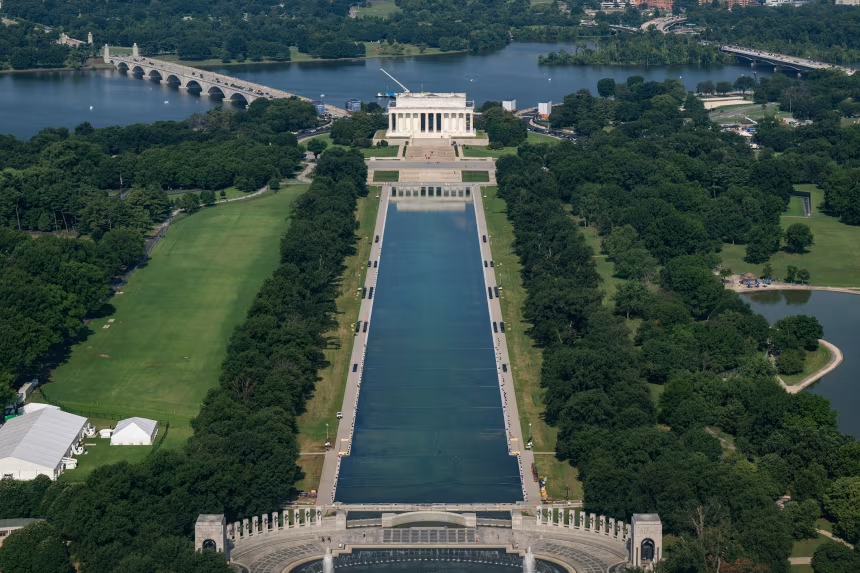
The incident occurred on June 19, 2026, at the Lincoln Memorial Reflecting Pool in Washington, D.C. U.S. Park Police arrested Hearn after National Park Service (NPS) employees reportedly observed him reaching into the pool and “forcefully and violently” pulling up and removing a section of the recently installed bottom liner/sealant with both hands. Prosecutors, including U.S. Attorney for D.C. Jeanine Pirro, allege he damaged about two square feet of material, causing over $1,000 in damage.
Hearn was initially charged with misdemeanor destruction of government property. The case was upgraded to a felony based on the estimated repair cost. He faces up to 10 years in prison if convicted. Arraignment is scheduled for July 9, 2026.
Hearn reportedly admitted to reaching into the water (removing a glove) to feel and bend the liner, describing it in statements that prosecutors may use as evidence. Witnesses described him as belligerent after being confronted.
Context of the Reflecting Pool Renovation
The pool, an iconic National Mall landmark, underwent a multimillion-dollar renovation (around $14 million reported in some coverage) under the Trump administration. It reopened recently but quickly faced problems with algae growth and peeling liner/sealant issues. President Trump publicly blamed vandals for the setbacks and highlighted the project as a priority.
This broader context of renovation challenges and political attention likely amplified scrutiny of the incident. Several other people have been arrested or cited for related issues at the site.
Who Is David Hearn?
Hearn is a accomplished slalom canoeist with a career spanning the late 1970s to early 2000s. He competed in three Olympics: 1992 (Barcelona), 1996 (Atlanta, best individual finish of 9th in C1), and 2000 (Sydney). He won multiple world championship medals, including golds in C1 and team events. Post-athletics, he reportedly owned a company producing composite materials for watercraft.
His background in canoeing has been noted in coverage, sometimes with irony given the water-related incident, though no direct link (e.g., protest or professional interest in pool materials) is clearly established in reports.
Legal and Evidentiary Nuances
- Prosecution’s Position: Eyewitness testimony from NPS employees is central. Pirro emphasized deliberate, malicious damage to a “national treasure” and the costly renovations. Hearn’s own statements about touching and bending the liner could undermine defenses claiming he wasn’t involved or that damage was accidental/minimal. An expert witness is expected to testify on the $1,000+ damage threshold for felony elevation.
- Defense Perspective: Hearn’s lawyers argue the liner was already loose or defective (supported by potential video evidence of pre-existing issues), framing the charges as an overreach or deflection from renovation flaws. Credibility of witnesses and lack of video (per some analyses) may be key at trial. Grand jury indictment indicates probable cause but is a low bar; conviction requires proof beyond reasonable doubt.
- Broader Considerations: D.C. cases can be politically charged. Some observers note grand juries here have rejected certain high-profile or politically sensitive cases recently, making this indictment noteworthy. Questions arise about prosecutorial priorities amid other national issues.
Edge cases include whether the act was vandalism, curiosity (given his canoe background), or a response to perceived poor workmanship. Repair costs, exact extent of damage, and any pre-existing defects will matter. If convicted, sentencing could consider his age, lack of prior record (assumed), and intent.
Implications
- Cultural/Historical: The Reflecting Pool symbolizes reflection and national memory near the Lincoln Memorial. Damage to public monuments raises questions about preservation, public access, and accountability for iconic sites.
- Political: Ties into Trump administration narratives on law/order, infrastructure, and “vandalism.” It highlights tensions in D.C. over federal projects and local/federal prosecution dynamics.
- Personal/Public Figure: For Hearn, a respected athlete, this risks legacy damage regardless of outcome. It also spotlights how even minor-seeming acts at high-profile sites can escalate.
- Related Issues: Reflects ongoing challenges with large public works (algae, materials failure) and debates over rapid renovations vs. durability. Similar incidents suggest the pool’s issues may not be isolated to one individual.
This case is in early stages; outcomes depend on trial evidence, witness testimony, and any video/forensic details. It blends sports history, public infrastructure, politics, and criminal law in a uniquely D.C. story. Updates will likely follow the July 9 arraignment and any pretrial developments.