



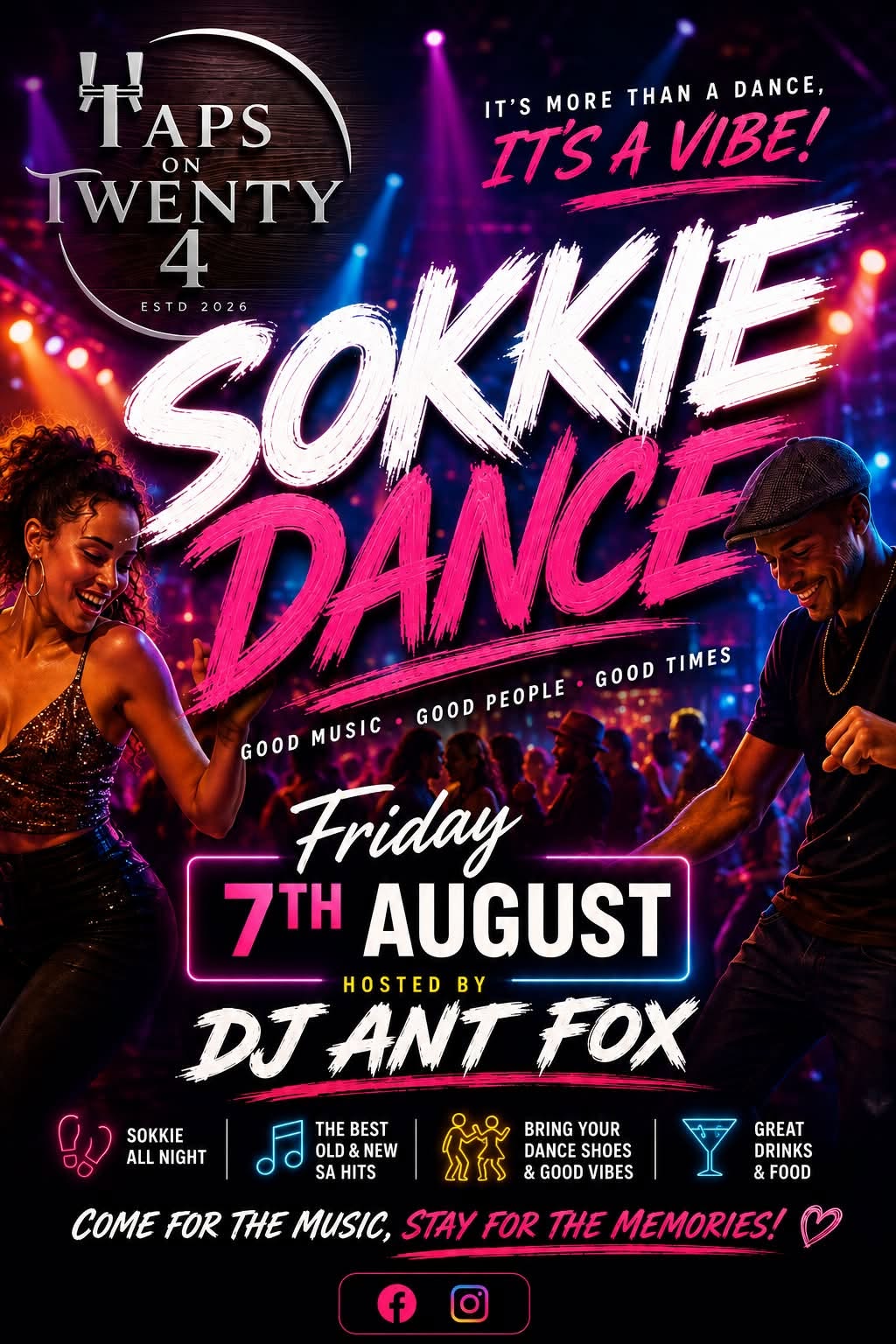
Sokkie (also known as langarm, sakkie-sakkie, kotteljons, or water-pomp) is a popular social partner dance unique to Southern Africa, especially among Afrikaners.
It is a freestyle ballroom-style dance typically performed at weddings, braais, parties, nightclubs, and dedicated sokkie nights. The name comes from the Afrikaans word for “sock,” reflecting the traditional practice of dancing in socks (or barefoot) on smooth floors—similar to American sock hops—for better glide and to protect wooden floors. Modern dancers in clubs usually wear shoes and dress smart-casual.
Origins and Cultural Context
Sokkie evolved from European folk and ballroom influences (including elements of the two-step, swing, boogie, social foxtrot, quickstep, and Viennese waltz/boerewals) brought by settlers and adapted by Afrikaner communities, with roots linked to the trekker era. It became a key part of social life and cultural identity, particularly in places like Pretoria and Johannesburg nightclubs (e.g., historical venues such as Presley’s). It is danced not only to dedicated Afrikaans “sokkie music” but also to pop, country, hip-hop, trance, and other genres.