





Key facts of the incident
The fire broke out around 6:45–7:00 a.m. local time on the third floor of the Mother and Child Health (MCH) or gynaecology ward/nursery at PIMS, the largest public/state-run hospital in the Pakistani capital.
Hospital officials reported that 15 (or in some accounts up to 16) newborns were present in the ward at the time. Most were in incubators or receiving oxygen support. One infant was rescued by a doctor; the other 14 died. The bodies were severely burned, and DNA testing has been indicated as necessary for identification in some cases so that remains can be returned to families.
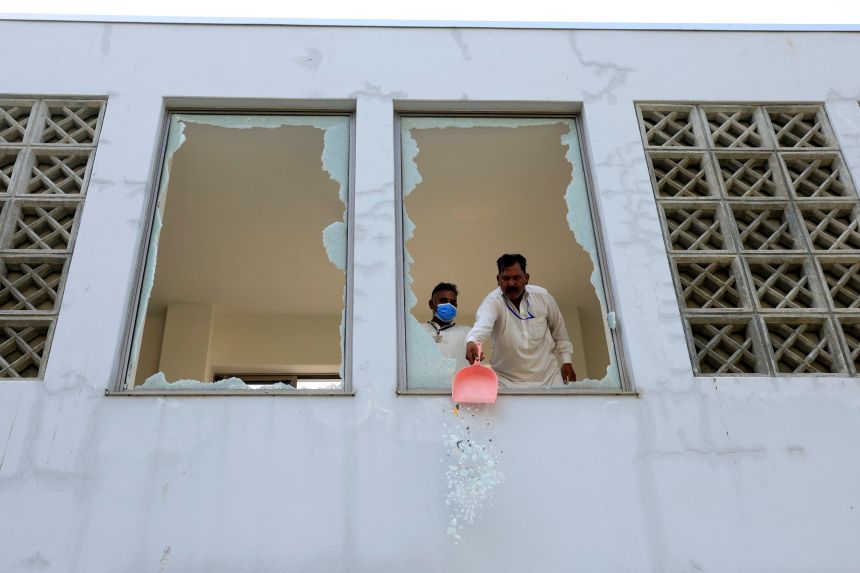
Emergency responders (including multiple fire brigade vehicles and ambulances), police, and medical teams arrived after an emergency call. Officials stated the fire was brought under control relatively quickly and that other patients and staff (including mothers who had recently given birth) were evacuated—some by running down flights of stairs. At least 19 other people were reported rescued in some accounts. Relatives gathered outside the hospital in grief; witnesses and parents described scenes of shock, locked or restricted access in places, thick smoke, and anguish (one father spoke of losing his three-day-old baby; others demanded justice).
Reported cause and contributing factors
Health Minister Mustafa Kamal and hospital spokespersons indicated the fire began with a “blast” or fault in an air-conditioning unit (or compressor explosion/short circuit) inside the nursery. The oxygen canisters and supply lines present for the infants intensified the blaze, as oxygen accelerates combustion even though it is not itself flammable.
Additional context noted in reporting includes ongoing repair and construction work at the hospital, which some relatives and observers linked to heightened hazards in the wing housing the neonatal unit. Questions have also been raised about fire-safety measures, emergency access (including manned doors intended partly to prevent infant theft), and the overall condition of the facility.
An official inquiry/fact-finding committee (headed by an additional deputy commissioner or multi-agency panel) was formed promptly, with directions to report within 24 hours on the cause, fire-safety adequacy, and emergency response. Prime Minister Shehbaz Sharif expressed deep sorrow, ordered an immediate investigation, called for identification of those responsible and strict action, and directed the removal of the federal health secretary in the initial response. Interior Minister Mohsin Naqvi and other officials also conveyed grief. Politicians and commentators across parties and media described the event as criminal negligence and demanded accountability (“heads must roll”).
Broader context and implications
This ranks among the deadliest hospital fires in Pakistan in recent years. Public hospitals in the country are widely described as under-resourced, overburdened, and subject to longstanding criticism over infrastructure, maintenance, regulatory enforcement, and safety standards. Neonatal units are particularly vulnerable because of the combination of fragile patients, oxygen use, electrical equipment (incubators, air conditioning), and sometimes aging facilities.
The tragedy underscores several interconnected issues:
- Fire safety and infrastructure — Reliability of electrical systems and air-conditioning units in high-dependency areas; presence and management of oxygen in oxygen-enriched environments; adequacy of detection, suppression, and evacuation routes; and the impact of concurrent construction.
- Accountability and governance — Rapid political and administrative response (investigation, personnel changes) is occurring amid public outrage, but past incidents in Pakistani public institutions have sometimes led to limited long-term systemic change.
- Healthcare system pressures — High demand on major public facilities like PIMS, resource constraints, and the challenges of protecting vulnerable populations (newborns dependent on continuous support).
- Human and social impact — Immediate devastation for families, the practical difficulties of identification and return of remains, and the emotional and trust erosion for the broader community relying on public maternity and neonatal care.
Slight variations appear across early reports (exact number of infants present, precise wording of the cause as “faulty AC,” “compressor explosion,” or “short circuit”), which is typical in the fluid initial hours of such events. Official tallies have centered on 14 deaths with one survivor among those in the ward.
Investigations continue, and further details on exact causation, any lapses in safety protocols, and institutional responses are expected from the inquiry. The event has already prompted widespread calls for stronger fire-safety standards, better maintenance of critical equipment in hospitals, and clearer accountability mechanisms in Pakistan’s public healthcare system.