





This is not hyperbole from a single headline; industry associations, shipping lines, transporters, and even a presidential intervention confirm acute disruption at South Africa’s busiest container gateway.
The current crisis: What is failing and why
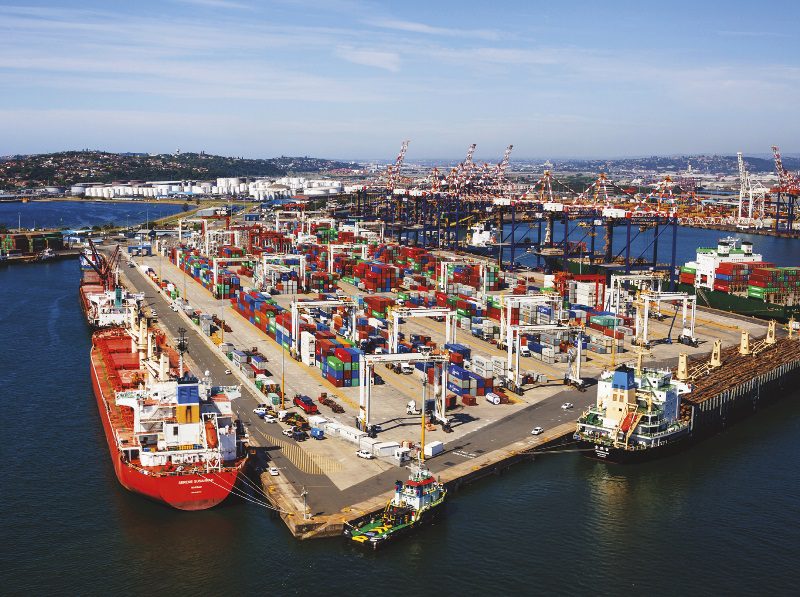
The Port of Durban handles the majority of South Africa’s container traffic—historically around 60–65% (and in some recent monthly data higher shares of imports/exports), serving as the primary gateway for the Gauteng industrial and consumer heartland as well as landlocked neighbours. It is the largest and busiest container terminal in sub-Saharan Africa.
The immediate trigger is the mid-August 2026 cutover to an independent Navis N4 terminal operating system at Durban Gateway Terminal (DGT / Pier 2), compounded by equipment shortages (especially straddle carriers), yard congestion, landside truck-booking failures, and coordination issues. ICTSI (Philippines-based) took operational responsibility for DGT under a 25-year partnership with Transnet (which retains majority stake) from 1 January 2026, following private-sector participation reforms aimed at revitalising long-underperforming assets.
Key metrics from recent industry reports (SAFLA, RFA, SAAFF, shipping advisories):
- Vessel waiting times at DGT: 8–12 days (some carriers warning of up to 20 days); average port-call time rose from under 5 days in late June to over 12 days by late August.
- Anchorage and berth times: vessels averaging ~80 hours at anchorage and 106 hours at berth in July; weekly throughput fell ~26% after the system cutover.
- Monthly berth calls dropped sharply (e.g., from 34 to 19 in one reported period).
- Landside: truck times in the port precinct rose >50% in three months; Bayhead Road transit times worsened; containers can sit for days while storage, demurrage, and detention charges mount (sometimes US$80–140+ per container per day after free time).
- Stack occupancy high; productivity reported as low as one-third of normal in some accounts.
SAAFF declared a “crisis,” escalated to the Presidency (a delegation visited), and transporters have complained to the Competition Commission over charges and access issues. Industry bodies (SAFLA and RFA) are proposing a recovery compact. Weather risks (August is windy in Durban) and residual global factors (Cape of Good Hope rerouting from Red Sea/Hormuz disruptions) add pressure.
This follows earlier improvements: the World Bank’s Container Port Performance Index ranked Durban the most improved globally for 2025 (big gains in turnaround and berth utilisation after the severe 2021–2023 congestion era, when vessels sometimes waited 20+ days). Transnet reported stronger overall port volumes and vessel traffic in the prior year. The private partnership and equipment investments were meant to lock in progress, but the system transition and residual constraints have reversed momentum at the critical terminal.
Economic scale and livelihoods at risk
Logistics inefficiencies have long been quantified as extremely costly. During the 2023 crisis, the GAIN Group estimated freight-system dysfunction at roughly R1 billion a day in lost output (a figure still widely cited by industry and government, including recent presidential references). Broader underperformance of rail and ports has been estimated in the hundreds of billions of rand annually in earlier years (unachieved exports, higher transport costs, opportunity losses). Even partial recurrence at Durban risks similar daily losses, higher logistics costs as a share of GDP, delayed production inputs, emergency airfreight, and inventory holding costs.
Who is affected:
- Direct and port-adjacent jobs: Logistics, warehousing, freight forwarding, trucking, clearing/customs, and related services in Durban South (Jacobs, Clairwood, Mobeni) and corridors like Cornubia. The port and its ecosystem support a large share of local employment; older analyses suggested port-related activity underpins a significant portion of eThekwini jobs. Truckers face idle time, lost bookings, and escalating charges they often cannot recover.
- Manufacturers, retailers, and exporters: Automotive, citrus/agriculture, consumer goods, and industrial inputs. Production lines wait for components; exporters miss windows or face surcharges; retailers face stock delays. South Africa’s high unemployment (official rate ~33.6% in Q2 2026, with millions jobless and youth rates far higher) makes any drag on growth and hiring especially damaging.
- Regional impact: Landlocked SADC countries (Zimbabwe, Botswana, Zambia, etc.) rely on Durban corridors. Delays raise costs for their imports/exports and undermine regional value chains and the African Continental Free Trade Area ambitions.
- Broader economy: Higher trade costs act as a structural tax, discouraging investment, reducing competitiveness, and slowing job creation. eThekwini contributes ~10% of national GDP; KwaZulu-Natal is heavily port-dependent. Past crises shaved potential export volumes and GDP growth significantly.
“Millions of livelihoods” is a reasonable framing when cascading effects are considered—direct logistics employment, downstream manufacturing and retail jobs, informal traders reliant on goods flow, and households facing higher prices or lost income—especially against a backdrop of already elevated unemployment and slow growth.
Nuances, context, and counterpoints
- Not total collapse: Other terminals (Pier 1, Point) and bulk ports (Richards Bay, Saldanha) continue to move significant volumes. Overall Transnet port recovery showed green shoots earlier in 2026. Absolute ship times in Durban remain long by global standards even in better periods.
- Reform progress and risks: Private participation (ICTSI’s R11bn-scale investment plans) and equipment recovery were positive steps after years of state-owned underperformance, ageing assets, and capacity shortfalls. Teething problems with a major system cutover are common but poorly managed ones become crises. Long-standing issues—yard density, landside access, equipment reliability, coordination across Transnet entities, and road congestion—persist.
- External amplifiers: Global shipping disruptions (Cape rerouting) increase vessel bunching pressure on South African ports.
- Edge cases: Seasonal peaks (citrus exports, retail import surges) or weather can tip a strained system into crisis. Transporters and forwarders bear immediate cash-flow pain via charges even when delays are terminal-driven. Communities along freight corridors suffer road congestion and related externalities.
Implications if unresolved: prolonged higher costs, lost export competitiveness (including under frameworks like AGOA), diverted cargo to other regional ports where possible, reduced investor confidence, and slower recovery in a high-unemployment economy. Successful recovery could reinforce the private-participation model and support capacity expansion goals (toward higher TEU handling).
Path forward and related considerations
Industry is calling for coordinated recovery: restore booking capacity and container evacuation, stabilise the new system, improve equipment availability, address landside access (truck staging, Bayhead Road), and prevent unfair cost transfer to cargo owners. Presidential engagement signals political recognition of the stakes. Parallel work on rail (private operators, National Rail Master Plan) and road upgrades is essential because ports do not operate in isolation—hinterland connectivity determines overall fluidity.
Longer-term, sustained private capital, modern equipment, digital systems that work under real operating conditions, and better multi-stakeholder coordination are required to make Durban reliably competitive. South Africa’s logistics costs have historically been elevated relative to peers; fixing the ports-rail-road system is repeatedly identified as one of the highest-leverage reforms for growth and jobs.
In short, the current Durban Gateway Terminal disruption is real, costly, and consequential for livelihoods precisely because the port is so central to South Africa’s trade and employment ecosystem. Early intervention and disciplined execution of recovery measures will determine whether this becomes a temporary setback or a deeper setback to the hard-won improvements of recent years.