





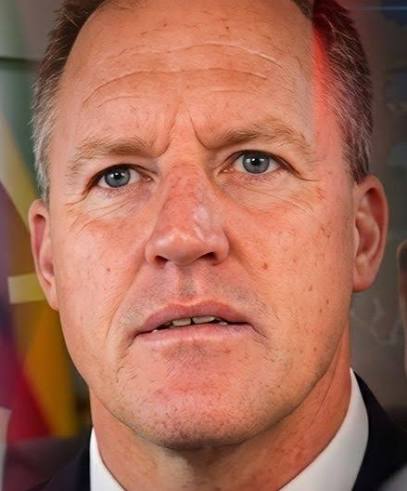
from abroad and publicly stated plans to establish a “Government in Exile” aimed at preparing for political change and challenging President Emmerson Mnangagwa.
The article, published on 31 August 2026 by New Zimbabwe (with byline credit to Dumani Moyo of The South African; a near-identical version appeared a couple of days earlier on The South African), presents MuVet’s initiative as a response to what he describes as a closed political space inside Zimbabwe under the 83-year-old Zanu PF leader.
Key points from MuVet’s stated position
- Motivation and structure: He argues that conventional political avenues inside the country are no longer sufficient. Zimbabweans in the diaspora should organise and prepare for change. The proposed Government in Exile would consist of Zimbabweans based outside the country, working on plans for a future administration after Mnangagwa’s removal. It would require an office, staff, and training programmes—including in government and security-related areas.
- Diagnosis of Zimbabwe’s problems: MuVet focuses on everyday hardships faced by ordinary citizens—shortages and poor access to clean drinking water and medicines in hospitals, deteriorating roads and classrooms, unemployment, and limited economic opportunities. He contrasts this with political leaders who live in large houses, drive expensive vehicles, and travel in business class, arguing that leadership should prioritise improving living conditions rather than personal privileges.
- Personal framing: He presents himself as living modestly (small house, average car, cleaning his own home) and claims to have rejected offers of money or gifts so the project is not driven by personal financial gain. He frames the effort partly as a legacy for his son, wanting the child to know his father “stood for what is right.” The movement’s stated goal is to improve the lives of ordinary Zimbabweans under a “servant leadership” ethos.
The reporting notes that this remains MuVet’s stated plan; questions of how such a structure would actually operate, secure resources, attract meaningful support, or gain any form of recognition are left open.
Broader context and related reporting
Similar coverage on sites such as ZimCitizenNews and earlier pieces (including a February 2025 report of an announcement by Brett Muvhet) describe the initiative as seeking to unite Zimbabweans inside the country and in the diaspora, with an emphasis on servant leadership and criticism of the gap between the country’s economic potential and living standards. One account notes a financial appeal for modest monthly contributions to cover office space, research, and mobilisation.
The idea of a “government in exile” is not new in Zimbabwean opposition discourse. In 2024, investigative journalist Hopewell Chin’ono floated a similar concept and faced accusations of promoting treason from critics. Diaspora activism, parallel institutions, and calls for alternative structures have long been part of the opposition landscape, especially given restrictions on political space, allegations of electoral irregularities, and constitutional controversies (including debates around term extensions and amendments such as CAB3/Amendment No. 3 in 2026).
Zimbabwe’s political environment under Mnangagwa has been marked by internal Zanu PF tensions (including reported friction with war veterans and figures associated with Vice-President Constantino Chiwenga), economic challenges, service-delivery failures, and a large diaspora. Opposition and civic groups have repeatedly highlighted constraints on free political activity, which is the core justification MuVet offers for operating from outside the country.
Nuances, challenges, and implications
- Legitimacy and practicality: A government in exile typically requires a clear political mandate, organisational capacity, and some degree of external recognition or influence to be more than symbolic. Without elections or a broad domestic mandate, such a body risks being dismissed as fringe or illegitimate by both the Harare government and many citizens. Training programmes in “government and security-related areas” could raise additional sensitivities around sovereignty and potential subversion claims.
- Diaspora role vs. domestic politics: Large Zimbabwean communities abroad (especially in South Africa, the UK, and elsewhere) have historically provided financial remittances, advocacy, and opposition organising. MuVet’s pitch leans into this, arguing that external organisation can prepare for change when internal space is closed. Whether this translates into sustained, coordinated influence inside Zimbabwe is an open question—past diaspora-linked efforts have varied widely in impact.
- Risks and reactions: Proposals of this kind can attract government condemnation (as seen with earlier “government in exile” suggestions), legal pressure, or attempts to discredit the proponent. They can also polarise the opposition itself if seen as diverting energy from existing parties or civic movements. Conversely, they can energise supporters frustrated with the status quo.
- Personal credibility and scale: MuVet positions the project as non-self-serving and rooted in everyday struggles. Success would depend on building genuine organisational capacity, transparent funding, concrete policy work, and broader alliances rather than remaining a one-person initiative.
- Historical parallels: Governments in exile have ranged from highly influential (e.g., during World War II) to largely symbolic. In African contexts they have sometimes sustained opposition identity and international advocacy, but rarely substituted for domestic mobilisation or negotiated transitions.
In short, the article reports a diaspora-based activist’s launch of V.V.Z and his explicit plan for a Government in Exile as a vehicle for planning post-Mnangagwa governance and addressing service-delivery failures. It is presented as a new initiative still in its early, aspirational stage. Whether it develops into a significant political force will hinge on organisational follow-through, support from both diaspora and domestic constituencies, and the broader trajectory of Zimbabwean politics. The reporting itself remains largely descriptive of MuVet’s own statements rather than an independent assessment of viability.