






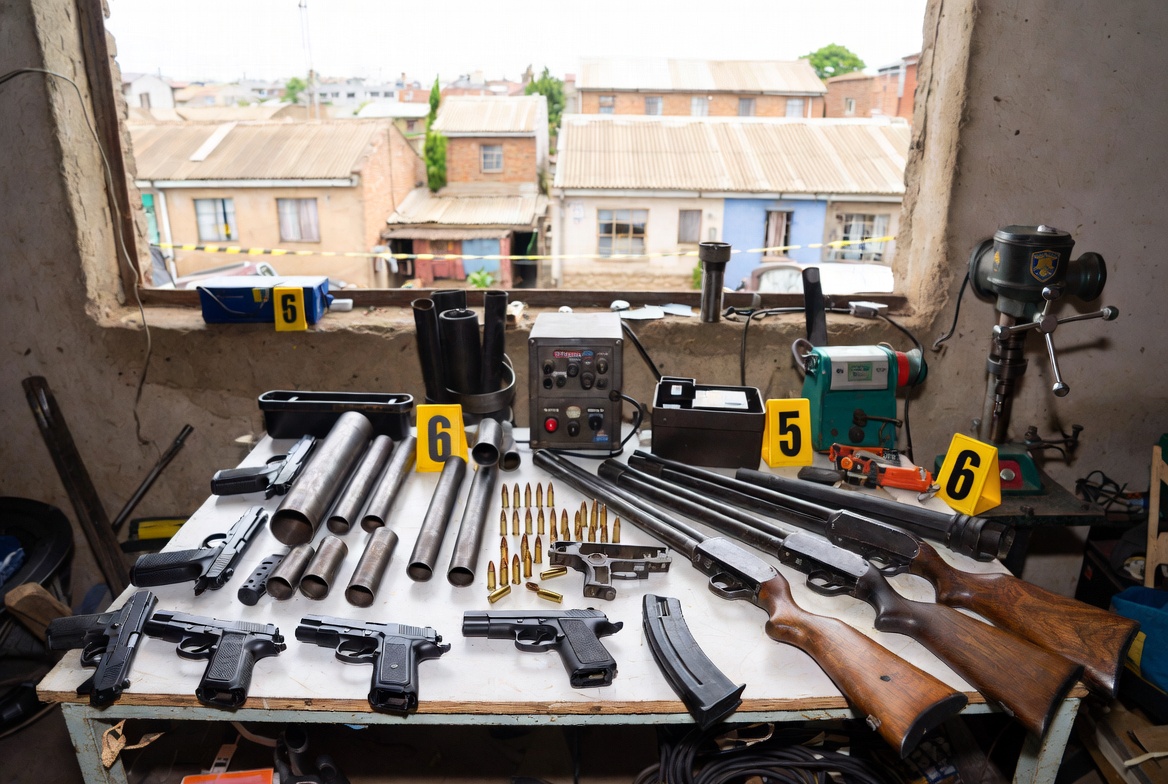
- Suspect: A 71-year-old man (named in some social media reports as Mbangiseni Ndlovu, though official statements primarily use his age).
- Operation: Intelligence-driven raid by the SAPS eThekwini District Tracing Unit, based on Crime Intelligence information alleging involvement in firearm manufacturing.
- Allegations: The man is accused of:
- Modifying replica firearms into functional weapons.
- Manufacturing homemade firearms.
- Selling ammunition of various calibres.
- Supplying these items to buyers within the eThekwini District (some reports mention sales to foreign nationals).
Items seized (per SAPS statements via Captain Carmen Rhynes):
- 3 × 9mm pistols.
- 7 × 9mm pistol frames.
- 2 × homemade shotguns.
- 11 × firearm barrels (various sizes).
- 8 × 9mm pistol slides.
- 11 × firearm magazines.
- 41 rounds of assorted live ammunition.
- 21 spent/empty cartridges.
- Equipment: MIG 1300 GM Trade welding machine, CAT DX175 drilling machine, CAT DX371 grinding machine.
Photos released by SAPS show seized firearms, components, and workshop tools.
Legal Status
The suspect was arrested at the scene and charged with possession of unlicensed firearms and possession of live ammunition. He remained in police custody as of the latest reports (around 23 July 2026) and was expected to appear in court soon. Investigations are ongoing, with possible additional charges following forensic analysis of the items.
Context and Broader Implications
This case fits into a pattern of illegal firearm manufacturing and trafficking in South Africa, particularly in KwaZulu-Natal, where gun violence, taxi-related conflicts, and organized crime contribute to high demand for weapons. Cato Manor has a history of crime-related incidents, making it a focus for policing operations.
Nuances and considerations:
- Age factor: At 71, the suspect’s involvement raises questions about motivations—possible financial desperation in retirement, long-standing illicit activity, or exploitation. South African law applies equally, but courts may consider age in sentencing.
- Workshop setup: The presence of welding, drilling, and grinding machines indicates a semi-sophisticated home-based operation capable of converting replicas or producing crude “homemade” guns (often unreliable but deadly in criminal hands).
- Supply chain: Alleged sales to local buyers and possibly foreign nationals highlight how such operations feed into broader criminal networks, exacerbating firearm proliferation.
- Police response: This reflects ongoing SAPS efforts (e.g., tracing units and intelligence ops) to remove illegal guns, amid national statistics showing thousands of firearms recovered annually but persistent challenges with unlicensed weapons.
- Edge cases: Forensic results could determine if items were truly functional firearms or if charges expand (e.g., manufacturing, dealing, or links to other crimes). Replica modification is a known tactic to bypass regulations.
No reports indicate prior convictions or connections to larger syndicates at this stage, and the investigation continues.