





There is no general exemption that places the SABC or its TV licence operations outside POPIA or other applicable statutes. POPIA applies to both public and private bodies that process personal information. Limited exclusions exist (e.g., certain national security or pure household activities), but routine debt collection, licence administration, and related communications do not fall under them.
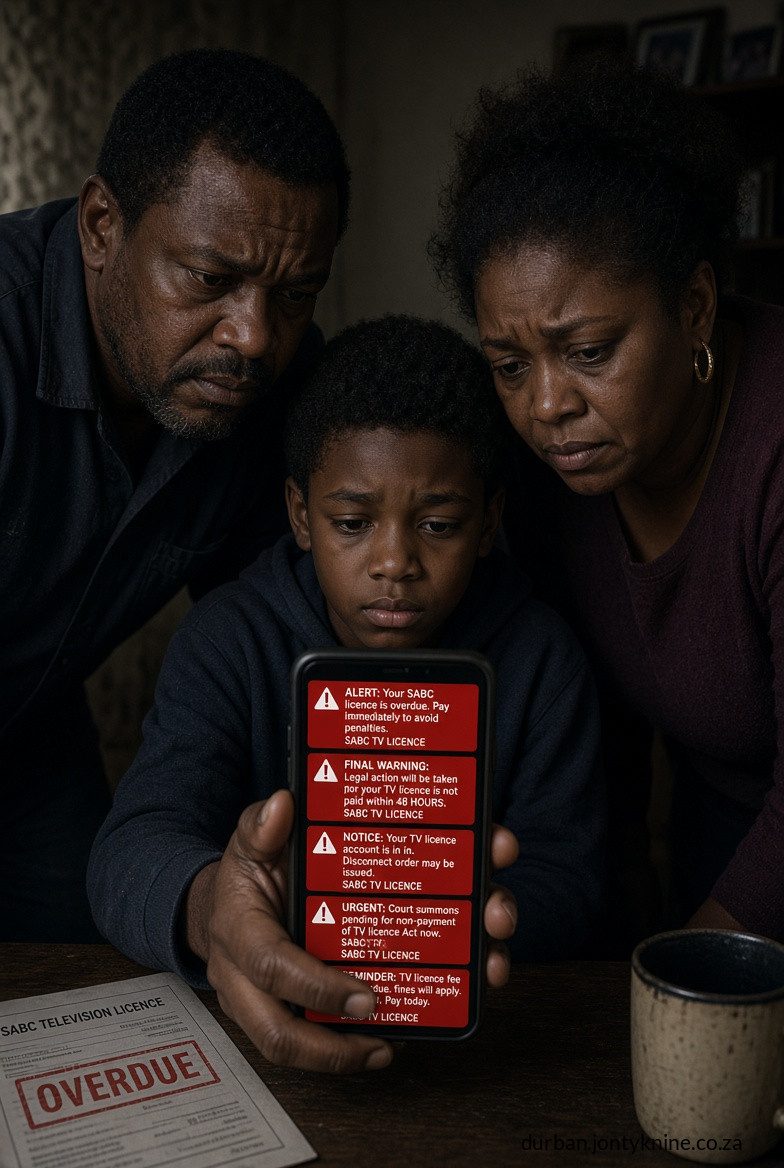
The core problems you describe—mass threatening SMSes (often multiple per day), messages reaching recycled/wrong numbers that now belong to different people, difficulty getting the SABC or its agents to stop or update records, and the resulting stress—are widespread and longstanding complaints. Media reports, forums, and consumer feedback document exactly this pattern: aggressive “trace alert,” “final notice,” handover-to-collectors, and settlement-offer messages sent via SMS by the SABC and its panel of debt collectors
Why the SMS campaign raises POPIA and related issues
POPIA requires lawful processing under one of the grounds in section 11 (consent, contract performance, legal obligation, legitimate interests of the data subject or responsible party, public-law duty, etc.). For electronic direct marketing (including SMS), section 69 is stricter: processing for direct marketing by unsolicited electronic communications is prohibited unless the data subject has given consent or is an existing customer under narrow conditions, with opt-out rights. Debt-collection communications are often distinguished from pure “marketing,” and collectors can rely on legitimate interests or legal obligations to pursue a debt. Handing files to registered collectors and pursuing recovery is generally treated as compatible further processing.
However, several aspects of the SABC’s approach create real compliance risks and practical harm:
- Outdated or incorrect contact details / number recycling. Phone numbers are routinely reassigned. When a number that once belonged to a licence holder is now used by someone else, continuing to send debt-collection or threat messages to that number involves processing the new person’s personal information (their number) without a proper lawful basis relative to them, and without reasonable steps to keep information accurate and up-to-date (a core POPIA condition). This is a recognised broader problem in South Africa; recycled numbers frequently receive residual marketing or debt messages.
- Volume, tone, and persistence. Multiple messages per day, threatening language (“trace alert,” legal action, handover), and difficulty stopping them can cross into harassment territory under the Protection from Harassment Act, even if courts have sometimes characterised pure licence-debt reminders as a “nuisance” rather than actionable harm when the debt itself is legitimate. Misleading or ambiguous wording (e.g., implying High Court action or irreversible credit damage via “trace alerts”) has been criticised by consumer groups such as OUTA.
- Data quality and purpose limitation. POPIA requires personal information to be accurate, complete, and not excessive, and processing to be limited to the stated purpose. Mass-blasting of outdated databases without robust verification or easy correction mechanisms sits uneasily with these duties. The SABC has acknowledged using GIS data cleansing, analytics, and trace-alert processes to chase non-payers, which shows systematic processing of contact data.
- Third-party collectors. The SABC remains the responsible party. Operators (collectors) must process only as instructed and with appropriate safeguards. Collectors themselves are regulated under the Debt Collectors Act and must observe contact-time limits, avoid certain intimidation tactics, and respect privacy rules.
Harassment claims based solely on volume of legitimate debt reminders have faced hurdles (one legal view is that they do not meet the “harm” threshold under the Harassment Act because the underlying obligation is statutory). That does not immunise the SABC from POPIA accuracy, purpose-limitation, security, or direct-marketing rules, nor from consumer-protection or debt-collection standards.
Practical difficulties contacting the SABC
This is a very common complaint. Official channels exist but are often described as slow, unresponsive, or bureaucratic:
- Phone: (011) 330-9555 (weekdays 08:00–18:00, Saturdays 08:00–13:00).
- Email: tvlic.info@sabc.co.za (include ID number and/or licence account number).
- Postal: Private Bag X60, Auckland Park, 2006.
- Website/customer care: tvlic.co.za.
- Some recent social-media pointers have mentioned WhatsApp options for queries.
- Debt-collector contacts are listed on the TV licence site (Hahn, VVM, NuDebt).
To stop messages or correct a wrong number:
- Formally notify the SABC and the specific collector in writing (email preferred, keep records) that the number no longer belongs to the licence holder / you have no connection to the debt, and demand that processing of your number cease and records be updated/deleted where appropriate.
- Use any opt-out mechanism offered in the SMS (reply STOP if available).
- If it is a marketing-style message, consider the WASPA Do Not Contact list (dnc.org.za or *120*69269# / SMS BLOCK to 40662), though debt-collection messages may fall outside pure marketing rules.
- For cancellation of an actual licence (e.g., no longer own a TV set), a formal affidavit process is required; outstanding balances generally must be settled first, and supporting documents may be demanded.
Many people report that simply blocking numbers is ineffective because new short/long codes or different senders are used.
Is the SABC above the law?
No. As a Schedule 2 major public entity and the national public broadcaster, it is subject to the Constitution, the Broadcasting Act, the Public Finance Management Act, POPIA, the Debt Collectors Act, consumer-protection legislation, and ordinary civil and criminal law. Non-payment of a TV licence is a statutory offence under the Broadcasting Act (maximum R500 fine and/or six months’ imprisonment on conviction), and the SABC can pursue civil recovery, but practical prosecution rates appear extremely low and the cost-benefit is poor—points repeatedly made by OUTA and others.
The SABC’s financial pressure (very low compliance rates, declining licence revenue relative to mandate costs) explains the aggressive collection drive, but does not create a legal exemption from privacy or fairness rules.
What you can do
- Document everything: screenshots of every SMS (date, time, sender, exact text), call logs, and all correspondence.
- Written demand to SABC + collector: State that the number is no longer associated with the licence holder (or that you never were), demand immediate cessation of processing of your personal information for this purpose, correction/deletion of inaccurate data, and written confirmation. Reference POPIA sections on accuracy, purpose limitation, and (if applicable) direct marketing or objection rights. Give a reasonable deadline (e.g., 14–30 days).
- Complaint to the Information Regulator: This is the primary avenue for POPIA issues (unlawful processing, inaccurate data, unwanted electronic communications, failure to respect objections). Lodge via the eServices portal on inforegulator.org.za (or the prescribed Form 5). Provide evidence. The Regulator can investigate, mediate, issue enforcement notices, and ultimately impose administrative fines. Direct-marketing and general POPIA complaint channels both exist.
- Other routes: Council for Debt Collectors (if the agency is registered and the conduct breaches their code); ICASA for certain broadcasting/billing issues; OUTA (they have historically collected examples of threatening communications); Protection from Harassment Act applications in serious cases of persistent unwanted contact; ordinary civil remedies.
- Credit-related: “Trace alerts” are not the same as a full adverse listing and do not automatically damage a credit record in the same way, though authorised collectors can list defaults under the National Credit Act in proper cases.
In short, the SABC is not above the law. The combination of mass automated messaging, poor data hygiene around recycled numbers, aggressive tone, and difficult correction processes creates legitimate POPIA, consumer, and harassment concerns for people who receive the messages in error or find it impossible to stop them. Persistent, documented complaints to the Information Regulator (and parallel demands to the SABC/collectors) are the most direct formal route available to individuals. The systemic problem of outdated contact databases and low compliance with TV-licence obligations is real and affects many households; individual action plus regulatory pressure are the practical levers currently available.