


As of early September 2026 (around day 1,659 of the full-scale invasion), the Russia-Ukraine war remains a high-intensity war of attrition with no ceasefire or negotiated end in sight. Diplomatic efforts have restarted under US mediation, but core disagreements persist, while fighting continues with slow Russian tactical gains, Ukrainian counteractions and long-range strikes, and elevated civilian and military costs.
Diplomatic Situation
US special envoys Steve Witkoff and Jared Kushner visited Moscow (around September 5, meeting Putin) and then Kyiv (September 6, meeting Zelenskyy) in an attempt to revive stalled talks. A temporary three-day pause on long-range strikes against Kyiv (with some reciprocity noted) facilitated the visit. No major breakthrough occurred on the fundamental issues.
- Russia continues to insist on maximalist terms, including Ukrainian withdrawal from remaining Ukrainian-held parts of Donbas (Donetsk Oblast areas it has not fully seized), recognition of territorial “realities,” and other demands tied to its original war aims. Kremlin statements emphasize that terms will harden if the war continues and that negotiations must address “root causes.”
- Ukraine rejects unilateral territorial concessions, arguing they would reward aggression and invite future attacks. Zelenskyy has expressed openness to US proposals and support for intensifying talks via a trilateral (US-Russia-Ukraine) format, potentially in September or October.
- Both sides have signaled willingness to resume trilateral negotiations, though details on venue and timing remain unresolved. A Trump-Putin phone call on September 8 discussed the envoys’ meetings and prospects for ending the war; Russian officials indicated Putin used it to present his (disputed) assessment of the battlefield.
Earlier US-mediated rounds (e.g., in Abu Dhabi and Geneva earlier in 2026) also failed to bridge the territorial gap. The overall diplomatic trajectory shows limited progress amid ongoing fighting.
Military / Frontline Situation
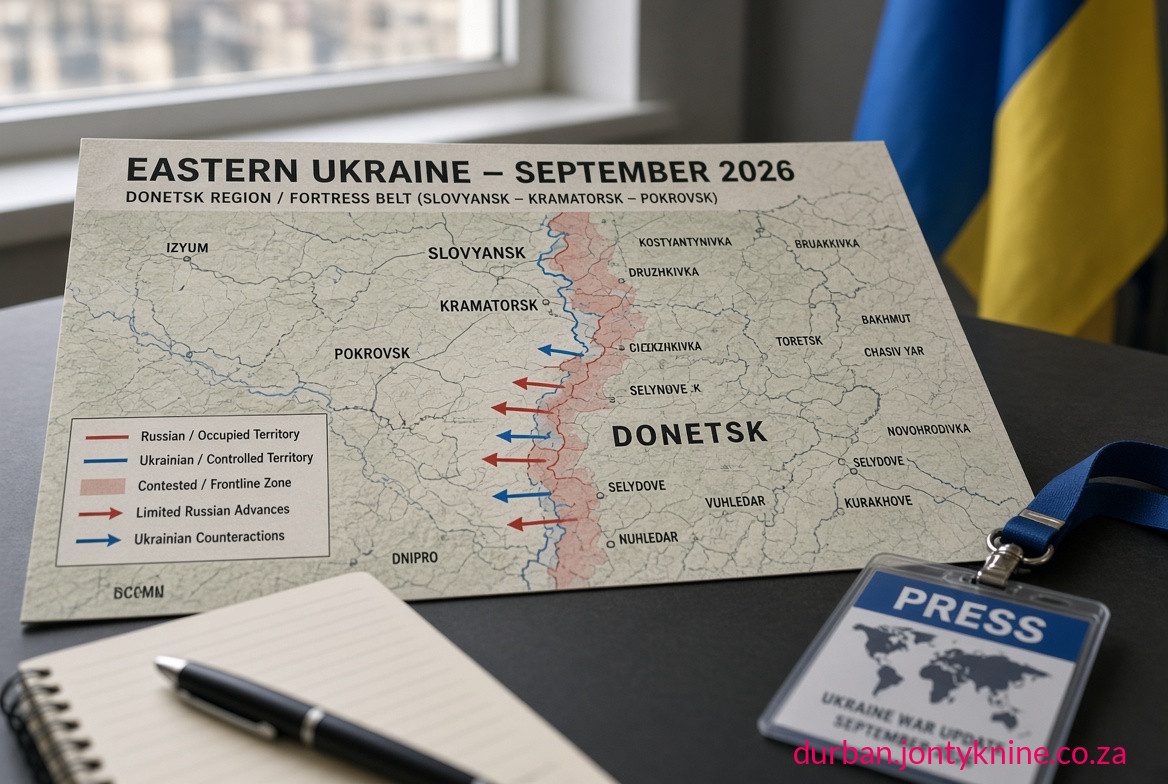
Russian forces continue offensive operations, primarily in eastern Ukraine (Donetsk direction, including areas around Pokrovsk, the broader Fortress Belt of Slovyansk-Kramatorsk-Druzhkivka-Kostyantynivka, and sectors near Kupyansk) and parts of the south (e.g., Hulyaipole direction). Advances are generally slow, incremental, and costly rather than operationally decisive.
- Institute for the Study of War (ISW) assessments indicate Russian net territorial gains have been limited in recent months compared with earlier periods. Ukrainian forces conducted notable counteroffensive actions earlier in 2026 (including the Oleksandrivka direction, liberating dozens of settlements and hundreds of square kilometers in parts of Donetsk, Dnipropetrovsk, and Zaporizhia oblasts). Ukrainian forces have also made recent advances or held firm in areas such as the Slovyansk direction and Kostyantynivka-Druzhkivka tactical area.
- Russian claims of major progress (including specific settlements like Svyatohirsk) have repeatedly been shown as exaggerated or false by Ukrainian evidence and even acknowledged by some Russian sources. Putin has set (and missed or adjusted) multiple deadlines for full control of Donbas; current ones pointing toward late 2026 appear unrealistic based on the observed pace.
- Russian casualty rates remain high (Ukrainian reports cited figures exceeding 40,000 in recent individual months). Ukrainian forces sustain pressure through intermediate- and long-range drone/missile strikes on Russian oil refineries, military infrastructure, logistics, and other targets deep inside Russia and occupied areas (recent examples include strikes reported near Novorossiysk, Saratov, and other sites).
Russia continues large-scale combined drone, cruise missile, ballistic missile, and other strikes against Ukrainian cities, energy, and infrastructure. After the short pause for the US envoys ended, Russia resumed heavy attacks on Kyiv (and other areas) around September 7–8, causing civilian deaths (reports of around 5 killed and dozens injured in the capital in one wave), fires, and damage to residential and other sites. Ukraine faces ongoing pressure on air defenses, particularly interceptors, ahead of winter.
Incidents such as a Russian drone briefly violating Moldovan and Romanian airspace have also been reported.
Aid, Support, and Broader Context
Western allies continue providing military support, with recent emphasis on air defenses: Ukraine is contracting supplies of roughly 1,000 Patriot missiles with partner and EU loan support; Germany has moved to send additional PAC-2 interceptors from stocks and urged others to do likewise; the UK has pledged further air-defense packages. Concerns persist about intensified Russian winter attacks on energy infrastructure and the need for sustained ammunition, air defense, and other aid.
The conflict remains a grinding attrition war. Russia holds the initiative in many sectors and can sustain pressure through manpower, artillery, glide bombs, and drones, but its advances are limited and expensive, and Ukrainian long-range strike capabilities plus defensive adaptations continue to impose costs and constrain Russian operational freedom. Neither side appears close to achieving decisive military victory on current trajectories, and political will for major compromises on territory remains low. The situation is fluid; daily ISW assessments, Ukrainian General Staff reports, and major news outlets provide the most current granular updates on specific sectors.