
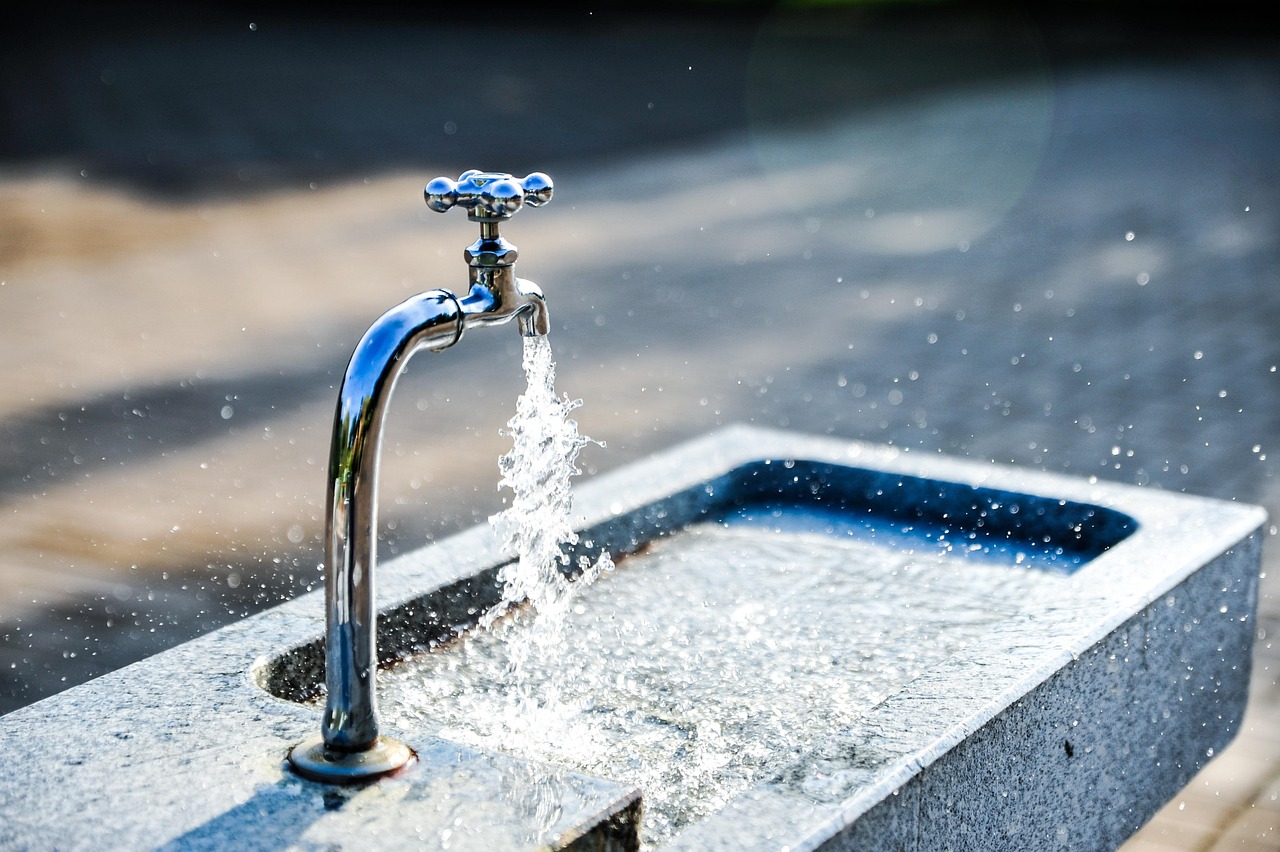
large-scale financial mismanagement, corruption, and infrastructure collapse. Funds intended for water services are diverted or lost while non-revenue water (leaks, theft, billing failures) reaches ~47%, wastewater systems fail, and residents in many areas face dry taps or contaminated supplies that have been described as unsafe or “poison.”
The headline’s “R500bn municipal scandal” appears to reference (or round from) figures highlighted by AfriForum and related SCOPA briefings around mid-2025. These cited 35 municipalities implicated in corruption cases valued at roughly R437 billion already referred to the National Prosecuting Authority (NPA), plus another ~R349 billion still under investigation—figures in the hundreds of billions that underscore the scale of alleged graft in local government, much of it tied to water and related services. Exact totals and scopes can vary by reporting period and what is included (procurement fraud, irregular expenditure, etc.), and independent verification of the full quantum remains challenging because many cases have not progressed to successful prosecution.
Scale of Financial Losses and Diversion
Key documented problems include:
- Non-revenue water: Roughly 47% of treated water is lost before reaching paying customers (well above international benchmarks of ~25–30%). This cost taxpayers an estimated R14.89–R19 billion in the 2023/24 financial year alone, with Gauteng (~R6.9bn) and KwaZulu-Natal (~R3.45bn) accounting for the bulk. National annual losses from this have also been cited around R26 billion in some later statements.
- Fund sweeping/diversion: In Johannesburg, ~R4 billion was moved (“swept”) from Joburg Water accounts into the city’s central treasury under a long-standing cash-management model. City officials and the mayor insisted the money was accounted for “on paper” as an inter-entity debt and that no funds were lost or stolen; critics (including opposition politicians and civil society) argued it was diverted from urgently needed maintenance while infrastructure crumbled and the physical cash position did not fully support the claim.
- Water tanker contracts: Municipalities have spent billions on private tankers as a stopgap for failing networks (e.g., hundreds of millions in Tshwane and Johannesburg alone in recent years, with national figures around R2.3 billion in one period, including substantial irregular expenditure). Investigations have uncovered politically connected or capacity-lacking companies receiving large payments, allegations of fronting, and claims that infrastructure is sometimes sabotaged to prolong tanker dependence. One high-profile Tshwane case involved an obscure company linked to an RDP-house resident receiving ~R95 million.
- Broader irregularity and backlog: Auditor-General findings have flagged material irregularities costing over R1.7 billion in specific water-related audits. The Department of Water and Sanitation has estimated a ~R400 billion backlog just to address maintenance and repairs in the worst-performing water services authorities (over 70% of which scored poor or critical in Blue/Green/No Drop reports). Grants for infrastructure sometimes go unspent and are returned while systems deteriorate.
Water revenue is frequently not ring-fenced, so collections are absorbed into general municipal budgets rather than reinvested in pipes, pumps, treatment works, or skilled staff. This creates a vicious cycle: under-maintenance → higher losses and pollution → more emergency spending (often poorly controlled) → further underfunding of core infrastructure.
Contaminated or Unsafe Water (“Poison”)
Failing wastewater treatment works discharge untreated or poorly treated sewage into rivers and dams, polluting source water. Blue Drop and related assessments have shown large shares of systems with poor microbiological compliance. High-profile consequences include the 2023 Hammanskraal cholera outbreak (linked to pollution from the failing Rooiwal works and reliance on tankers), widespread sewage spills, and local reports of discoloured, foul-smelling, or bacteriologically unsafe tap water. Residents in affected areas have resorted to boiling water, buying bottled supplies, or using informal (sometimes untested) tanker water.
This is primarily a governance and maintenance failure rather than absolute resource scarcity in many cases—dams and bulk supply often hold enough water, but distribution networks and treatment plants have collapsed under years of neglect, skills shortages, and political interference.
Investigations, Accountability, and Responses
The Special Investigating Unit (SIU) has pursued multiple proclamations covering the Department of Water and Sanitation, water boards, and municipalities. Outcomes include recovered assets (hundreds of millions), set-aside contracts (over R1 billion in some tallies), civil litigation worth several billion rand, and hundreds of referrals for prosecution or disciplinary action. However, actual criminal prosecutions and convictions have lagged significantly, drawing criticism from parliamentarians and civil society.
Government responses include a National Water Crisis Committee, calls for ring-fencing of water revenue (especially in metros), the Water Services Amendment Bill (aimed at stronger enforcement and personal liability for managers), establishment of a National Water Resources Infrastructure Agency, redirected grants, legal action against non-compliant municipalities, and an anti-corruption forum targeting tanker mafias and sabotage. Opposition parties and groups such as AfriForum, Corruption Watch, and the SA Human Rights Commission have repeatedly called for ring-fencing, competent appointments over cadre deployment, personal accountability, and faster prosecutions.
Broader Implications and Nuances
The crisis disproportionately harms poorer communities, raises health costs, damages economic activity (businesses, agriculture, households face higher private water costs or downtime), and erodes trust. It is multi-causal: ageing apartheid-era and post-1994 infrastructure, rapid urbanisation, skills flight, weak revenue collection, political patronage in procurement, and inadequate consequence management. While some metros and better-run municipalities perform relatively well, the national picture is dominated by the failures of the majority of water services authorities.
Not every large figure equates to outright theft—some reflect cumulative losses over years, unspent grants, inter-entity accounting, or legitimate (if inefficient) emergency spending. Independent audits, court outcomes, and full SIU reports remain essential for precise attribution. South Africa has the technical knowledge and, in many catchments, sufficient bulk water; the binding constraint is institutional capacity, financial discipline, and political will at municipal level.
Ongoing monitoring of Auditor-General reports, Blue/Green/No Drop assessments, SIU progress, and implementation of ring-fencing and enforcement reforms will determine whether the cycle of vanishing funds and unsafe water can be broken.