
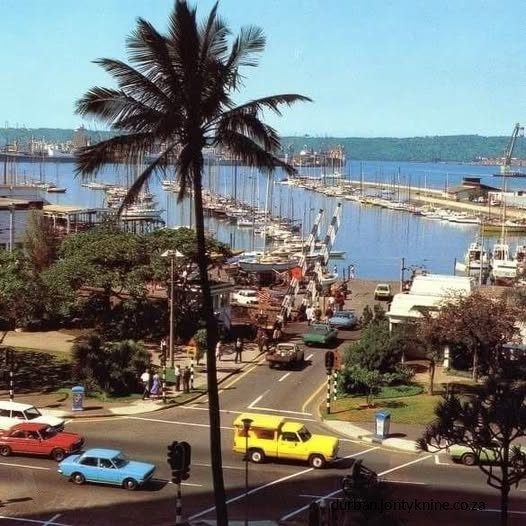
Esplanade
Durban Esplanade (commonly a reference to the Victoria Embankment, now officially Margaret Mncadi Avenue) is…
The days that were
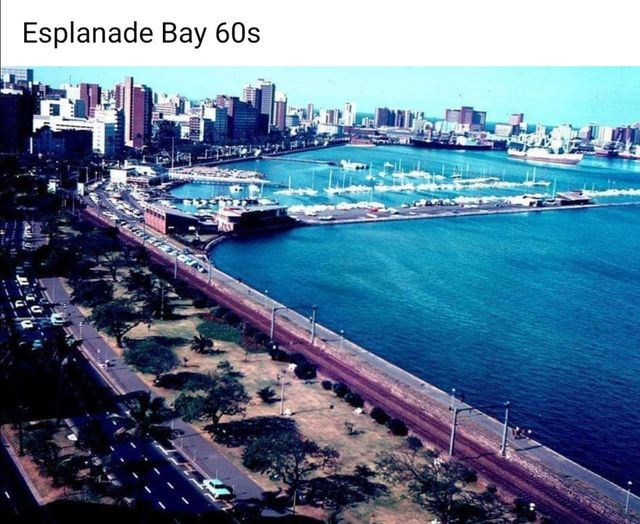
Durban Esplanade (commonly a reference to the Victoria Embankment, now officially Margaret Mncadi Avenue) is a historic waterfront roadway and precinct in central Durban (eThekwini), KwaZulu-Natal, South Africa. It runs along the northern edge of Durban Harbour (the Bay of Natal), offering views of the port, yacht marina, and the Bluff across the water.
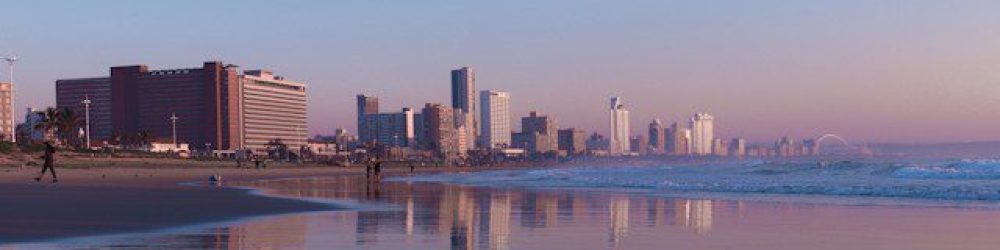
It is distinct from—but closely connected to—the ocean-facing Golden Mile / Beachfront Promenade (the popular sandy beach and pedestrian walkway stretching several kilometres, extended in recent years toward the harbour mouth). The Esplanade sits on the harbour side of the CBD/Point area.
It stretches roughly from Maydon Wharf (with its large sugar terminal) in the west, past Wilson’s Wharf and the yacht basin, toward the docks and Point area in the east. It is lined with a mix of historic institutional buildings, mid- to high-rise apartments and offices, and modern structures, with the harbour and marina immediately adjacent.
Key nearby features include easy access to the CBD, the Point Waterfront developments, and a short distance (walking or short drive/bus) to the Golden Mile beaches, uShaka Marine World, and related attractions.
The area was developed in the late 19th and early 20th centuries as part of harbour and foreshore works. Construction of the embankment began around the mid-to-late 1890s; it was named Victoria Embankment in 1897 and sections were completed in the early 1900s. It quickly became a prestigious residential and institutional address with harbour views, formal landscaping, and civic buildings.
Historically, the bay itself was used for bathing and recreation before the open-ocean “Back Beach” (today’s Golden Mile) was developed starting around 1906–1907. The Esplanade retained a more formal, urban waterfront character—home to clubs, courts, government buildings, and apartments—while the ocean promenade evolved into a major leisure and tourism strip.
Notable spots along or near the Esplanade include:
The area forms part of broader Point and harbour regeneration efforts, with improved links to the extended beachfront promenade.
The most prominent current project is the major refurbishment of the Esplanade Government Building. In November 2024, KwaZulu-Natal Public Works announced a partnership involving the department, eThekwini Municipality, and private contractor Enza Construction for an approximately R800 million to nearly R1 billion redevelopment.
Key details:
This sits alongside ongoing Point Waterfront and beachfront upgrades that have lengthened and improved the continuous waterfront walkway.
Residential — The Esplanade area remains popular for apartments with harbour views. Listings (for sale or rent) typically feature 1–3 bedroom units; prices vary but reflect central location and outlooks. Amenities include proximity to shops, the Workshop shopping centre, hospitals (e.g., Addington), transport links, and both harbour and beachfront recreation.
Visiting — It is an open public thoroughfare suitable for walking, with waterfront restaurants, marina views, and cultural stops (BAT Centre, museums). Combine it with a Golden Mile promenade walk, harbour boat trip, or visit to uShaka. Early morning or late afternoon often offers pleasant light and cooler temperatures. As with many urban waterfronts, standard awareness of surroundings is advisable, particularly at night.
The Esplanade embodies Durban’s layered identity as a major port city: colonial-era civic ambition, harbour industry (sugar, shipping, yachting), residential living with water views, and ongoing urban renewal. It is less about sandy beaches and more about the working and historic harbour edge that defines much of the city’s character.