




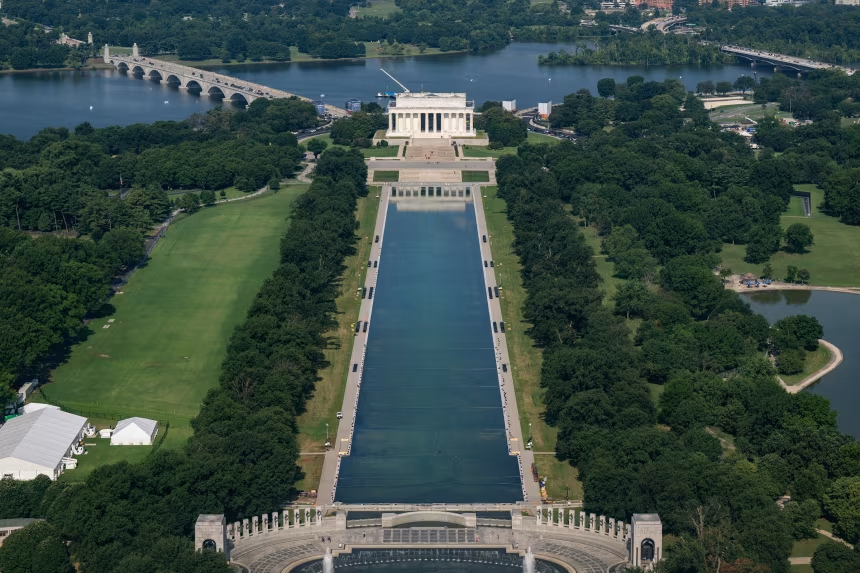
The charge relates to an incident on June 19, 2026, at the Lincoln Memorial Reflecting Pool in Washington, D.C. Prosecutors, led by U.S. Attorney Jeanine Pirro, allege Hearn “maliciously” and “forcefully and violently” pulled up and removed sections of the pool’s bottom liner/sealant with both hands, causing more than $1,000 in damage.
This upgraded the initial misdemeanor arrest by U.S. Park Police. The felony carries a potential maximum sentence of up to 10 years in prison if convicted, though actual outcomes depend on evidence, plea deals, or trial results.
Context of the Incident
The Reflecting Pool, recently renovated under the Trump administration to address ongoing issues (including algae problems), had a new liner or sealant installed. Reports indicate the renovation faced challenges, with peeling or failing sealant noted shortly after completion.
- Prosecutors’ account: National Park Service employees witnessed the alleged deliberate damage.
- Hearn’s account: He was biking or jogging nearby, noticed a loose or partially detached flap of blue liner material, reached in (removing a glove) to feel or inspect it out of curiosity, and denies any destructive intent or significant damage. He has described it as minimal interaction with already compromised material.
Public and social media reactions are divided. Some view it as overzealous prosecution of a minor or curious act (especially for a 67-year-old Olympian and given the pool’s pre-existing issues), while others see it as accountability for vandalizing a national landmark. Comments range from calls for leniency (“picking up debris”) to support for enforcement.
Legal and Evidentiary Notes
The grand jury’s indictment establishes probable cause based on witness testimony (Park Service employees). Hearn’s own prior statements acknowledging he reached in and touched/bent the material could serve as evidence, though they do not necessarily constitute a full admission of malicious destruction.
No video has been prominently mentioned by prosecutors, so the case may hinge on witness credibility versus Hearn’s explanation. Defense arguments could include lack of intent, the pool’s condition (pre-existing peeling), and proportionality of the response.
This is not Hearn’s first notable public interaction, but reports frame this as an isolated incident tied to curiosity about the high-profile site rather than activism or prior criminal history.
Broader Implications
- Symbolism and politics: The pool’s renovation has drawn attention amid national landmark maintenance debates. The case highlights tensions over public property protection, prosecutorial discretion, and perceptions of “vandalism” versus benign interaction.
- Nuances and edge cases: If the liner was already detaching (as some reports suggest), questions arise about causation and damage valuation. Similar incidents at public sites often result in civil resolutions or lesser charges unless clear malice or significant harm is shown. Age, background (Olympian with decades in water sports), and lack of apparent motive could influence sentencing or plea negotiations.
- Related considerations: This fits into ongoing discussions about D.C. grand juries, federal vs. local priorities, and high-visibility cases involving public monuments. Outcomes could set precedents for similar “tampering” incidents.