




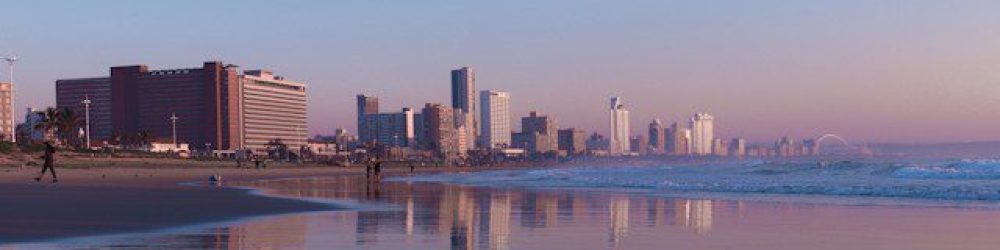

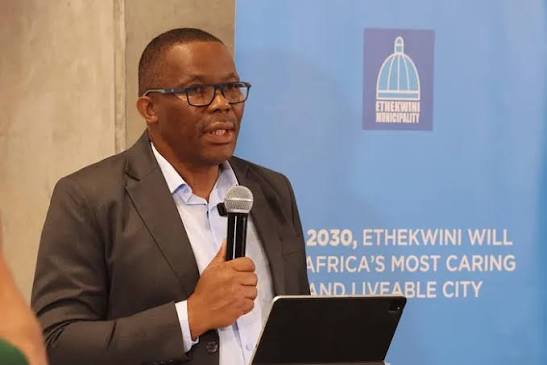
This push was highlighted by PeWG co-chair Mike Mabuyakhulu at the inaugural KwaZulu-Natal Investment Forum in Umhlanga, Durban, on 30 July 2026. The forum itself focused on unlocking pension fund capital for provincial priorities including infrastructure, housing, SME finance, logistics, tourism, and the green economy.
Background on the PeWG
President Cyril Ramaphosa established the PeWG (around 2024) as a collaborative platform involving national, provincial, and local government, organised business, labour, and other stakeholders. Its initial phase prioritised stabilising service delivery—addressing water, electricity, sanitation, infrastructure damage from the 2022 floods, governance issues, and related challenges that had eroded investor confidence in South Africa’s third-largest metro and home to Africa’s busiest container port.
By early-to-mid 2026, officials reported tangible progress: improved business confidence (reaching its highest levels since the local index began), record tourism spend, support for roughly 61 industrial areas housing about 27,000 businesses (generating around R9 billion annually and over half the city’s rates revenue), and major private commitments such as Toyota’s R10 billion expansion in the Prospecton industrial node. A Partnerships Framework was approved to enable public-private collaboration on infrastructure and catalytic projects.
In March 2026, Ramaphosa launched Phase 2 (the “Catalytic Growth Phase”), shifting emphasis to economic development, unlocking large-scale infrastructure investment, reducing red tape, strengthening industrial zones, and inner-city regeneration. The group has coordinated workstreams on water security, infrastructure, economic recovery, and partnerships.
The Call for Pension Fund Investment
Mabuyakhulu argued that faster growth requires infrastructure investment, stronger industrial development, and expansion of productive sectors. Municipalities face pressures from rapid urbanisation, ageing assets, climate resilience needs, and rising service demands that exceed constrained public balance sheets. He positioned the PeWG as a model for aligning government with institutional investors to remove obstacles and accelerate projects.
South Africa holds a large pool of domestic institutional capital—estimated at roughly R2.96 trillion in non-overlapping domestic capital (extending to about R5.96 trillion in total assets under management across the ecosystem). Traditional approaches have treated retirement capital as passive secondary-market investments, detached from the real (physical) economy. Mabuyakhulu contended this is no longer sustainable: pension fund long-term performance and solvency depend on domestic economic growth, functional utilities, and labour market stability. Underperformance in the real economy creates systemic risks for the assets backing liabilities. Deliberate, structured investment in the domestic physical economy is therefore a core fiduciary duty. Capital allocation must support a functional, productive, and stable environment to sustain long-term returns.
eThekwini has developed a substantial pipeline of catalytic projects (variously cited in the R217–R227 billion range) across manufacturing, logistics, infrastructure, tourism, and mixed-use development. These are supported by spatial planning and coordinated public infrastructure spend. Potential impacts include hundreds of thousands of construction jobs and over 100,000 permanent positions. Specific examples include industrial upgrades (e.g., Prospecton supporting Toyota), water and flood-risk projects (such as the Umlazi Canal feasibility work toward a multi-billion-rand overhaul), waterfront and precinct developments, and others like Durban Film City, Oceans Umhlanga, and inland logistics nodes.
Related voices at the forum and elsewhere reinforced the theme. Developers and fund representatives have long argued that pension capital (facilitated in part by Regulation 28 frameworks) can and should play a larger role in local construction, infrastructure, and development rather than flowing predominantly offshore. Local funds such as the KZN Municipal Pension Fund (serving eThekwini employees, with assets in the tens of billions of rand) have been part of the broader conversation.
Broader Context, Opportunities, and Considerations
Durban’s strategic importance—as a major port, manufacturing hub (especially automotive), tourism destination, and logistics corridor—makes its recovery nationally significant. Successes so far have helped restore some confidence and attract commitments, but persistent issues remain (high non-revenue water, certain infrastructure gaps, crime/extortion concerns in construction, and the need for faster approvals and lower costs of doing business). The city has updated incentive policies offering rates rebates tied to job creation, sector priorities (manufacturing, logistics, green industries, automotive), and spatial focus (including townships and regeneration corridors).
Pension funds can provide long-term, patient capital suited to infrastructure and development projects that commercial banks or the fiscus alone may not fully fund. Potential benefits include jobs, rates revenue, improved service reliability (which supports industrial viability), and broader economic multipliers. Alignment with the National Development Plan and provincial growth strategies is emphasised.
Nuances and challenges include fiduciary responsibilities (returns, risk, liquidity, and member outcomes must remain primary), project bankability and readiness (governance, experienced partners, realistic demand assumptions, and credible institutions are essential for capital to flow), regulatory frameworks (Regulation 28 and offshore limits influence allocation), capacity for project preparation and execution, and the need to avoid past pitfalls of poorly structured public investments. Institutional investors typically seek certainty, transparency, and delivery track records rather than aspirational pipelines alone. Collaboration models (blended finance, public-private partnerships via the new framework, one-stop shops for approvals) are being refined to address these.
In summary, the PeWG’s outreach reflects a deliberate strategy to crowd in domestic institutional capital—particularly pension funds—as a complement to public budgets and private equity for Durban’s infrastructure and growth agenda. Progress on stabilisation has created a platform; converting the project pipeline into financed, delivered outcomes will determine the scale of impact on jobs, competitiveness, and long-term municipal and pension fund sustainability. Ongoing multi-stakeholder coordination remains central to implementation.