




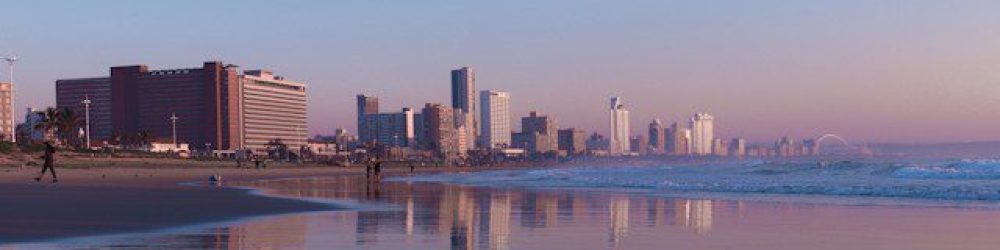

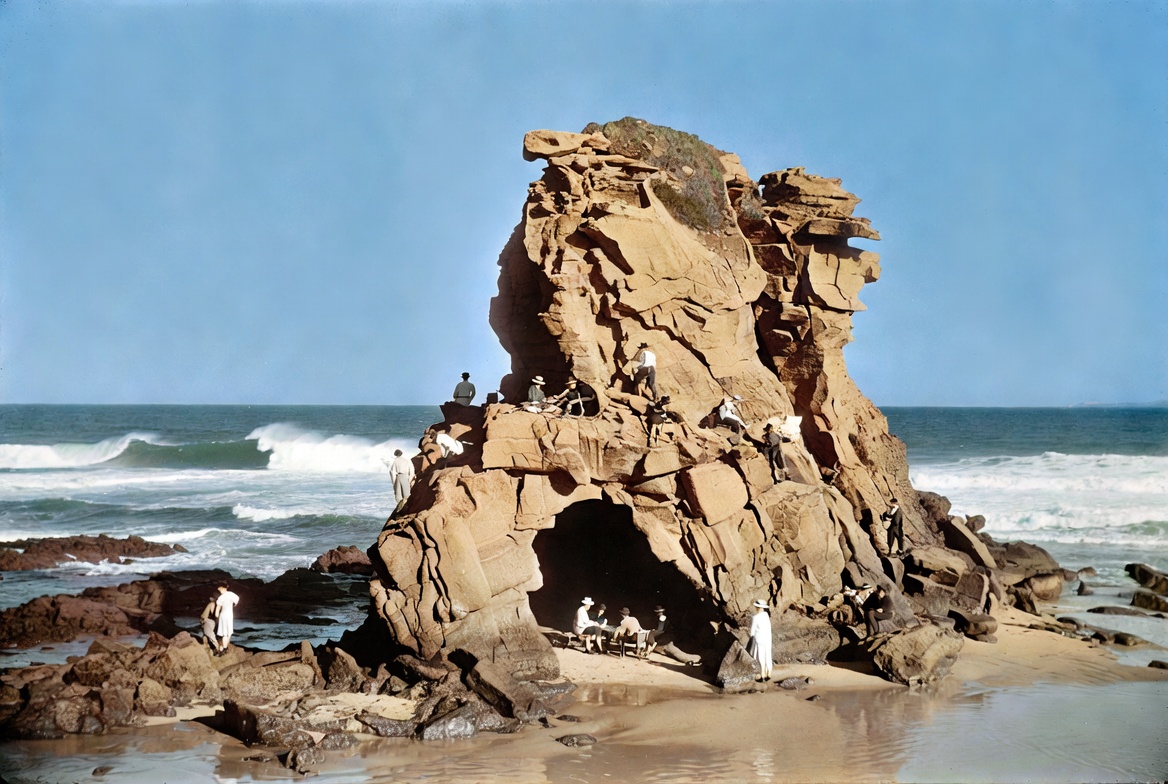
The recent coverage stems from a July 8, 2026, social media post by the Sodurba Tourism Association (also referred to as Durban Tourism Group in headlines), which revived interest in this “forgotten story” of a lost Durban landmark.
Historical Context and Significance
Cave Rock was a large, weathered sandstone formation shaped over hundreds of thousands of years by the sea, wind, and weather. It stood near the Bluff headland, serving as a visible sentinel for centuries:
- Early explorers and settlers — It was present when Vasco da Gama sailed the coast in 1497, during shipwrecks like that of the Good Hope in 1685, and noted by early mapmakers and settlers such as Henry Ogle in the 1820s. Indigenous groups like the Abakwa Luthuli also knew the area.
- Local landmark and recreation spot — For generations of Durbanites, it was a popular picnic site, photography spot, fishing area, and place for family outings. Surfers and fishermen gathered there, and it featured in artworks and old photographs. Many Durban residents still refer to the area as Cave Rock today, even though the formation itself is gone.
It was a defining feature of the Bluff’s coastline, visible from the sea and land, and held cultural and recreational value long before modern tourism.
Reason for Destruction
The primary reason was wartime security and military strategy during World War II. Durban Harbour was a strategically important port, and the Bluff played a key role in coastal defenses due to its height and position.
- Officials feared the distinctive rock could serve as a navigational aid or landmark for enemy ships (such as German U-boats), helping them identify and approach the coastline.
- Alternative accounts suggest it obstructed sightlines or firing trajectories for gun emplacements (like those at King’s Battery) positioned to defend against potential landings or attacks.
The South African War Department used dynamite to remove it. This decision has been criticized as shortsighted or philistine, with some noting that relocating a gun might have been simpler than destroying a natural landmark.
The rock was reduced to rubble by the 1940s. Remnants may still exist as scattered rocks, but the iconic formation vanished.
Aftermath and Legacy
- The site today — The area retains the name “Cave Rock” and is known for surfing (Cave Rock Beach/Brighton Beach is a notable spot). Surfers worldwide still inquire about it.
- Public reaction — Recent posts have elicited nostalgia, memories of fishing for kingfish and shad, and some regret or humor about the loss. It highlights tensions between heritage preservation and practical/military needs.
- Broader implications — This fits a pattern in some South African contexts where natural or historical features have been altered for development, defense, or other priorities. It raises questions about balancing security, progress, and cultural/natural heritage. Similar debates occur with other landmarks or sites facing threats from vandalism, development, or neglect.
Multiple Angles and Nuances
- Military perspective — In the context of WWII threats to South African ports, removing potential aids to enemy navigation was a pragmatic defensive measure. Durban’s role in the war effort made the Bluff a high-priority area with gun batteries and other installations.
- Heritage and tourism angle — The destruction represents a permanent loss of a unique geological and cultural feature. Tourism groups like Sodurba use such stories to educate locals and visitors about Durban’s layered history, fostering appreciation for what remains.
- Environmental/historical irony — A formation that survived millennia of natural forces was erased by human action in a short time. This echoes other cases worldwide where landmarks were sacrificed for wartime needs (e.g., camouflage, clearing lines of fire).
- Edge cases and related considerations — Memory persists through photos, artworks, oral histories, and place names. Modern efforts sometimes involve monuments, education, or petitions for protection of similar sites. Climate change, coastal erosion, and urban development continue to threaten natural features along Durban’s coastline.