


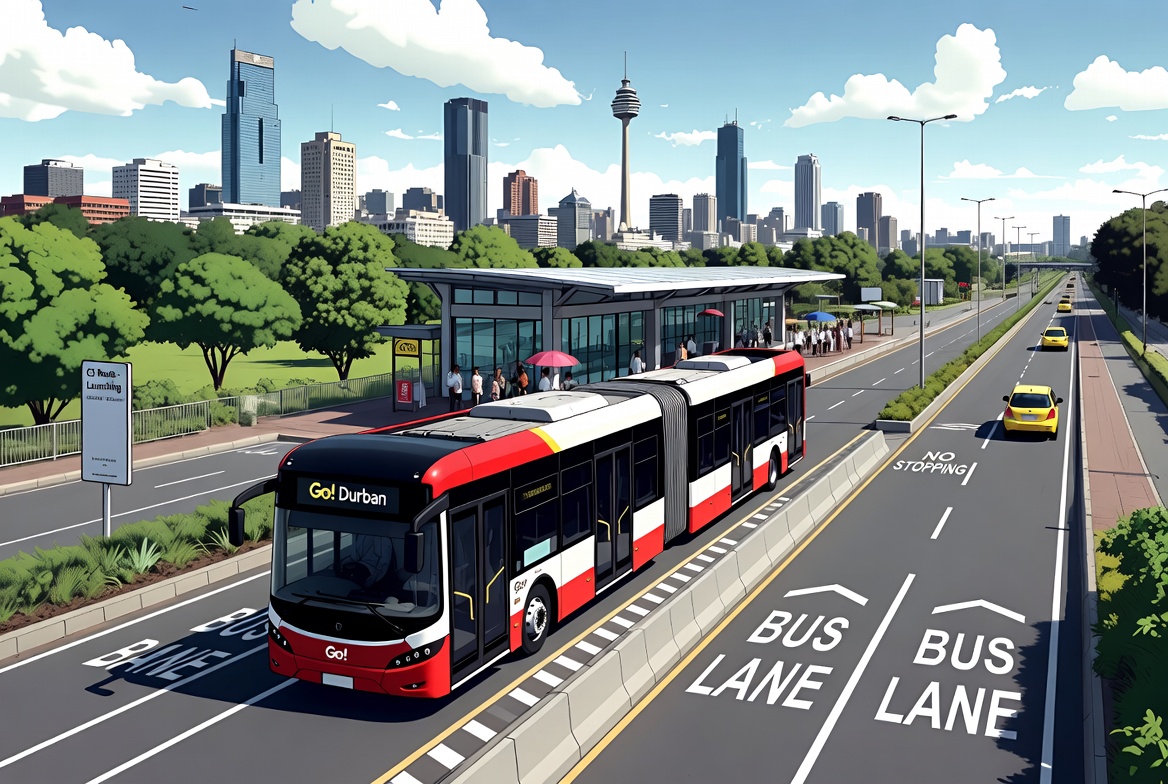
Go! Durban aims to create a safer, more reliable, efficient, and accessible public transport system. It includes dedicated bus lanes (Right of Way), stations, integrated fare management, feeder services, and eventual links to rail. The full network envisions around 250 km of trunk routes (with some rail components), serving over 85% of the municipality’s population within walking distance.
Key Phase 1 Corridors include:
- C3 (the pilot): Bridge City (KwaMashu) to Pinetown/New Germany via MR577 — this is the focus of current launch talks. It features 14 stations and has seen significant infrastructure completion.
- C1: Bridge City to Durban CBD (with sub-routes).
- C9: Connections toward Umhlanga via Cornubia and Phoenix.
The project aligns with national goals for integrated public transport, job creation, urban regeneration, transit-oriented development, and reducing reliance on private cars and unregulated minibus taxis. It received funding via the Public Transport Infrastructure System Grant (PTISG).
Recent Developments (July 2026)
- The eThekwini Municipality and taxi operators (e.g., Durban West Taxi Association under Santaco) report positive engagements and progress toward resolving an impasse.
- The C3 route is physically ready and targeted as the first to launch, potentially from December 2026, followed by phased expansion.
- Key sticking points like bus ownership, compensation for lost business, and route access are being negotiated. The city has reverted to a conventional phased approach agreed by stakeholders, abandoning alternative plans that might have allowed non-participating operators.
- Municipality spokesperson Mandla Nsele highlighted ongoing work on contracts, system testing, and commissioning, emphasizing benefits for commuters, formalization of the taxi industry, and empowerment.
Taxi representative Mathula Mkhize noted that tensions are easing, with a commitment to launch this year, though funding clarity and other details remain.
Why the Delays? Historical Context and Challenges
The project dates back to planning around 2010, with construction starting in the mid-2010s. It has faced:
- Taxi industry resistance: Operators feared revenue loss on affected routes and demanded significant stakes in the new bus operations. Past tensions included go-slows, disputes, and claims of “mafias” or sabotage in earlier reports.
- Financial and operational hurdles: High costs (overall project ~R22 billion), funding uncertainties, and maintenance of idle infrastructure (including security against vandalism). One report noted R200 million spent on a stalled route by early 2025.
- Construction and integration issues: Land acquisition, service relocations, expropriations, and aligning with land-use plans.
- Political and administrative shifts: Multiple missed launch dates, leadership changes, and broader municipal challenges in Durban/eThekwini.
These reflect common tensions in South African cities when introducing formal BRT systems that compete with or integrate the dominant informal minibus taxi sector.
Potential Benefits and Implications
For commuters: Dedicated lanes could mean faster, more predictable travel, reduced congestion, better safety, and universal access features. Integration with feeders and non-motorized transport would improve last-mile connectivity.
Economic and urban development: Stimulate densification around stations, job creation (construction, operations, skills development), and support for local businesses. It fits broader goals of making eThekwini more livable and competitive.
For the taxi industry: Potential formalization, compensation packages, and roles in feeder services could provide stability and new opportunities, though it requires balancing control and livelihoods. Successful models elsewhere (e.g., other South African cities) show integration is possible but needs careful negotiation.
Broader implications:
- Traffic and environment: Reducing single-occupancy vehicles and minibus inefficiencies could lower emissions and improve road safety.
- Fiscal responsibility: Launching C3 could start generating revenue and justify further investment, but sustained subsidies will likely be needed.
- Political optics: Progress could be a win for the municipality amid past criticism; opposition parties like the DA remain cautiously optimistic due to the history of delays.
Risks, Nuances, and Edge Cases
- Implementation risks: Even with agreement, testing, fleet procurement, driver training, fare systems, and enforcement of dedicated lanes must succeed. Past projects elsewhere have struggled with operational reliability.
- Ongoing tensions: If compensation or ownership deals fall short, renewed protests or non-cooperation could arise. The taxi sector’s influence in KZN is significant.
- Phased realities: Full network rollout will take years; initial services might run in mixed traffic where dedicated infrastructure is incomplete.
- Equity considerations: Ensuring affordability, accessibility for disabled users, women, youth, and marginalized communities is critical. Park-and-ride was not prioritized in Phase 1, which may affect some users.
- External factors: Funding availability, political stability, economic conditions, and competition from private vehicles or ride-hailing apps.
Stakeholder Perspectives
- Municipality: Focuses on transformation, commuter benefits, and stakeholder buy-in.
- Taxi operators: Seek protection of livelihoods and meaningful participation.
- Commuters: Frustrated by years of delays and unreliable current options; eager for improvements but skeptical.
- Opposition/Critics: Highlight past waste and call for accountability.
Overall, this development is encouraging but tempered by the project’s troubled history. A successful C3 launch in late 2026 could mark a turning point for public transport in Durban, demonstrating that persistent engagement between government and the taxi industry can yield results.