




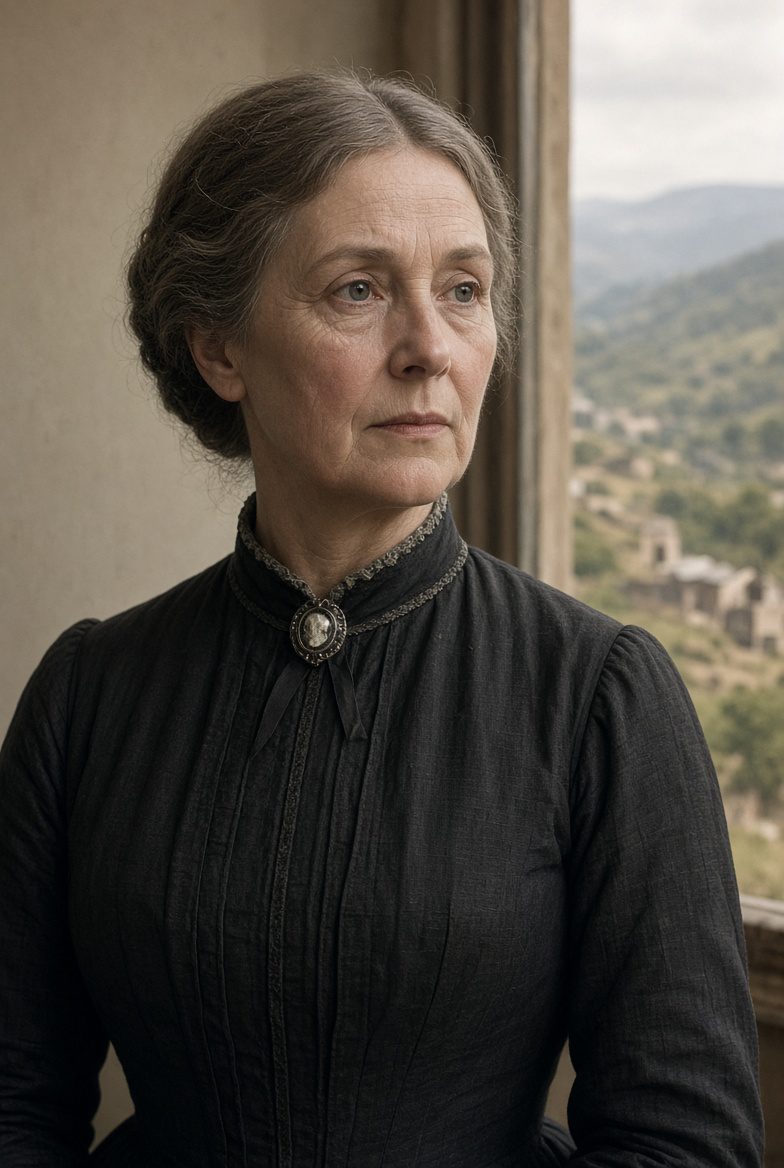
She was the eldest child of John William Colenso (the first Bishop of Natal) and Sarah Frances Bunyon. Born on 30 June 1847 in Tharston, Norfolk, England, she moved to Natal with her family as a child. The Zulu nickname Udhlwedhlwe (or close variants such as uDhlwedhlwe / Udlwedlwe / Dlwedhlwe) translates roughly as “walking stick” or “her father’s staff and guide.” It reflected her role as support, secretary, interpreter, and close collaborator to her father, whose fluency in Zulu she often surpassed. She also had other Zulu names, including uMatotoba (the slow/careful one), Inkanisi (source of brightness), and uMandiza (the flying one).
Early life and role alongside her father
Harriette grew up at the family’s mission station at Bishopstowe / Ekukhanyeni near Pietermaritzburg. She assisted her father during key episodes, notably serving as his secretary during the 1874–1875 trial of the Hlubi chief Langalibalele. After Bishop Colenso’s death in 1883, she took on the leadership of the family’s advocacy work on behalf of African (especially Zulu) communities against colonial policies.
Advocacy for the Zulu monarchy and people
She became a determined defender of the Zulu royal house, particularly King Cetshwayo and later his son Dinuzulu. Key aspects of her work included:
- Campaigning against policies (associated with figures such as Sir Theophilus Shepstone) that fragmented Zulu authority and encouraged inter-chiefdom conflict.
- Advising Dinuzulu to surrender to British authorities in 1888 and securing high-profile legal counsel for his defence.
- Working intensively (through pamphlets, letters, the Aborigines Protection Society, the Colonial Office, and her brother Francis in London) for the return of Dinuzulu and his uncles from exile on St Helena (1890–1897/1898). She became the first woman to give evidence before a House of Commons committee in this cause.
- Supporting Dinuzulu again after the 1906 Bambatha Rebellion, obtaining counsel (including W.P. Schreiner) and pushing for a fair trial; this effort left her financially strained despite some imperial funding.
- Maintaining contact with educated African leaders (e.g., Martin Lutuli, Saul Msane, J.T. Gumede) around the formation of the Natal Native Congress (a precursor to the African National Congress). Sol Plaatje later dedicated Native Life in South Africa to her.
She also sought to preserve the independent Church of England presence in Natal after her father’s death, though this ultimately failed with legislation around the time of the 1910 Union of South Africa. The family lost Bishopstowe and relocated.
Later years and legacy
After Dinuzulu’s death in 1913 and the creation of the Union of South Africa, her direct political influence waned as issues shifted toward industrialisation, urbanisation, and the reduced role of imperial oversight. She continued missionary and related work but was burdened by debt. She died on 2 June 1932 at Sweetwaters, Natal (aged 84). Alice Werner dedicated her 1933 book Myths and Legends of the Bantu to Harriette and her sister Agnes.
Harriette Colenso is remembered as a committed (if sometimes strategically imperfect) ally of Zulu political interests across the colonial divide. She occupied an unusual position as a white woman who was treated in some Zulu contexts with kinship-like respect and who used her father’s name and her own Zulu identity markers to speak with authority. Primary materials related to her work are held in the Natal archives in Pietermaritzburg. Scholarly treatments include Jeff Guy’s The View Across the River: Harriette Colenso and the Zulu Struggle against Imperialism and various articles and theses examining her political praxis.
The spelling “Harriete Dlwedlwe” in your query closely matches common historical renderings of her English given name (Harriette/Harriete) and Zulu name (Dlwedhlwe / Udhlwedhlwe variants). She is the historical figure this name combination refers to.