


The N3 between Pietermaritzburg (PMB) and Durban
Share this... Whatsapp Facebook0 Twitter Threads Pinterest0 Linkedin0 Reddit0 Wechat Line TelegramBlueskyBroader N3 Toll Route…


The days that were
**The N3 between Pietermaritzburg (PMB) and Durban is a high-volume, high-risk corridor for mixed traffic (cars/light vehicles and heavy trucks), with frequent multi-vehicle incidents that often result in fatalities.** Precise, publicly available annual aggregated statistics specifically isolating fatal car- and truck-involved accidents on only this ~80–100 km stretch over recent years (roughly 2022–2026) are limited. Official data is more commonly reported for the broader N3 Toll Route (primarily Heidelberg/Gauteng to Cedara, just north of PMB, managed by N3TC), KZN province overall, or individual high-profile incidents.
### Key Characteristics of the Stretch
This section carries heavy freight traffic linked to the Port of Durban, with thousands of trucks daily on the wider N3 corridor and sustained growth from the shift of freight from rail to road. Known high-risk zones include:
– Key Ridge / Hammarsdale area (historically steep grades and curves; subject to a major SANRAL realignment project to reduce vertical grades, straighten alignments, and improve safety).
– Marianhill Toll Plaza approaches.
– Areas around Ashburton, Market Road (near PMB), Pinetown/Richmond Road, Shongweni, Townhill, and related interchanges.
Crashes frequently involve trucks losing control (brake issues, speed, fatigue), rear-end collisions, multi-vehicle pile-ups, and interactions with light vehicles. Human factors dominate causes (typically 75–90%+ of incidents on comparable N3 sections), including speeding, fatigue, distraction, reckless overtaking or following too closely, and vehicle roadworthiness problems (especially truck brakes). Nighttime, early morning, weekend, and festive/peak holiday periods show elevated risk.
### Available Quantitative Context
– **Broader N3 Toll Route (to near Cedara/PMB, 2011–2022 academic analysis of N3TC data)**: Fatal crashes ranged from roughly 73–120 per year; fatalities from about 112–185 per year. Totals over the period showed higher concentrations in certain sections. Human factors accounted for the large majority of crashes. Recent N3TC figures indicate ~1,000–1,200 total crashes per year (e.g., 1,045 Jan–Nov 2024 with trucks in over half; ~1,194 in full 2024), with single-vehicle loss-of-control crashes often dominant and human error cited in the large majority for both light vehicles and trucks.
– **KZN provincial and district patterns**: During peak periods (e.g., early December), eThekwini (covering the Durban end of the N3) frequently leads in crashes and fatalities. Example: 1–12 December 2024 saw provincial increases (63 crashes vs 56 prior year; ~64 fatalities vs 61), with eThekwini recording 26 crashes and 26 fatalities in that short window. Broader RTMC national data notes truck involvement elevates fatality likelihood, with KZN accounting for a substantial share of national truck-related fatal crashes.
– **National truck context (RTMC)**: Roughly 2,237 fatal crashes involving trucks over a five-year period (averaging at least one per day nationally), with KZN contributing significantly.
Exact yearly fatality counts limited strictly to car + truck incidents on the PMB–Durban N3 segment are not published in a consolidated public summary in the sources reviewed.
### Patterns from Recent Incidents (Illustrative, Not Exhaustive)
News and official reports from 2024–2026 document recurring fatal or serious multi-vehicle events involving both cars/light vehicles and trucks on this stretch:
– December 2024 (Marianhill Toll Plaza area): Heavy vehicle (Zimbabwe-registered truck) into multiple trucks and light vehicles; at least one fatality (truck driver).
– December 2024 (near Market Road offramp, PMB area): Multi-vehicle involving trucks, buses, and cars; two fatalities (truck and bus drivers), multiple injuries.
– 2025 (near Marianhill/Shongweni): Incident involving a minibus taxi and light vehicle leading to rollover down an embankment; multiple fatalities (reported as five, including police officers in one account).
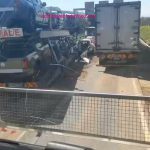
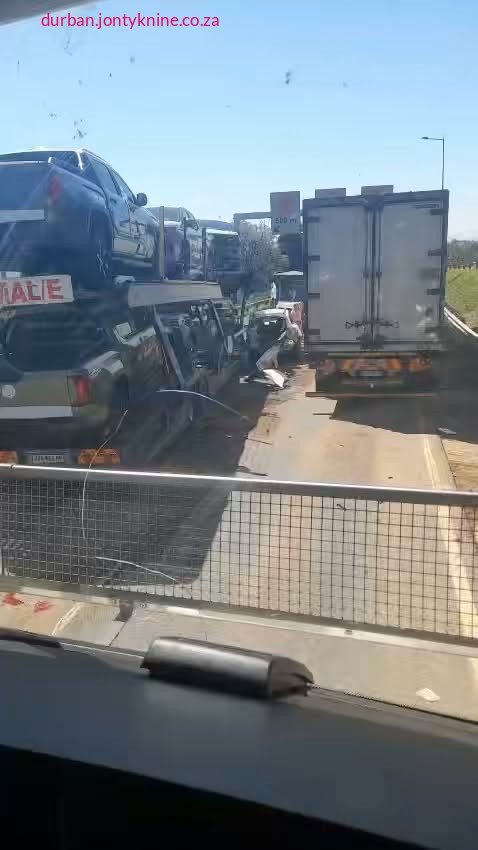
– October 2026 (Pinetown/Richmond Road area, PMB-bound): Car carrier (truck) collision with light vehicle then bridge; one fatality (light vehicle driver), truck driver critically injured and entrapped.
– Other reported events include head-on or multi-vehicle crashes near Ashburton, Shongweni, Townhill, and related sections with fatalities or serious injuries involving mixed traffic.
These align with longer-term patterns of pile-ups, runaway or out-of-control trucks on grades, and high-severity outcomes when heavy vehicles are involved.
### Trends, Causes, and Broader Implications
Overall crash volumes remain elevated due to traffic growth, though some periods show fluctuations or modest declines in certain metrics with intensified enforcement. Fatal outcomes are influenced by vehicle mass differences (trucks vs cars), speed, and secondary collisions. Infrastructure work (e.g., Key Ridge realignment) targets geometric risks, while authorities emphasize enforcement, vehicle fitness checks, driver behaviour campaigns, and rest compliance for truckers.
**Limitations of the data**: Public reporting is stronger on high-profile incidents and broader route/provincial aggregates than on clean annual segment-specific tallies broken down by vehicle type and fatality status. For the most granular or official figures, primary sources such as RTMC State of Road Safety reports, KZN Department of Transport releases, SANRAL project updates, or N3TC incident analyses would be the best references (though they often aggregate at larger scales).
In summary, the PMB–Durban N3 remains a persistently high-risk corridor for fatal accidents involving cars and trucks. Multi-vehicle incidents with trucks as key participants are a recurring feature, driven primarily by human factors amid high freight volumes, with specific blackspots under active improvement. Fatality numbers are material enough to feature regularly in provincial alerts, especially around peak travel times, even if exact year-by-year segment totals are not neatly summarised in open public sources.