





Kennedy Road is one of eThekwini’s largest and most densely populated informal settlements, historically home to around 3,000 households. It has long faced severe challenges including overcrowding, lack of formal services, frequent shack fires, flooding risks, and past conflict. The broader project aims to deliver safer, formal housing through three phases of mainly 49.2 m² double-storey units:
- Phase 1 (Dodoma Avenue): 45 sites/units (largely completed earlier).
- Phase 2 (Barton Place, greenfield site): 198 units planned. As of the handover, 117 units were completed and handed over, with the remaining 81 under construction.
- Phase 3: In-situ upgrade/development within the existing informal settlement area, planned to yield about 225 sites (still in planning/implementation stages in available reports).
One widely noted beneficiary was a 92-year-old woman who expressed relief at having a complete house free from the constant threats of fire and flooding.
The eThekwini Municipality and Department of Human Settlements have framed the project as “a ray of hope for the City,” with official posts highlighting progress on informal settlement upgrades.
Shift in Government–Shack-Dweller Relations
Historically, relations between the Department of Human Settlements (and local authorities) and shack-dweller movements like Abahlali baseMjondolo—which originated in part from struggles at Kennedy Road in 2005—have often been marked by friction, mistrust, protests, violence, and contested politics. Kennedy Road itself has a difficult history, including a major 2009 attack linked by Abahlali to political conflict.
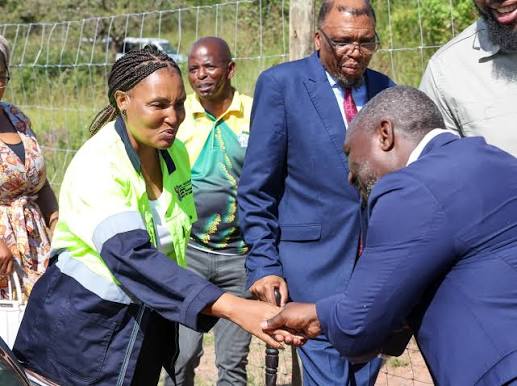
At the recent handover, both sides pointed to cautious progress toward collaborative governance and formalisation of informal settlements. Minister Simelane described a “laborious communication process” involving community committees to build trust, prevent re-occupation of vacated shack spaces after people move into formal housing, and manage temporary relocation (e.g., via facilities like Montclair Lodge where needed). She noted support from Abahlali baseMjondolo in the formalisation effort and stressed the need to complete started projects rather than leave them blocked. Nationally, she referenced 212 unblocked projects (with 85 targeted in the current medium-term expenditure framework to benefit at least 30,000 households), noting that major metros including eThekwini account for a large share of South Africa’s more than 4,000 informal settlements.
Abahlali baseMjondolo founding president S’bu Zikode acknowledged the deep scars from past losses (including homes and lives of movement founders) but expressed joy at people finally accessing decent housing after long struggle: “It’s what we’ve been fighting for.” He highlighted a partnership with the national department while raising a practical concern: without robust monitoring and demolition of vacated shacks in eThekwini, new occupations could create an “endless battle.”
Broader Context, Challenges, and Implications
The project forms part of wider national and local efforts to upgrade informal settlements under frameworks such as the Medium Term Development Plan (2024–2029), which targets upgrading more than 4,000 informal settlements. UN-Habitat’s involvement underscores international interest in partnership models for sustainable urban development.
However, the initiative has faced significant delays and capacity issues over years. Earlier reports (including opposition commentary in 2025) noted original timelines and budgets that slipped substantially, contract issues, and incomplete work despite additional funding. High demand, limited land in the Springfield/Kennedy precinct, local subcontractor pressures, and the need to prevent unsafe re-occupation of fire-prone areas remain ongoing challenges. Recent fires in the settlement have continued to highlight residual risks even as upgrades progress.
Nuances and longer-term considerations: While the handover represents tangible delivery and a public display of cooperation, full transformation of relations depends on sustained trust-building, effective monitoring against re-occupation, completion of remaining phases (especially the more complex in-situ work), adequate funding, and addressing systemic issues across metros. Abahlali’s participation signals pragmatic engagement from a movement that has historically prioritised grassroots democracy and dignity, but scepticism rooted in past experiences (including violence and unfulfilled promises) persists on both sides. Success here could offer a template for other high-density informal settlements; failure to manage re-occupation or finish the full project risks reinforcing cycles of informal growth and mistrust.
In short, the Kennedy Road/Barton Place handover is being celebrated as a concrete step forward in housing delivery and a possible turning point in state–community relations in one of Durban’s most historically contested informal settlements. It delivers immediate relief for some families while illustrating both the possibilities and the persistent difficulties of formalising large-scale informal settlements in South African cities.