

The NDLEA described this as one of its most significant recent narcotics investigations and the largest cocaine seizure through a courier company in the agency’s history. The operation began with the interception of the consignment (concealed in brown boxes) at a courier/logistics facility in Lagos on or around 3 August 2026. Authorities say the international trafficking network had used Nigeria as a transit hub for years, moving cocaine from South America through the country onward to destination markets. A Special Investigation Team was formed to trace the full network.
Key arrests and details
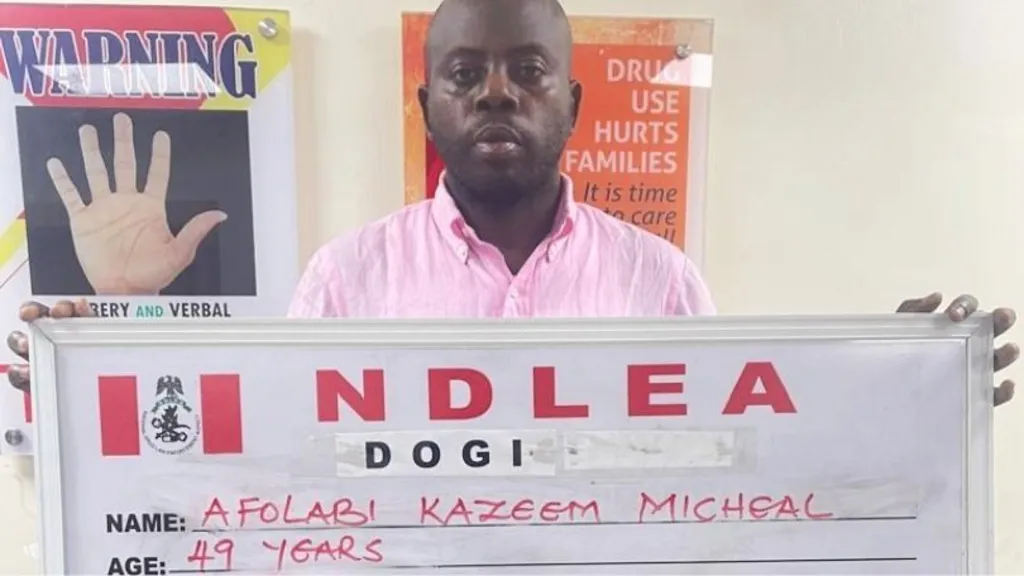
- Afolabi Kazeem Michael (“KC Luxury”): Identified by the NDLEA as the Nigerian “arrowhead” or coordinator of the cartel. He publicly presented himself as a social media influencer and businessman dealing in gold, jewellery, and luxury goods; investigators allege he used this glamorous image and lifestyle to disguise the trafficking operation. He was arrested on the night of 13 August 2026 at the boarding gate of Murtala Muhammed International Airport in Lagos while attempting to board a business-class flight to Paris, after intelligence indicated he planned to flee. He was found with €7,750, £2,800, ₦100,000 in cash, and expensive jewellery. A follow-up search of his luxury apartment on Banana Island, Ikoyi (Lagos), recovered exotic vehicles.
- Lawal Mujab Kehinde: A staff member of the logistics firm involved. He allegedly had a sustained relationship with the cartel’s Nigerian coordinator, packaged and processed consignments for export (routed to the UK, Europe, and Asia), and was paid in cash.
The NDLEA stated that the cartel used false identities to conceal the true origin/consignors of shipments, relied on financial facilitators who moved large sums, and maintained contacts in the UK—some of whom were arrested by British authorities in coordinated action around the same time. Michael has not publicly commented on the allegations, and formal charges/indictment details were not fully detailed in initial reports.
Broader context from NDLEA
NDLEA Chairman/CEO Brig. Gen. Mohamed Buba Marwa (retd.) framed the bust as evidence of the agency’s ability to disrupt networks shifting away from heavily scrutinized seaports and airports toward courier and logistics channels. He linked it to other recent successes against transnational groups and emphasized that traffickers cannot hide behind luxury lifestyles, social media personas, or alternative routes. The agency highlighted international cooperation and warned that its reach extends to ports, forests, luxury residences, and departure gates.
This is a developing story based primarily on NDLEA statements and contemporaneous reporting from outlets including the BBC, Punch, and others (as of 18–19 August 2026). Allegations remain those of the authorities; the suspects are entitled to due process. Nigeria has long been noted as a transit point in global cocaine routes from Latin America toward Europe, and high-profile cases involving lifestyle influencers or socialites periodically draw significant attention due to the contrast between public image and alleged criminal activity.