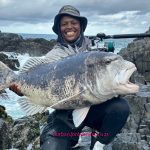





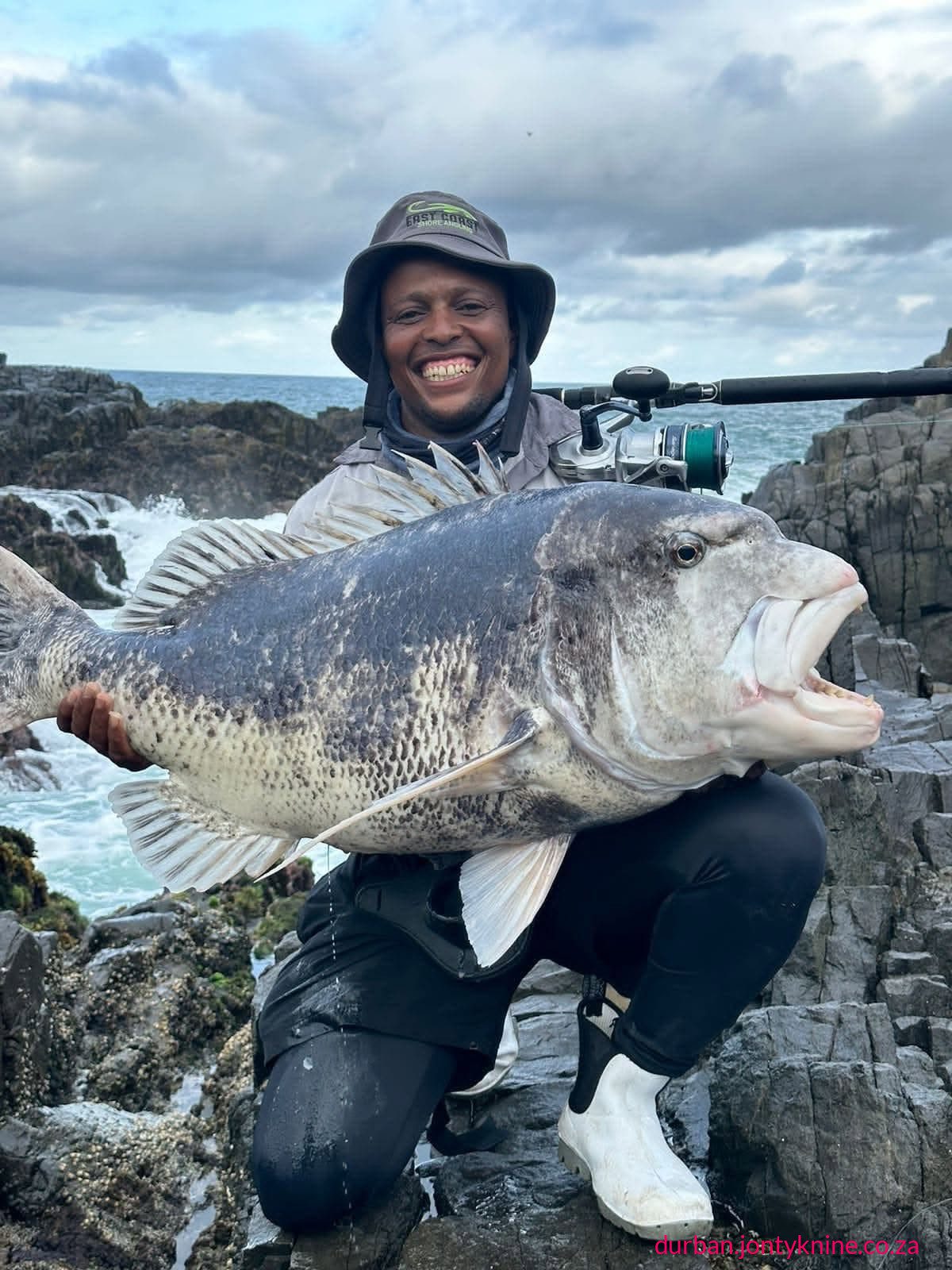

The black musselcracker (Cymatoceps nasutus), locally known in South Africa as the black steenbras or poenskop, is one of the most iconic and formidable reef fish species found along the Southern African coast. Highly prized by rock and surf anglers, these powerful sea bream are famous for their crushing bite, incredible fighting power, and massive size.
Key Facts at a Glance
- Scientific Name: Cymatoceps nasutus
- Common Names: Black Musselcracker, Black Steenbras, Poenskop
- Distribution: Endemic to South Africa, ranging from Western Cape waters around Cape Point up through KwaZulu-Natal.
- Habitat: Shallow rocky reefs, deep offshore reefs, dropping cliffs, and heavy surf zones.
- Diet: Hard-shelled invertebrates including mussels, sea urchins, crabs, red bait, and octopus.
Anatomy and Distinct Features
The black musselcracker is easily recognizable by its robust, heavily built frame and massive head:
- Crushing Jaws: Equipped with heavy, peg-like front teeth and rounded molars designed specifically to crush thick-shelled prey like crabs, crayfish, and mussels.
- Distinctive Profile: Older adults (particularly males) develop a prominent, fleshy knob on their snout, giving them the Afrikaans nickname poenskop.
- Coloration: Juveniles and young adults display grey and dark mottling, while mature fish turn a deep bluish-grey to almost pitch black.
Behavior & Life Cycle
- Slow Growth & Longevity: Black musselcrackers are extremely slow-growing and can live for well over 30 to 40 years.
- Hermaphroditism: They are protogynous hermaphrodites, meaning they begin life as females and mature into large breeding males later in life.
- Territorial Reef Dwellers: Adults usually establish territories on structural offshore or coastal reefs, making them vulnerable to localized overfishing.
Angling & Conservation Status
Due to their slow growth rate and late maturity, black musselcracker populations have faced significant pressure over the decades.
- Fighting Style: Renowned as one of the ultimate tests of heavy tackle, a hooked musselcracker immediately dives for cover in sharp, submerged rocks.
- Regulations: Strictly managed under South African recreational fishing regulations with defined bag limits and minimum size limits to protect breeding stock. Catch-and-release is strongly encouraged for large breeding individuals.