





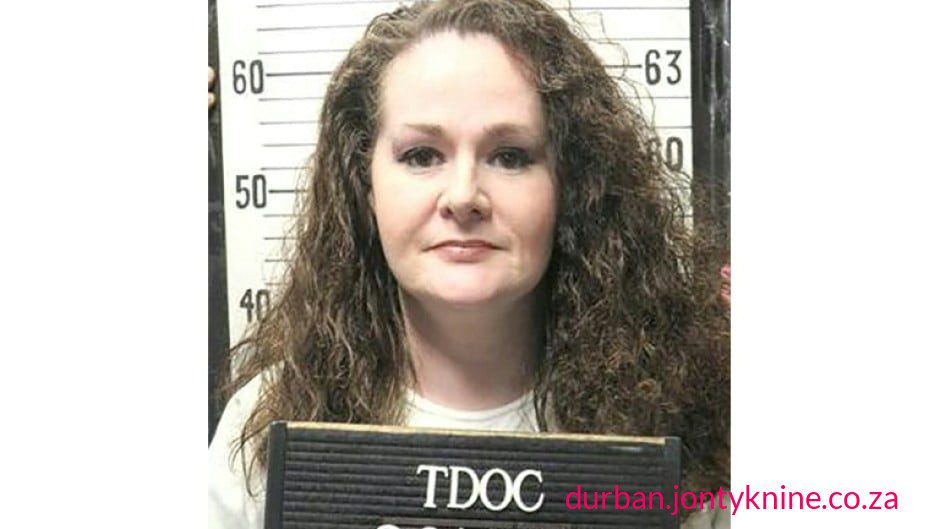
Pike, then 50 and the only woman on Tennessee’s death row, had been scheduled to become the first woman executed in the state in more than 200 years (since around 1820). The attempt took place at Riverbend Maximum Security Institution in Nashville after a day of legal delays. A U.S. Court of Appeals for the Sixth Circuit briefly stayed the execution (originally set for 10 a.m. local time) over concerns including ineffective counsel claims, but the U.S. Supreme Court vacated the stay later that day (in a 6-3 decision, with liberal justices dissenting), allowing it to proceed in the evening.
What Happened During the Attempt
Prison officials followed Tennessee’s single-drug protocol using pentobarbital. Media witnesses and Pike’s attorneys described significant difficulties establishing IV access: at least seven needles were used in her left arm alone (one reportedly bent at a 90-degree angle upon removal), and her right arm turned purple. Pike herself commented on pain, saying things like her arm felt like it was about to burst or that there was burning.
Two full doses/syringes of the drug were administered. Witnesses reported she continued breathing (sometimes described as ragged or heavy snoring/choking sounds), occasionally lifted parts of her body or kicked (dislodging sheets), and remained conscious or semi-conscious for an extended period—well over an hour after the process began in some accounts. The curtain to the witness room was closed and reopened at points. After the second dose failed to stop her heart or fully end consciousness/breathing, officials halted the process; an ambulance transported her to an off-site medical facility.
Pike’s attorneys filed emergency motions noting she still had a heartbeat and was audibly snoring, arguing the process caused “unnecessary agony,” “superadded physical and mental suffering,” and violated protections against cruel and unusual punishment. They had previously warned of risks due to her medical conditions (including thrombocytosis, a blood disorder with elevated platelets, and small/difficult veins).
The Tennessee Department of Correction stated it “followed every step” of the state’s lawful, established protocol (approved by the Attorney General’s Office), noted that the chemical “has consistently been effective,” and said the protocol does not allow additional procedures beyond what was carried out. It confirmed she was taken to a medical facility but provided limited further details.
Aftermath and Condition
By October 1–2, 2026, Pike’s lawyers reported she was in critical condition, receiving life-saving care, and later specified she was unconscious, intubated, and on a ventilator, with medical staff working to address the effects of the pentobarbital (including clearing it from her system). Both arms were reportedly swollen, blistered, and burned. Prognosis details remained limited in public reports. Experts (including those retained by her team) suggested possible causes such as the drug entering tissue rather than the bloodstream (due to blown or misplaced IVs), degraded/expired/potency issues with the pentobarbital, or individual physiological factors preventing sufficient blood levels.
Gov. Bill Lee (R) called the incident “deeply disturbing,” ordered a comprehensive third-party review of the lethal injection process and what occurred, and suspended all remaining executions for the rest of 2026 (including that of Gary Wayne Sutton, previously set for December 3). This was Tennessee’s second failed/botched execution attempt of the year (after one in May involving Tony Carruthers, halted due to inability to establish IV access). Death penalty experts described the outcome—survival after two full doses—as unprecedented or unparalleled in the modern era.
Pike’s attorneys have called for her sentence to be reduced to life in prison, citing the torturous nature of the experience and prior warnings that went unheeded. Legal efforts continued around evidence preservation and related claims. Broader context includes ongoing national debates over lethal injection reliability, drug sourcing secrecy, vein-access challenges (especially with older inmates or those with medical histories), and the Eighth Amendment implications of prolonged or painful procedures. Historical data from groups like the Death Penalty Information Center note dozens of botched lethal injections since the method’s adoption, though full survival after drug administration is rarer.
Background on the Case
Pike was convicted in 1996 for the 1995 murder of 19-year-old Colleen Slemmer (a romantic rival/classmate) in Knoxville. She was 18 at the time of the crime, which was described as prolonged and brutal; she received a death sentence. Appeals over decades involved claims related to her background, counsel effectiveness, and more recently medical suitability for lethal injection. She had been on death row for about 30 years.
This event has prompted renewed scrutiny of Tennessee’s capital punishment procedures, similar to prior pauses or reviews in other states facing protocol failures. Official investigations and any further medical or legal updates would clarify exact causes and next steps for Pike’s case.