





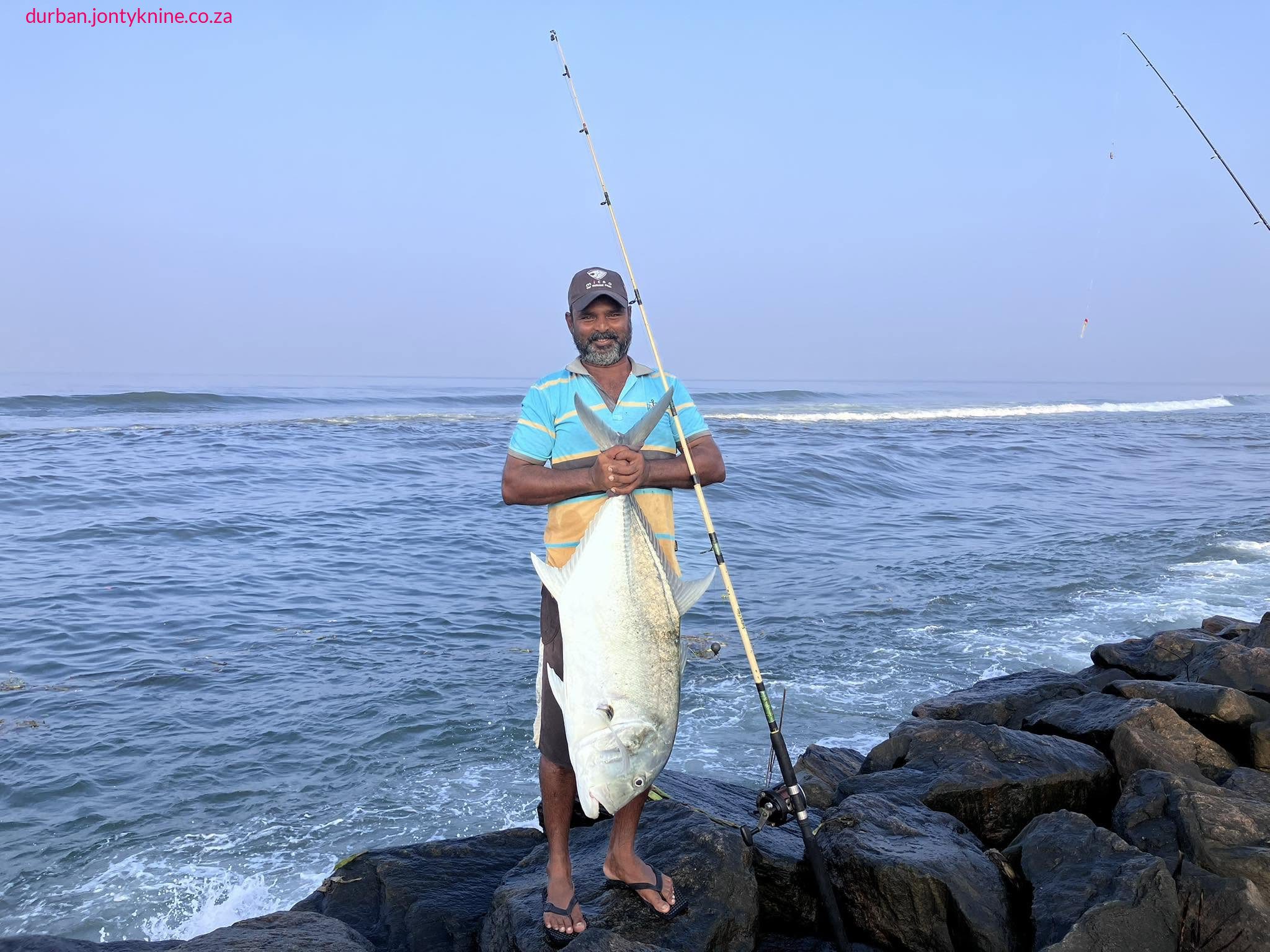

It is a member of the jack/trevally family (Carangidae). Key matching features from the photo include:
- Deep, strongly compressed, oval-to-subovate silver body (bluish-grey above, paler below; large adults can show a golden-orange tint).
- Broadly rounded/blunt snout profile.
- Deeply forked caudal fin.
- Elevated (sickle-shaped) soft dorsal and anal fin lobes (visible in the way it’s held).
- No prominent dark spots or scutes like many other trevallies/queenfishes.
- Size consistent with a solid adult specimen (this species reaches ~65–110 cm fork length and several kg).
It is common across the tropical Indo-Pacific (including coasts of India, Sri Lanka, Maldives, and similar areas), often taken from rocky shores, reefs, or sandy/muddy shallows by shore anglers using rods—exactly the setting in your photo. Juveniles prefer beaches/bays; adults move to clearer reef and rock areas and feed mainly on hard-shelled molluscs and invertebrates.
It is sometimes confused with giant trevally (which has a steeper head profile, darker coloration in large males, and scutes) or Atlantic permit (a close relative restricted to the western Atlantic). The rounded snout, overall body depth, and lack of spots point clearly to the snubnose pompano here.