


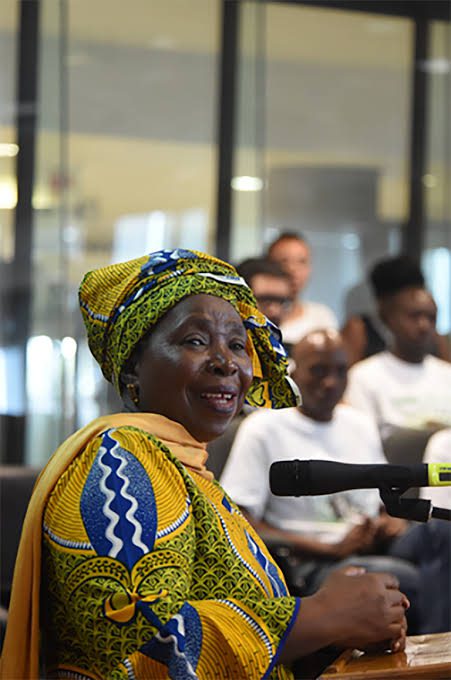
This stems from explosive remarks she made in early August 2026 on the African Renaissance Podcast hosted by former EFF MP Dr Mbuyiseni Ndlozi. Dlamini-Zuma alleged that money (and, in one case, a voice note) influenced outcomes at the ANC’s 54th National Conference in 2017 and the 55th in 2022 at Nasrec. She specifically claimed that ANC Secretary-General Fikile Mbalula was “dishing money in the clinic” during the 2022 conference to secure his own election as SG and support President Cyril Ramaphosa’s re-election. She also referenced an alleged voice note involving International Relations and Cooperation Minister Ronald Lamola linked to the 2017 contest (in which she ran against Ramaphosa), and spoke more broadly of money playing a decisive and openly visible role, including a claim that half a billion rand was found in someone’s room on the first morning of the 2022 conference. She portrayed the conduct as widely known among delegates and workers and contrary to ANC rules.
Responses from Mbalula and Lamola
Both men issued strong, categorical denials and formal demands.
- Mbalula described the claims as “very damaging and painful.” He denied distributing money at any clinic, facility, conference, or ANC gathering to procure his own election or anyone else’s. He emphasised that his 2022 election as secretary-general occurred via secret ballot under the party’s Electoral Commission and ANC constitutional rules, with no formal challenges lodged by branches, regions, provinces, or leagues at the time. He instructed lawyers to demand clarity and evidence from Dlamini-Zuma (with a reported response deadline around 14 August), reserved the right to go to court, and indicated he would also refer the matter to the ANC Integrity Commission. He has publicly framed it as a personal reputational issue requiring either substantiation or retraction, rejecting any purely “political solution.”
- Lamola issued an open letter expressing concern and disappointment. He denied any involvement in vote-buying via phone calls, voice notes, or other means at the 2017 conference or any other time. He specifically disputed that the voice in the alleged recording was his, noting that his manner of speech is well known. While stressing respect for Dlamini-Zuma’s struggle credentials and preference for internal ANC mechanisms, he demanded a public retraction and apology (with a reported deadline of 11 August) and warned that legal action remained an option if she did not comply.
Both have argued that such serious allegations should have been raised formally through ANC structures (such as the Integrity Commission) rather than publicly on a podcast.
Dlamini-Zuma’s position on the demands
In comments reported around 9–10 August 2026, Dlamini-Zuma confirmed she had received the legal letters. She stated she was travelling to Cuba (for events linked to the centenary of Fidel Castro, including the First Fidel International Colloquium in Havana) and would return around 16 August. She informed both men she could not attend to the matter while away, asked for more time, and noted she had not received responses to that request by the time of her comments. She left it to them to decide how to proceed.
Her Cuba trip is corroborated by contemporaneous posts and coverage showing her participation in related dialogues and events in Havana around 10–12 August 2026, reflecting on Cuban-South African solidarity, Fidel Castro’s legacy, and South-South cooperation.
Broader context and implications
These allegations sit within a long-running pattern of claims about financial influence, patronage, and “vote-buying” or “gatekeeping” in ANC elective processes. Similar concerns have been raised over years by figures such as former president Kgalema Motlanthe (in organisational reports warning about branches treated as “voting fodder”), in debates around the funding of Ramaphosa’s 2017 campaign, and more recently by provincial leaders. Analysts have described the public clash as reflecting deeper factional divisions and questions about the effectiveness of internal renewal and integrity mechanisms. Dlamini-Zuma’s decision to air the claims externally rather than solely through party channels has itself become part of the controversy, with critics arguing it undermines organisational discipline and supporters viewing it as necessary exposure of problems.
As of the latest available reporting around mid-August 2026 (shortly after her stated return date), there was no public indication that the deadlines had been extended, that formal legal papers had been issued, or that the ANC as an organisation had taken collective disciplinary steps. Mbalula had indicated the matter was being handled both individually (via potential court action) and collectively within the party. The episode underscores ongoing tensions within the ANC’s senior ranks over internal democracy, the role of money in leadership contests, and how (or whether) such disputes should be resolved privately versus publicly.
The situation remains fluid; any subsequent court filings, Integrity Commission processes, formal retractions, or further public statements would represent the next developments.