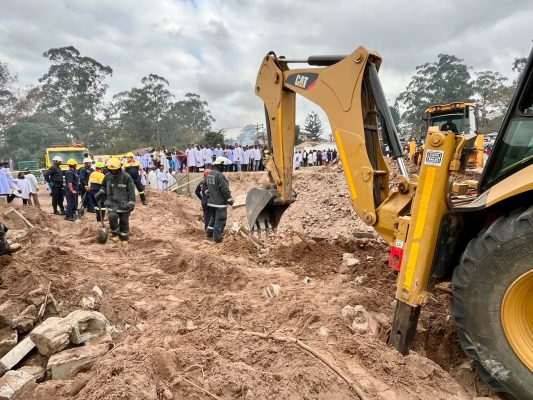





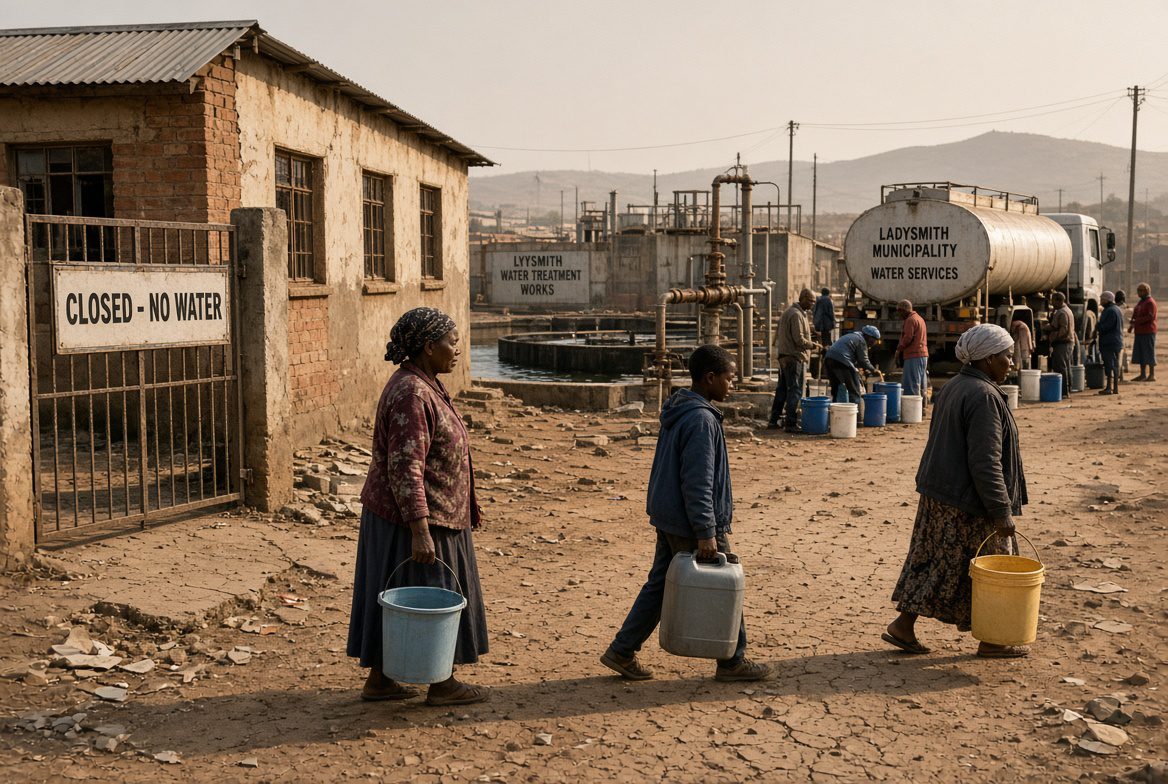
The outage began around 7 August 2026 and, by the time of reporting around 21 August, had entered its third week. It continues to hit communities including Steadville and Acaciaville (also referred to in related coverage as Acaciavale), among other parts of the town under the Alfred Duma Local Municipality within the uThukela District Municipality. Residents have faced unreliable or non-existent piped water supply, forcing reliance on alternative sources such as private purchases, community boreholes (often at religious sites), or limited tanker deliveries where available. This is not an isolated incident but part of a pattern of prolonged and intermittent shortages that have plagued parts of Ladysmith and the broader district for years.
Impact on education and public health
Ladysmith Secondary School was forced to close after the Department of Labour issued a prohibition notice citing unhygienic conditions stemming from the lack of water. The school confirmed in a letter to parents around 20 August that it had become non-operational. Grade 12 learners have been permitted limited classes, while the rest of the school remains shut. This reflects broader health and safety risks: without water for sanitation, toilets, handwashing, and cleaning, educational institutions and workplaces become untenable. Similar issues have previously affected other schools and even education department offices in the area.
Beyond schools, the absence of reliable water raises public health concerns, including heightened risk of water-borne diseases, challenges for food preparation and personal hygiene, and strain on households (especially those with young children, the elderly, or people with disabilities). Financial burdens also mount as families spend on bottled water, tankers, or storage solutions like JoJo tanks.
Political and governance dimensions
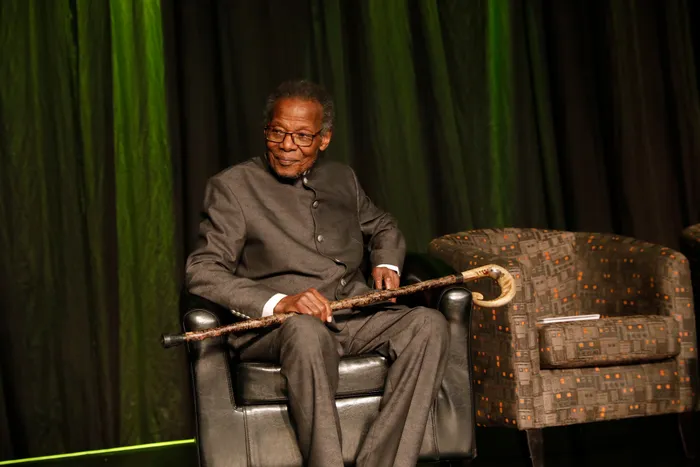
The Democratic Alliance (DA) has been highly critical, attributing the crisis to years of failure under the Inkatha Freedom Party (IFP)-led administration of uThukela District Municipality. DA uThukela chairperson Councillor Thys Janse van Rensburg has highlighted claims that the municipality is losing around 65% of its water (through leaks, theft, or infrastructure failure) and has accumulated more than R1.3 billion in unauthorised, irregular, fruitless and wasteful expenditure. The DA has lodged a High Court application in Pietermaritzburg, set down for hearing on 19 October 2026. The party is seeking orders to compel the restoration of water services, place the municipality under proper administration (potentially invoking Section 139 of the Constitution), and establish judicial oversight.
This legal action builds on earlier DA efforts dating back months (and claims of fighting the issue for around six years). The party has pointed to successive poor audit outcomes, infrastructure collapse, ignored recommendations from bodies such as the South African Human Rights Commission, and failures to meet the constitutional right of access to sufficient water (Section 27 of the Constitution) as well as minimum standards in water services regulations (typically at least 25 litres of potable water per person per day). Looking ahead, the DA has framed the November 2026 local government elections as an opportunity for residents to “choose change,” while committing to infrastructure fixes, anti-corruption measures, and redirecting public funds toward services.
uThukela has faced repeated interventions, financial distress (including issues with bank accounts, unspent grants, and recovery plans), technical capacity shortages, ageing infrastructure, silt build-up at abstraction points, pump failures, vandalism, and challenges at facilities such as the Ezakheni / Embizeni Water Treatment Works. Broader South African water sector problems—high non-revenue water losses nationally, deteriorating Green Drop (wastewater) and Blue Drop (drinking water) performance in many municipalities, and coordination gaps between spheres of government—provide important context. The SAHRC has continued to push for stronger national-level responses to the country’s water challenges.
Underlying causes and longer-term considerations
Root factors commonly cited include:
- Ageing and poorly maintained bulk and distribution infrastructure, leading to frequent bursts and high losses.
- Operational failures at treatment works and pump stations (silt, mechanical/electrical issues, power supply problems).
- Governance and financial mismanagement, including irregular expenditure and capacity constraints.
- Demand pressures and limited storage/resilience in the system.
- Historical underinvestment compounded by intermittent political and administrative instability.
Temporary measures such as water tankers have been used in the past, but they are costly, insufficient for sustained need, and do not address root causes. Longer-term proposals mentioned in district coverage have included silt removal, new storage, pump upgrades, and potentially a new treatment plant (e.g., at Spioenkop), though progress has been slow and contested.
Implications and outlook
The crisis underscores how service delivery failures rapidly cascade into education disruption, health risks, economic strain on households and businesses, and political tension—particularly in the run-up to local elections. Residents in the hardest-hit areas experience not only inconvenience but a denial of basic dignity and constitutional rights. Court intervention, if successful, could force more structured remedial action and oversight, though implementation would still depend on technical capacity, funding, and political will.
Nationally, this episode sits within a wider pattern of municipal water stress across South Africa, where infrastructure decline, high losses, and governance challenges are widespread. Effective responses typically require a combination of emergency relief (tankers, temporary fixes), rigorous leak detection and infrastructure rehabilitation, improved financial management and revenue collection, skills development, and better intergovernmental coordination—alongside accountability mechanisms.
As of the latest available reporting around 21–23 August 2026, the outage remained unresolved for the affected communities, with the school closure highlighting the human cost. Developments around the October High Court hearing, municipal responses, and any interim relief measures will be key to watch. Residents continue to bear the immediate burden while political and legal processes unfold.