






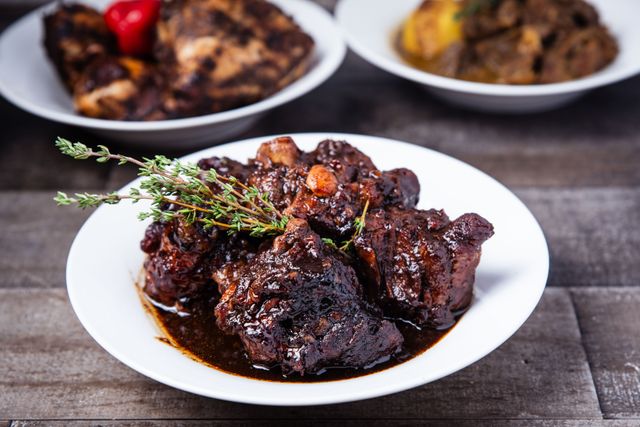
The price of oxtail in South Africa has roughly doubled in recent months primarily because of disrupted imports from Argentina, which normally supply about 70% of the country’s oxtail. Local production cannot meet demand—especially in winter when oxtail stew and potjie are popular—so the shortfall has created scarcity and driven prices sharply higher.
Price changes
- Earlier in 2026 (January–May): typically R79–R99 per kg.
- By late August 2026: around R169–R199 per kg.
Retailers have been managing limited stock carefully, which further constrains availability.
Root cause: veterinary certificate dispute
The problem began with a technical/administrative issue involving sanitary (health) certificates for Argentine beef products:
- South Africa’s import certificate for beef (including oxtail/bone-in products) incorrectly included a declaration about ovine scrapie (a disease that affects sheep and goats, not cattle). There had been a scrapie outbreak noted in Argentina, but it was irrelevant to bovine products.
- Argentina requested removal of the scrapie reference. South Africa’s Department of Agriculture acknowledged it as a technical error and removed the wording.
- However, instead of a simple fix, the department revised the entire health certificate and added extensive foot-and-mouth disease (FMD) biosecurity requirements specifically for bone-in beef products such as oxtail.
- Argentine exporters approved to supply South Africa are located in FMD-free zones where vaccination is practised. Argentina has not had an FMD outbreak since 2006, but the new conditions are very difficult (or practically impossible) for them to meet for oxtail and certain other bone-in cuts. This has effectively blocked the trade.
The Association of Meat Importers and Exporters (AMIE) has described the situation as “an absolute mess” of coordination and has formally asked the Department of Agriculture for the scientific evidence and risk assessments behind the stricter FMD rules. AMIE notes that what started as a straightforward administrative correction has turned into broader restrictions that continue to prevent imports.
Additional context and implications
- Scale of impact: Importers earlier estimated that up to about 1,000 tonnes of oxtail (valued at over R100 million) could be lost during the winter season if the impasse continued. Contracts have been cancelled or delayed as a result.
- Broader meat-market pressures: South Africa has faced elevated beef and other meat prices in recent periods partly due to domestic foot-and-mouth disease outbreaks that disrupted local livestock supply chains. This general inflationary environment in red meat has compounded the specific oxtail shortage.
- Consumer effects: Oxtail is a relatively affordable, flavourful cut popular across many households. The sharp price rise hits cash-strapped consumers hardest and has led retailers to slow demand to protect remaining stock.
- Ongoing status (as of late August 2026): The restrictions remain in place. AMIE continues to push for resolution, emphasising that South African consumers ultimately bear the cost of prolonged bureaucratic delays on a product the country cannot produce in sufficient volume itself.
In short, the surge is not driven by a sudden global demand boom or pure local production failure, but by an import bottleneck triggered by a certificate error that escalated into restrictive FMD rules blocking the main foreign supplier. Resolution of the veterinary certification issues with Argentina would be the most direct way to ease supply and bring prices back down.