


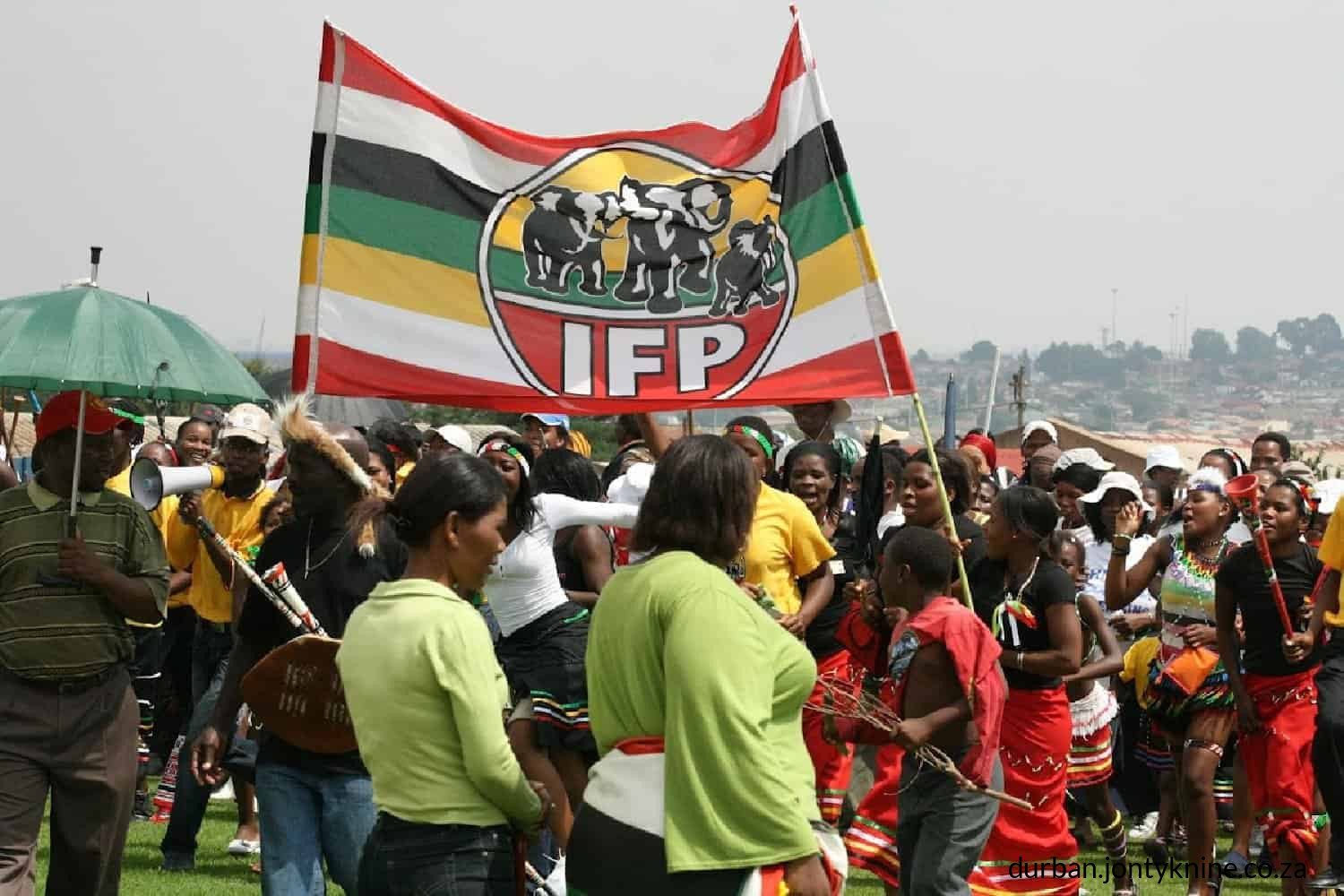
He was shot in front of his children on the evening of the previous Thursday, treated at Ngwelezane Hospital, and succumbed to his injuries (reports place the death around Monday/Tuesday). Mdluli had served as an IFP proportional representation (PR) councillor in uMlalazi since 2021 and was the party’s candidate for Ward 17 in the 4 November 2026 local government elections. He is survived by his wife and three children (including a newborn, a 4-year-old, and an 8-year-old).
IFP national spokesperson Mkhuleko Hlengwa strongly condemned the killing as “barbaric and senseless,” stating there is no place in South Africa’s democracy for political violence, intimidation, or the assassination of public representatives and candidates. The party called for a thorough, urgent SAPS investigation into all possible motives—including whether it was politically motivated—and demanded full resources to identify and prosecute those responsible. The circumstances (a serving councillor and election candidate attacked at home) were described as particularly disturbing because they undermine free political participation.
Broader context of political violence in KZN and nationally
This incident fits a longstanding and intensifying pattern of targeted attacks on local politicians, especially in KwaZulu-Natal, which remains South Africa’s primary hotspot. KZN Premier Thamsanqa Ntuli stated in August 2026 that at least 18 councillors had been assassinated in the province since the 2021 local elections. Breakdowns cited higher numbers in eThekwini (around five) and smaller clusters in municipalities such as uMngeni, Mkhambathini, and Newcastle.
Recent examples include:
- ANC eThekwini Ward 17 councillor Sibusiso Cedric (“Khekhe”) Khwela, shot dead in August 2026 at his Klaarwater office by a man posing as a resident seeking help; the Political Killings Task Team took over the case.
- Other incidents involving IFP, ANC, DA, and other parties’ representatives or candidates, both in KZN and elsewhere (e.g., Knysna in the Western Cape, where multiple ANC-linked figures were killed in a short period in August 2026; earlier cases in Gauteng and the Eastern Cape).
Nationally, authorities (including NATJOINTS) have acknowledged multiple politically motivated murders of party members and councillors in 2026 across KZN, Gauteng, Eastern Cape, and Western Cape, with Political Killings Task Teams investigating many of them. Killings often cluster around election cycles due to intense competition for municipal positions, which provide access to resources, tenders, and influence. Analysts and past inquiries have linked much of the violence to contests over tenders and local power rather than purely ideological disputes, with hitmen sometimes drawn from taxi or criminal networks.
The Moerane Commission of Inquiry (established 2016, report 2018) examined the underlying causes of political killings in KZN. It identified the tender system and competition for resources as a primary driver, alongside weak party structures, factionalism, intolerance, and shortcomings in the criminal justice and intelligence systems. Key recommendations included political education within parties on peaceful competition, stronger internal discipline, depoliticisation and professionalisation of the public service, reform of tender processes for fairness and transparency, better coordination among security agencies, and vigorous investigation/prosecution of corruption-linked crimes. Implementation has been partial and uneven; the Political Killings Task Team emerged in part from related efforts, and some reductions in certain hotspots (e.g., Glebelands Hostel) have been noted, but the overall problem persists and has drawn renewed attention ahead of the 2026 local elections.
Implications and ongoing concerns
With local government elections scheduled for 4 November 2026, parties across the spectrum (IFP, ANC, DA, and others) have expressed alarm that violence and intimidation could suppress campaigning, deter candidates and voters, and further erode trust in democratic processes. Calls for enhanced security for councillors and municipal facilities, better intelligence-sharing, rapid-response protection, and full implementation of past recommendations (including from Moerane) have intensified. Political leaders have repeatedly urged restraint, tolerance, and resolution of disputes through democratic means rather than violence.
Police investigations into Mdluli’s killing (and related cases) were ongoing as of the latest reports, with the IFP pressing for prioritisation. No arrests or confirmed motives specific to this case had been publicly detailed in the immediate coverage. The pattern raises questions about the effectiveness of existing task teams, the role of organised crime or tender-related interests, intra- and inter-party dynamics, and the broader capacity of the state to protect elected officials and candidates. Historical continuity from the apartheid era and post-1994 transitions, combined with contemporary factors such as high levels of illegal firearms and local economic stakes, continues to make KZN particularly vulnerable.
This latest death underscores the human cost—families left grieving, communities losing representatives, and the chilling effect on political participation—while highlighting the unfinished work of addressing root causes identified years ago.