





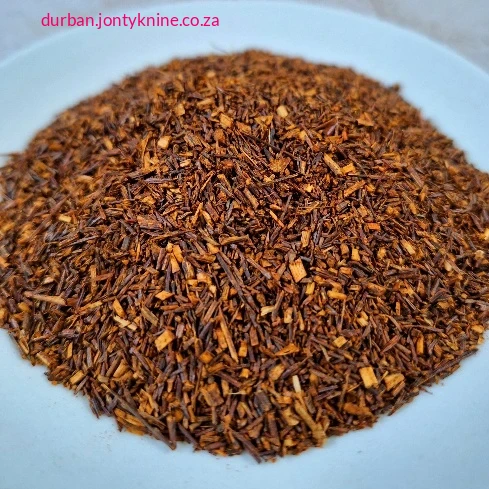
Rooibos tea (pronounced ROY-boss, from the Afrikaans for “red bush”) is a caffeine-free herbal infusion (tisane) made from the needle-like leaves and stems of Aspalathus linearis, a leguminous shrub in the Fabaceae family. It is not a true tea, which comes from Camellia sinensis; it is botanically closer to beans and peas.
It grows almost exclusively in the Cederberg mountain region of South Africa’s Western Cape (part of the fynbos biome), roughly 200–250 km north of Cape Town. Attempts to cultivate it successfully elsewhere have largely failed due to its highly specific soil, climate, and altitude requirements (typically 450–1,500 m). This geographic uniqueness underpins its Protected Designation of Origin (PDO) status granted by the European Union in 2021 (following a geographical indication in 2014).
History and Cultural Roots
Indigenous Khoisan (Khoi and San) peoples of the Cederberg used the plant for generations as a beverage and for medicinal purposes long before European contact. Swedish naturalist Carl Thunberg recorded its use in 1772. Dutch colonists later adopted it as a more affordable alternative to imported teas.
Commercialization began in the early 20th century. Russian immigrant merchant Benjamin Ginsberg started trading and refining processing methods around 1904. In the 1930s, local doctor and naturalist Dr. Pieter le Fras Nortier (with local knowledge and assistance) solved seed germination challenges through scarification and selective cultivation of the Nortier type, enabling large-scale farming. Production expanded significantly during World War II tea shortages and has continued to grow. South Africa now produces roughly 15,000–20,000 tons annually, with substantial exports (often over 8,000–10,000 tons) to more than 50 countries. It is widely regarded as South Africa’s national drink.
Processing and Varieties
After harvest, the plant material is cut and bruised. For traditional red (or fermented/oxidized) rooibos, it is piled and left to oxidize in the sun for hours to a day. This develops the characteristic reddish-brown color, deeper sweetness, and flavor compounds. The material is then dried, sifted into grades, and typically steam-pasteurized.
Green (unfermented) rooibos skips oxidation: the material is dried promptly to retain a greener color, higher levels of certain antioxidants (notably aspalathin), and a lighter, grassier, more mineral or herbaceous taste.
Both forms are available pure or in countless flavored blends (vanilla, caramel, fruits, spices, etc.). Red is by far the most common and what most people mean by “rooibos.”
Flavor Profile
Red rooibos is naturally sweet (no added sugar needed for many drinkers), with notes of honey, toasted nuts, malt, caramel, vanilla, soft woodiness, and sometimes subtle stone fruit. It has very low tannin levels, so it lacks the astringency or bitterness of true teas—even with extended steeping. The mouthfeel is smooth and full. Green rooibos is milder, fresher, and more vegetal.
How to Prepare It
Rooibos is exceptionally forgiving:
- Use freshly boiled water (≈100°C / 212°F).
- About 1–2 teaspoons (roughly 2–3 g) of loose leaf per 250 ml cup (or one teabag).
- Steep 5–7 minutes for a standard cup; longer (10–15+ minutes) simply intensifies flavor without bitterness.
- Enjoy plain, with milk (dairy or plant-based—oat pairs especially well), honey, lemon, or sugar.
- Excellent hot, iced (brew stronger and pour over ice or cold-brew), as a latte/cappuccino base, or in blends/chai-style preparations.
It works well in cooking and baking too, and extracts appear in cosmetics, beverages, and other products.
Nutritional and Potential Health Aspects
Rooibos is naturally caffeine-free and low in tannins (so it interferes less with iron or other nutrient absorption than high-tannin teas). It contains polyphenols, including the unique dihydrochalcone aspalathin (the primary antioxidant, higher in green rooibos), nothofagin, quercetin, and others. Fresh leaves also contain vitamin C, and the infusion provides trace minerals.
Human evidence is promising but limited (mostly small trials and scoping/systematic reviews involving a few hundred participants total). Observed effects in some studies include:
- Improved lipid profiles in at-risk individuals (e.g., reductions in LDL cholesterol and triglycerides, increases in HDL after several weeks of daily consumption of several cups).
- Enhanced antioxidant status and reductions in certain markers of oxidative stress.
- Potential modest support for blood glucose regulation (particularly post-meal in some contexts), linked to aspalathin’s effects in laboratory and animal work, with more limited human data.
Other areas under investigation (often still preclinical or preliminary) include anti-inflammatory activity, possible cardioprotective effects, and skin-related benefits. Claims of broad disease prevention or dramatic effects should be viewed cautiously—larger, longer, dose-response human trials are still needed. It is generally considered very safe for most people (including children, pregnant individuals seeking caffeine-free options, and those sensitive to stimulants). Rare case reports have raised questions about liver effects with very high intake in susceptible individuals, so moderation and medical advice for those with liver conditions are prudent.
Broader Context and Considerations
Economically, the industry supports rural communities in the Cederberg through seasonal harvesting and processing jobs, though historical recognition and benefit-sharing with indigenous knowledge holders has been imperfect and is an ongoing conversation. Environmentally, it is tied to a biodiversity hotspot; sustainable and organic practices matter for long-term viability.
Compared with black or green tea, rooibos offers zero caffeine, negligible astringency, natural sweetness, and a distinct antioxidant profile rather than catechins/theaflavins. Versus other herbals, its uniqueness stems from aspalathin and its place-specific origin.
In short, rooibos is a smooth, versatile, caffeine-free daily drink with a compelling origin story, pleasant naturally sweet character, and a growing (if still emerging) body of supportive research on cardiometabolic markers. Whether you prefer classic red, brighter green, or creative blends, it rewards simple preparation and rewards exploration.