





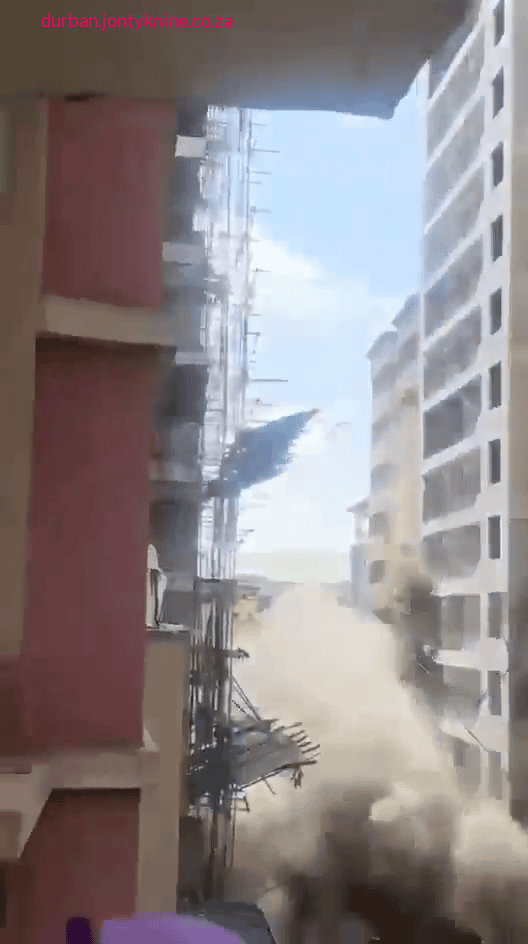
Numerous people, including construction workers and nearby pedestrians, are trapped under the rubble.
What happened and who was affected
The building was still under construction on the upper floors, but the ground floor and/or basement already housed businesses (including an electronics shop, butchery, and grocery). Construction workers were on site, and some pedestrians or shop-related people may also have been present. The timing around Friday afternoon prayers is noted in some accounts as potentially reducing the number of people inside.
Rescue and recovery operations involving the Kenya Red Cross, Kenya Defence Forces Disaster Response Battalion, county emergency teams, police, and other agencies continued into the evening. Challenges included dense crowds, reported looting of nearby shops (prompting police use of tear gas to clear access routes), limited initial access for heavy machinery due to the tight urban site, and concerns about a possible secondary collapse because the wreckage was leaning on a neighboring structure. At one point, heavy debris removal was temporarily paused after people believed to be trapped indicated that operations were affecting their air/oxygen supply.
Confirmed details on casualties (as of evening updates on the day of the collapse):
- At least one injured woman was rescued and taken to hospital (reported in stable condition in some accounts).
- Voices or signs of life were reported from the rubble at times (including one person who later went silent); rescuers heard communication from inside and worked to improve access and oxygen.
- Exact numbers of people trapped, injured, or killed remained unconfirmed hours later. Officials (including Nairobi Governor Johnson Sakaja) indicated it was possible one or two people had died, with more information expected as operations progressed. Unverified witness estimates of people potentially in the basement or lower levels varied widely (one casual labourer mentioned a high figure that was not confirmed). Some construction workers escaped (one plasterer described being among the last out from an upper floor).
A tent was set up for reports of missing relatives. Families shared accounts of phone contact with people believed trapped hours after the collapse.
Official response and accountability issues
Nairobi Governor Johnson Sakaja and police leadership (including Nairobi police chief Issa Mohamud and Inspector General Douglas Kanja) emphasized life-saving as the priority. The building had construction approval from the county but lacked an occupation certificate, making the operation of shops on lower floors illegal. Sakaja noted this “has potentially cost lives” and that investigations would follow, with accountability for any negligence. Authorities launched a manhunt for the building’s owner, who had not presented himself. Engineers on site pointed to possible prior warning signs (such as cracks) and broader issues with materials, supervision, or compliance.
This fits a recurring pattern in Nairobi and Kenya more widely. Rapid urbanization and housing/commercial demand have been accompanied by frequent building collapses, often linked to weak enforcement of codes, inadequate supervision, substandard materials, or construction beyond approved plans. A National Building Inspectorate audit found that 87% of buildings reviewed nationwide in the prior year failed to meet standards or lacked required approvals.
Broader context and implications
Eastleigh is a high-density trading hub, so the collapse disrupted businesses, caused traffic issues, and drew large crowds. Videos of the moment of collapse circulated widely, showing the structure folding downward amid screams from neighbors. The event has intensified public and official scrutiny of construction oversight, the role of developers, engineers, and approving authorities, and the risks of allowing occupancy during ongoing works.
Rescue and recovery efforts were expected to continue through the night and into subsequent days. Casualty figures and the precise cause remain subject to ongoing investigation and updates from authorities. For the latest official information, primary sources such as Nairobi County statements, Kenya Red Cross, or major Kenyan outlets (Nation, Standard, Tuko) should be checked, as details evolve quickly in such incidents.